Solutions for Digital Operation of Housing‑Rental Listing Videos: How Housing Rental Service Platforms Empower Online Property Viewing
Against the backdrop of continuously growing urban migrant populations and normalized off‑city employment‑related housing settlement, the housing‑rental industry is accelerating its digital transformation. Compared with conventional offline on‑site property viewings, convenient and efficient online property viewing has become the primary channel for tenants to screen listings, compare supporting amenities and finalize rental intentions. Major housing‑rental service platforms have built dual‑end service matrices for mobile apps and WeChat Mini Programs. Leveraging authentic on‑site listing videos to construct online display systems, these platforms effectively tap potential customers and boost scheduled viewing volumes. As core digital assets for platforms to build an authentic rental ecosystem, enhance user property‑viewing experience and drive business conversion, authentic listing videos are critical for platform reputation building and business growth.
Nevertheless, most housing‑rental service platforms suffer from in‑house video technology limitations. Their native playback tools offer limited functionality, accompanied by challenges such as inadequate video‑content protection, unsystematic media‑asset management and one‑sided user‑behavior statistics. Given industry characteristics including large numbers of agents, frequent private‑domain communications, rapid listing updates and high property turnover, platforms commonly face poor online property‑viewing experiences, rampant irregular listing promotions, disorganized asset management and insufficient data for operational decision‑making. These bottlenecks severely undermine service quality, brand credibility and refined digital‑operation capabilities of platforms. Accordingly, establishing a professional video‑operation system featuring multi‑terminal compatibility, security and compliance, batch‑processing‑enabled maintenance and reviewable data has become a pivotal measure for housing‑rental service platforms to upgrade services, standardize industry practices and improve quality and efficiency.
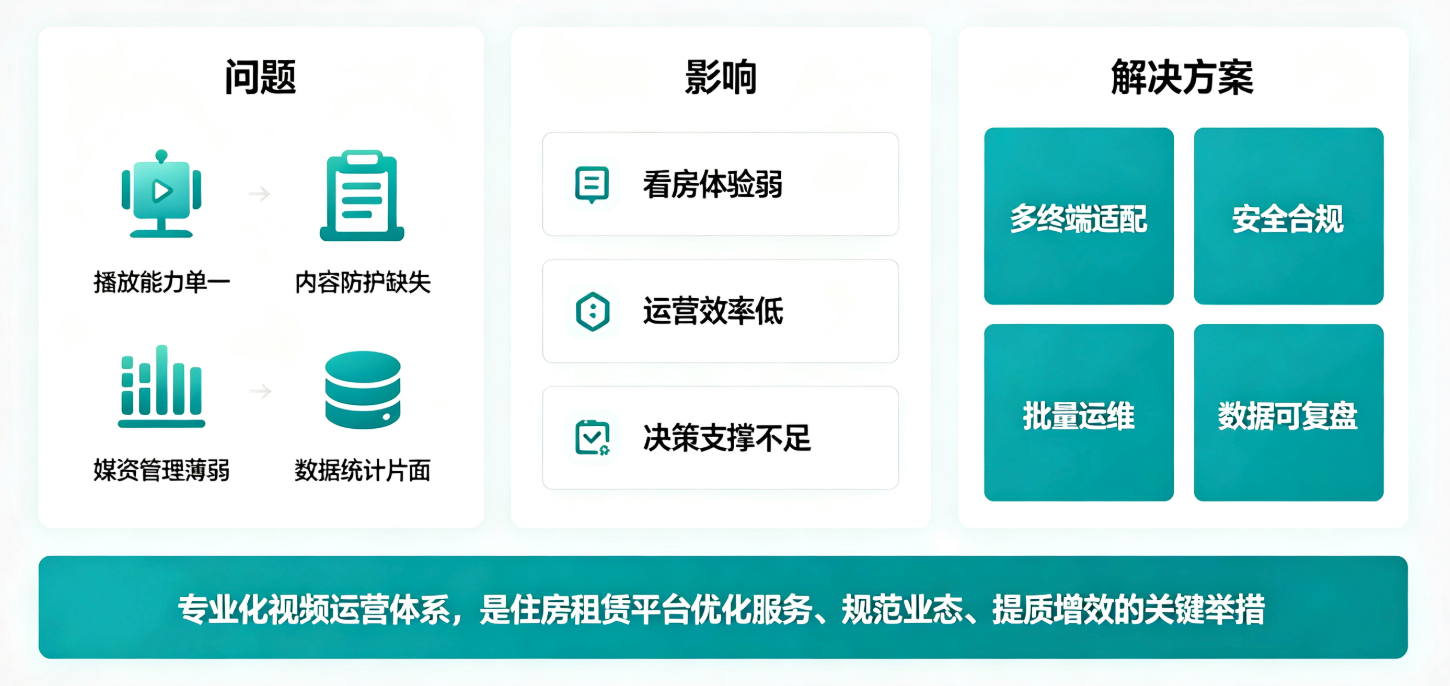
I. Core Shortcomings in Online Video Operations of Housing‑Rental Service Platforms
(I) Primitive Native Playback Functions Result in Uneven Online Property‑Viewing Experiences
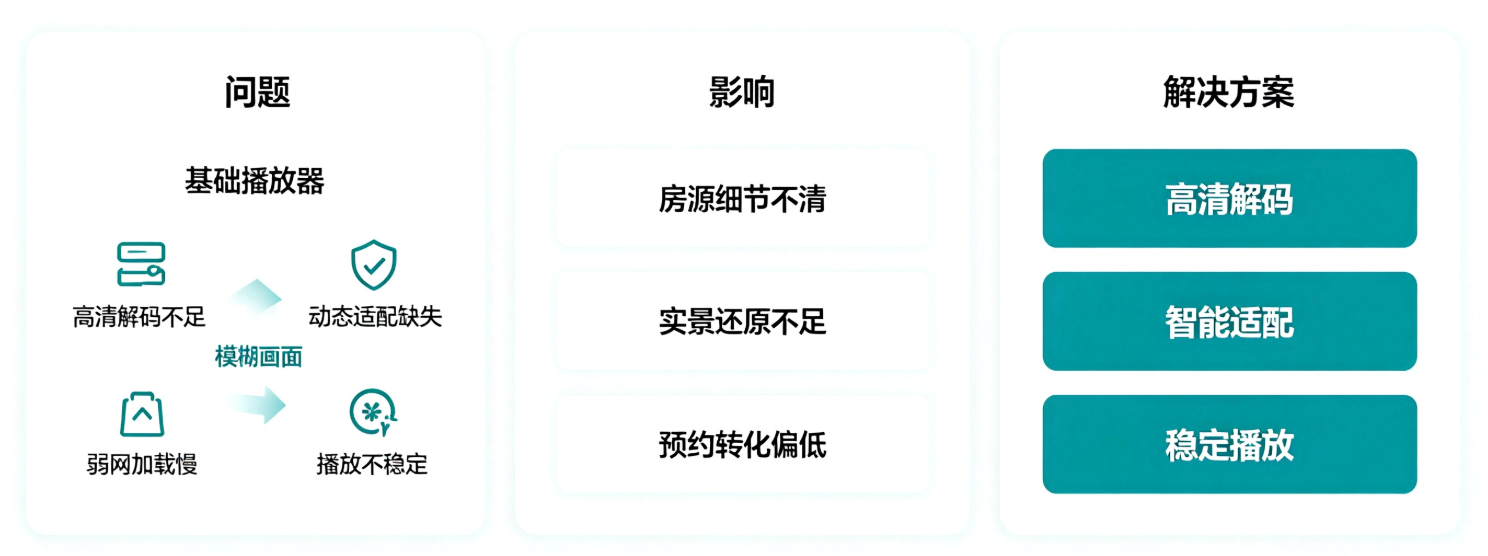
A large proportion of tenants nowadays search for rental properties remotely or across cities, completing initial listing screening entirely via online platforms. Hence they set high requirements for video clarity and smooth playback. Native players built into platforms only support basic playback functions, lacking professional optimizations such as high‑definition decoding, adaptive dynamic screen rendering and intelligent weak‑network loading. When playing high‑definition footage covering full‑property panoramas, unit‑type details, indoor facilities and community surroundings, issues such as blurry images, stuttering playback, app crashes and incomplete content loading frequently occur. Tenants cannot clearly and comprehensively verify unit layouts, renovation quality, facilities and community environments, leading to low realism in online property viewing. Tenants struggle to identify listings matching their actual demands, which directly drags down listing inquiry rates and conversion rates for scheduled viewings.
(II) Insufficient Video Security Protection Makes It Hard to Regulate Private‑Domain Promotional Irregularities
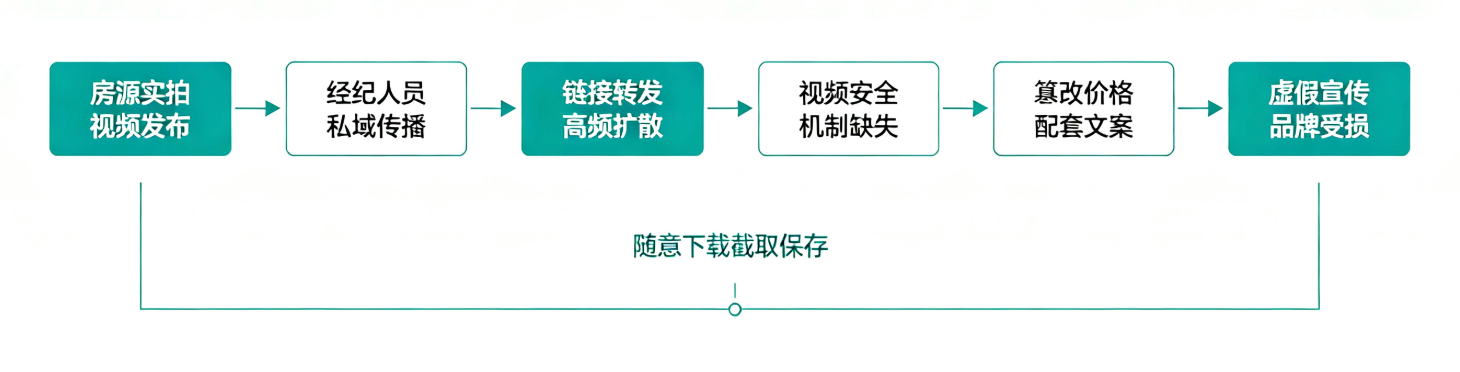
Housing‑rental service platforms host massive numbers of real‑estate agents. Private‑domain lead generation and link sharing constitute core customer‑acquisition approaches, resulting in high‑frequency and wide‑ranging circulation of listing videos. However, native video systems of platforms are not equipped with security mechanisms including encryption, anti‑leeching and access‑permission control. Video resources can be freely downloaded, captured and saved. To attract traffic and close deals, some agents arbitrarily alter captions, rental rates and supporting‑facility descriptions attached to official platform videos. This generates multiple promotional versions for the same listing within private‑domain channels. Misconduct such as low‑ball pricing for clickbait and misrepresentation of amenities occurs repeatedly. Such practices mislead tenants and harm consumer interests, disrupt standardized platform promotion frameworks, erode the platform’s positioning for authentic and transparent services, and significantly damage user trust and brand value.
(III) Rapid Listing Iteration Causes Low‑Efficiency Management of Massive Media Assets
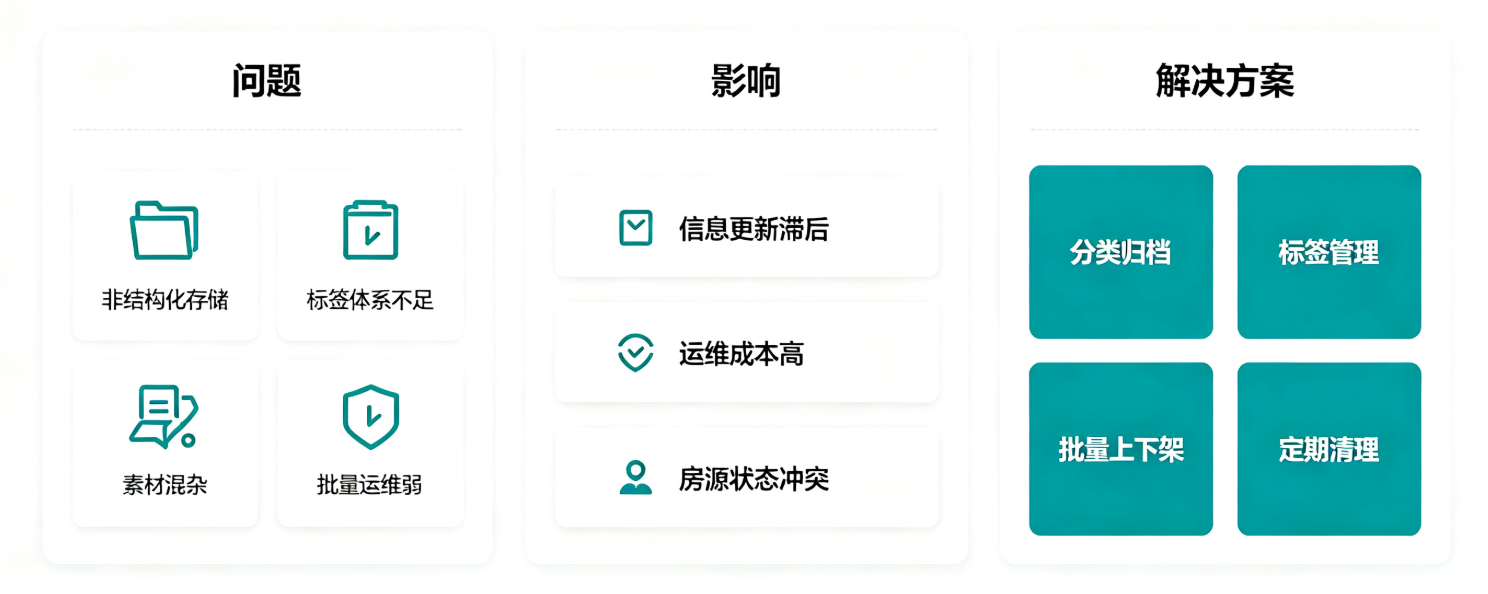
Rental listings feature high turnover and frequent updates. New listings go online, occupied properties become vacant for re‑rent, units undergo renovations and supporting facilities get upgraded on a regular basis, generating large volumes of iterated listing footage and commentary materials. Conventional platform storage models lack structured, tagged and refined management frameworks. Assets cannot be sorted and archived by dimensions such as location, unit type, rental bracket, listing status and publication date. New, active and expired materials are mixed together. Operation staff encounter difficulties in quick material retrieval as well as bulk publishing, removal and archiving. Expired listing videos often remain online, inconsistencies emerge between old and new materials, and listing information falls out of date. Manual maintenance costs surge while listing‑information updating efficiency declines sharply.
(IV) One‑Sided Behavioral‑Data Statistics Fail to Support Refined Operations
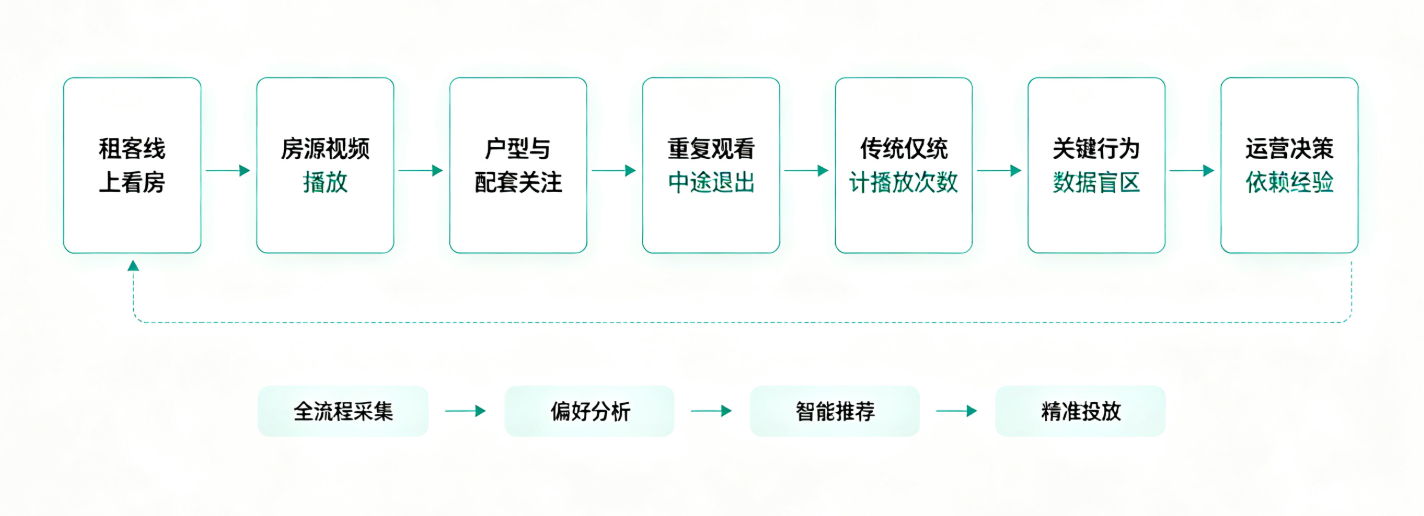
Traditional housing‑rental service platforms mostly track basic video play counts only, with narrow statistical dimensions. They cannot collect complete tenant behavioral data throughout the property‑viewing journey. Key metrics including viewing duration, playback drag‑and‑drop trajectories, repeat‑view frequencies for highlight segments and drop‑off points are largely unrecorded. Platforms cannot accurately analyze tenant preferences for unit layouts, amenity requirements, viewing priorities and decision‑making pain points. Listing recommendation algorithms, homepage traffic allocation, themed campaigns and traffic‑delivery strategies largely rely on subjective operator experience rather than data‑driven insights. This wastes platform traffic and hinders sustained improvements in listing exposure and deal‑conversion performance.
II. Achieving Refined Online Property‑Viewing Operations for Housing‑Rental Service Platforms
Polyv provides tailored solutions for dual‑end operation scenarios of housing‑rental service platforms. Addressing pain points including poor video‑playback experience, unregulated private‑domain dissemination, burdensome maintenance of massive assets and insufficient operational data, Polyv delivers an integrated video‑operation solution incorporating high‑definition playback, security protection, intelligent media‑asset management and full‑scope data feedback. It helps platforms standardize listing promotion practices, elevate user viewing experiences, cut maintenance costs and implement refined digital operations.
(I) Lightweight Uni‑App Deep Integration Enables Smooth High‑Definition Property Viewing across Terminals
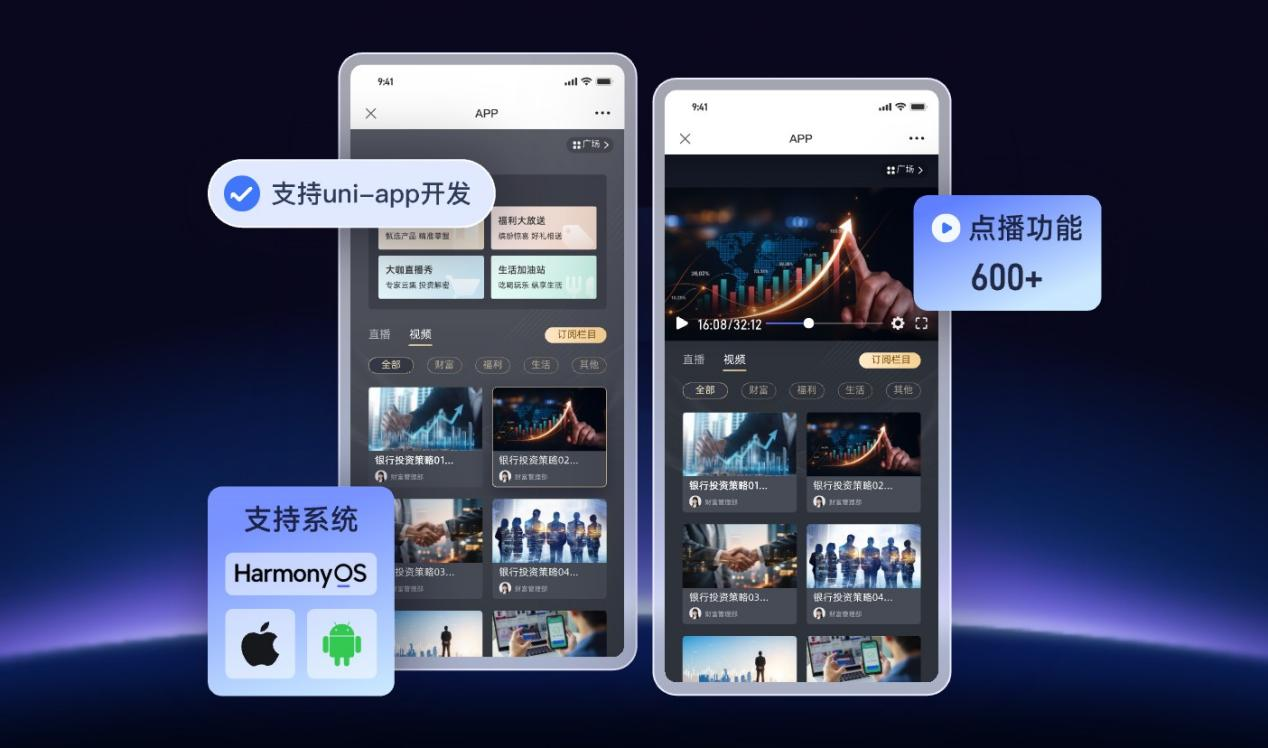
The solution offers a lightweight Uni‑App‑based dedicated video SDK for seamless embedding into existing mobile apps and WeChat Mini Programs. Platforms avoid heavy in‑house R&D workloads and achieve dual‑end deployment with minimal effort. Built‑in optimizations cover high‑definition decoding, adaptive resolution adjustment, weak‑network preloading and image stabilization. These capabilities mitigate common defects such as stuttering, blurriness and crashes in high‑definition listing‑video playback. Real‑world details including unit layouts, renovation finishes, indoor equipment and community surroundings are faithfully reproduced. Remote tenants enjoy improved online viewing experiences, complete initial listing screening more efficiently, and platform listing‑inquiry volumes as well as scheduled‑viewing conversion rates rise steadily.
(II) Full‑Link Video Encryption Enforces Unified Private‑Domain Promotion Standards
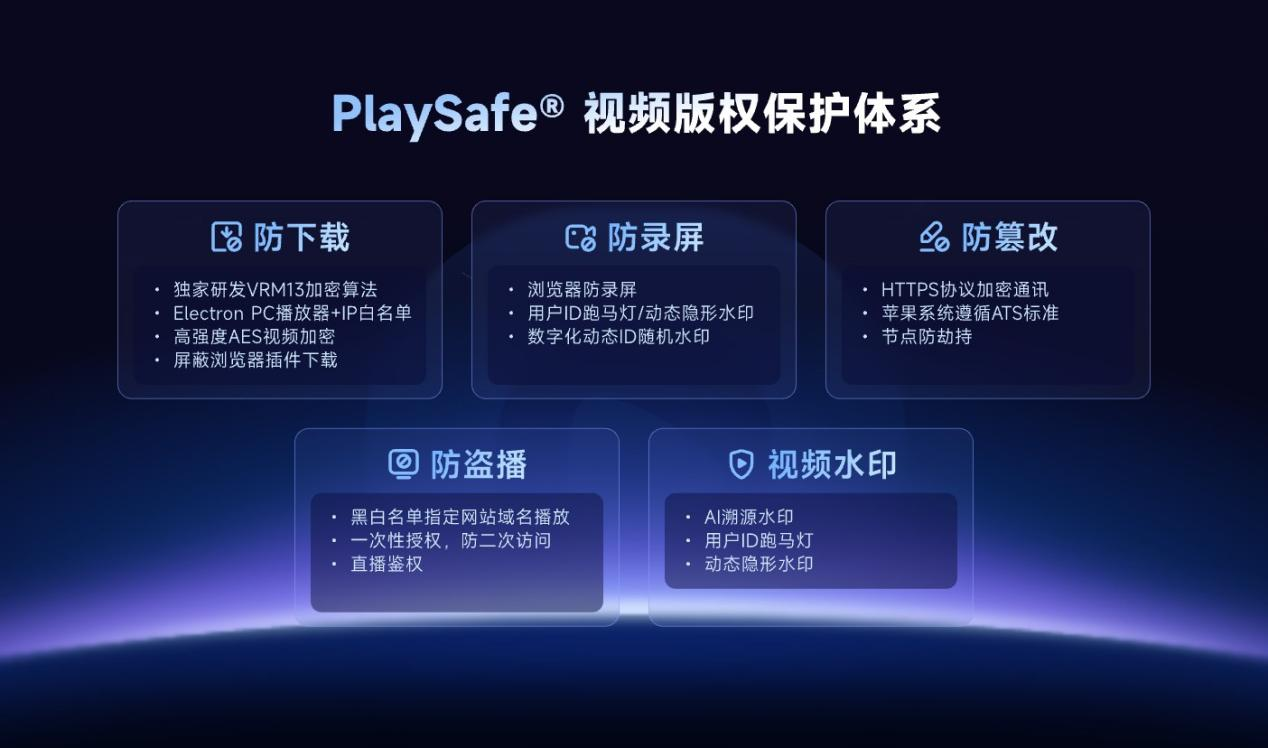
Powered by Polyv’s mature video‑security system, full‑link encryption safeguards videos: files are encrypted in cloud storage, original sources are blocked from downloading, and anti‑screen‑capture and anti‑tampering controls are enforced. Playback permissions for listing videos are strictly restricted to officially authorized platform portals, fundamentally deterring unauthorized video downloading, capturing and secondary editing. Agents conducting private‑domain outreach can only share standardized listing pages from the platform. Core information such as rental prices, unit specifications, amenity descriptions and listing status remains centrally governed by the platform. Unauthorized modifications and misleading packaging are prohibited. Clickbait low‑price marketing and false promotion are curbed, cross‑channel listing messaging is standardized, and the platform builds core competitive advantages anchored in “authentic listings, real‑scene footage and genuine pricing”.
(III) Enterprise‑Grade Structured Media‑Asset Library Empowers Efficient Bulk Material Operations
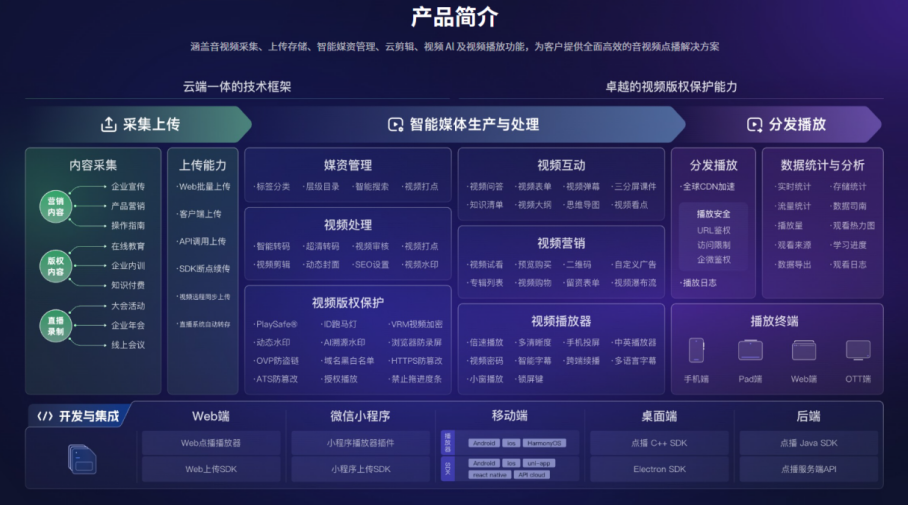
The enterprise‑grade structured media‑asset management system adapts to high‑frequency turnover and rapid circulation of rental listings. Multi‑dimensional custom tags covering geographic zones, unit types, rental ranges, listing categories and publication dates support refined classification and archiving of massive assets. Operators can perform bulk publishing for new listings, bulk removal for expired units and bulk archiving for obsolete materials. Media assets are clearly categorized by status: available for rent, pending occupancy, already leased and expired. Material clutter and outdated‑information risks are mitigated. Material‑management workflows for operation teams are streamlined, listing‑content iteration speeds up, online listing information stays accurate and real‑time, and manual maintenance costs decrease.
(IV) Full‑Scope Behavioral‑Data Collection and Feedback Underpin Data‑Driven Operational Decisions
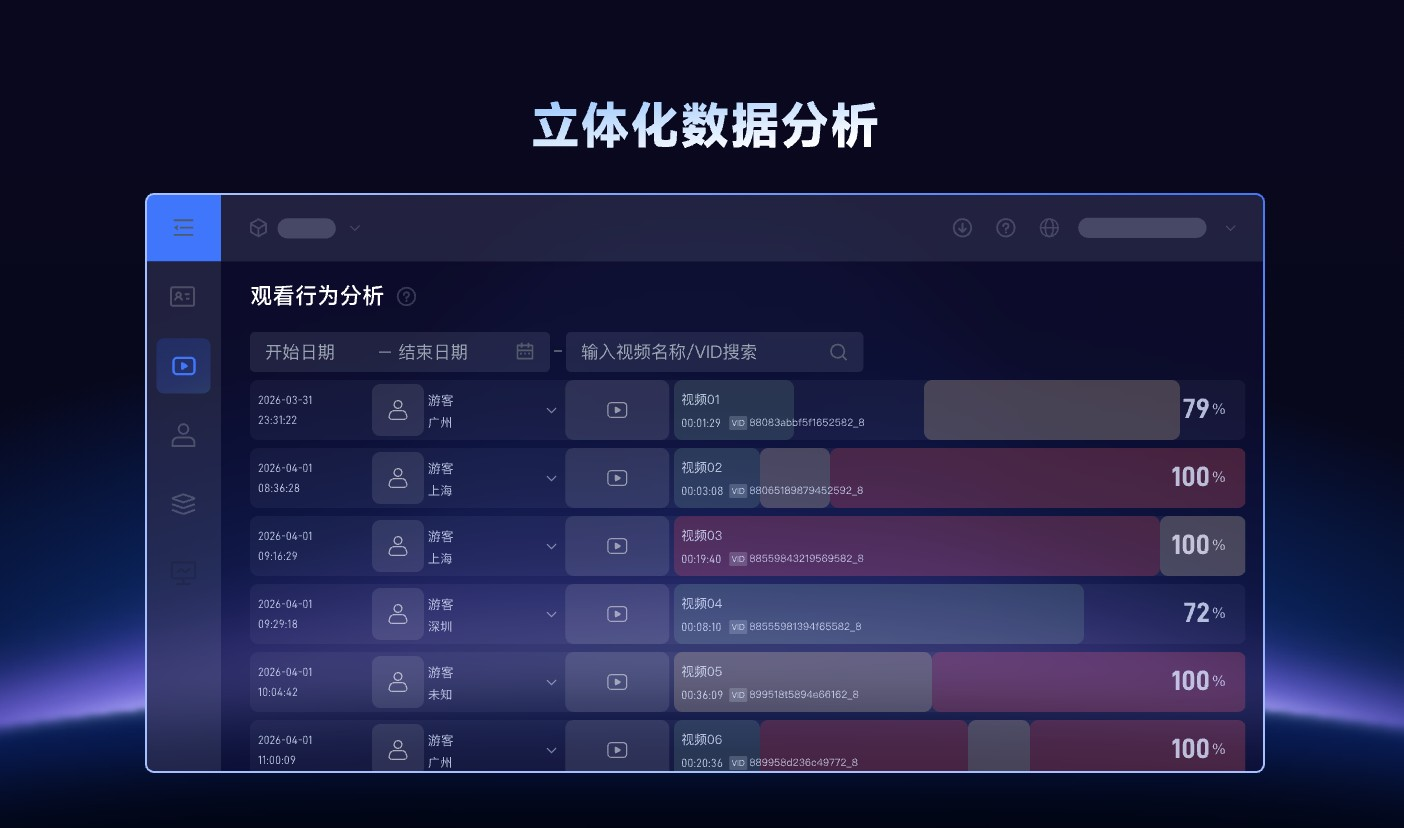
Comprehensive behavioral metrics are captured, including total viewing duration, playback drag‑and‑drop positions, repeat‑view counts for key segments and playback termination points. Standard APIs feed full‑scope user‑behavior data back into the platform’s native business backend, furnishing accurate inputs for algorithm iteration and operational decision‑making. Drawing on tenant viewing‑profiles, platforms can optimize listing‑recommendation algorithms, adjust homepage‑traffic layouts and design targeted campaigns to capture tenant demands precisely. Subjective‑experience‑driven operations give way to data‑enabled traffic distribution, user‑segmented operations and continuous content optimization. Platform traffic‑utilization rates and listing‑deal‑conversion performance improve holistically.
III. Core Business Values of the Solution
Fully aligned with core business requirements of the housing‑rental industry — online property viewing, compliant lead‑generation by agents, massive‑asset maintenance and data‑driven refined operations — this solution comprehensively addresses drawbacks of conventional video‑operation models. It empowers housing‑rental service platforms to build standardized, secure, efficient and data‑centric online video‑operation systems. Platform service quality and operational capabilities achieve comprehensive upgrades to support long‑term, high‑quality business growth.