How Higher‑Education Institutions Build a Lightweight Practical Training System?Construction Plan for Cloud‑Based Live‑Stream Practical Training Platform
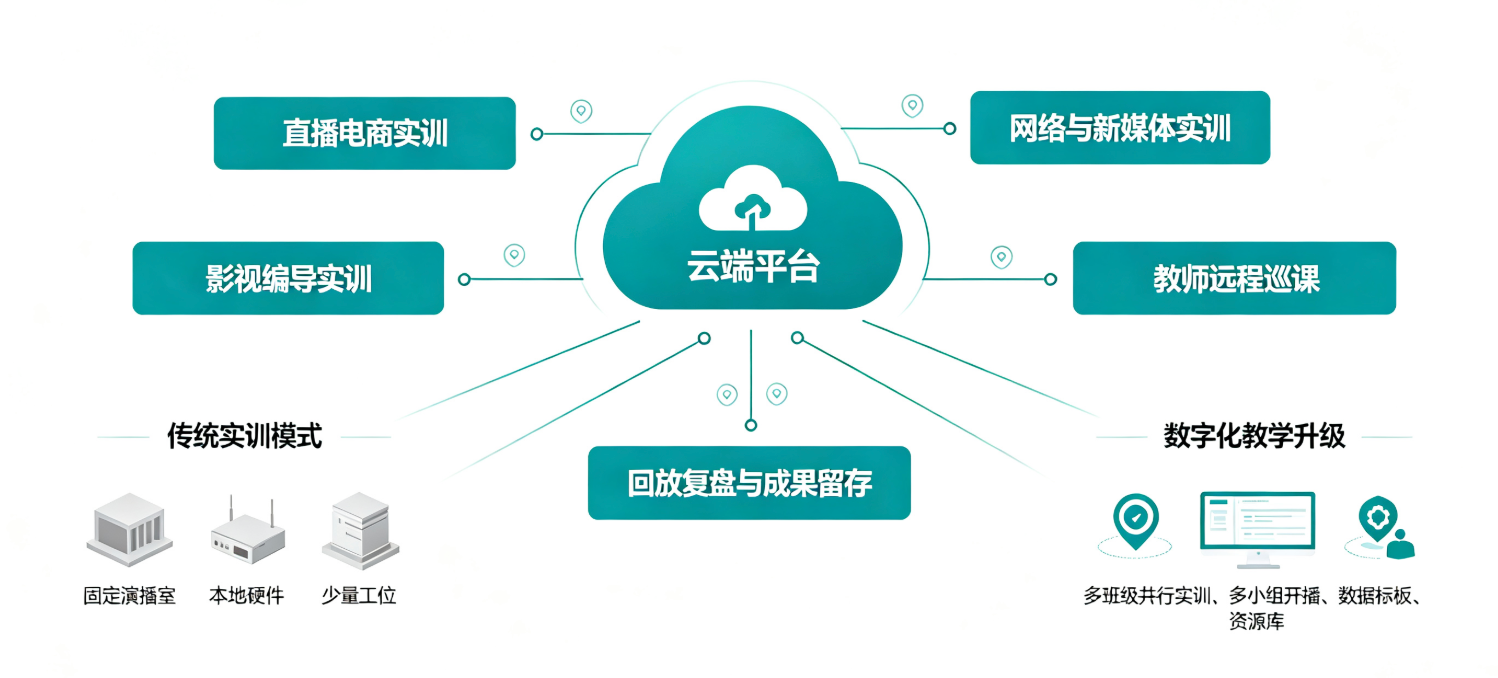
With the deepening of digital reform in vocational education, majors such as Live‑Stream E‑commerce, Online New Media and Film & Television Directing have growing demands for regular, high‑concurrency and review‑ready online practical training scenarios. Conventional practical‑training models in higher‑education institutions rely heavily on professional broadcast studios, on‑premise live‑switching hardware and fixed venues. These models incur high equipment investment costs, long deployment cycles and limited venue resources, making it difficult to support parallel regular live‑stream practical training for multiple classes and groups. Many institutions have mature in‑campus educational administration platforms, practical‑training management systems and teaching mini‑programs. They urgently need to supplement live‑stream practical‑training capabilities at low cost, so as to realize an integrated teaching mode covering student hands‑on live streaming, remote teacher class inspection, practical‑training playback and review, and unified achievement archiving. Meanwhile, the platform should support multiple reuse scenarios including school‑enterprise project live streaming, campus event broadcasting and online enrollment promotion. Against the pain points of traditional practical‑training models — high costs, poor concurrency, difficult self‑development, lack of data and insufficient resource accumulation — building a lightweight, integrable, data‑driven and resource‑rich cloud‑based live‑stream practical‑training platform has become a core imperative for institutions’ digital teaching upgrading.
I. Key Challenges in Institutional Live‑Stream Practical‑Training Development
(I) High Costs of Traditional Broadcast Studios and Insufficient Practical‑Training Concurrency
Traditional institutional live‑stream practical training is built around professional broadcast halls and complete sets of on‑premise live‑switching hardware. It brings high costs for hardware procurement, venue renovation and equipment maintenance, alongside lengthy construction and deployment cycles. Furthermore, limited fixed‑studio venues and equipment cannot accommodate parallel hands‑on live‑stream exercises for multiple classes and practical‑training groups. Students have to take turns for practical‑training sessions, which severely restricts training frequency and hands‑on practice time. This fails to meet the regular high‑frequency teaching requirements of majors like new media and live‑stream e‑commerce, and hinders improvement in students’ practical skills.
(II) High Barriers for Self‑Developed Live‑Stream Modules and Heavy Burden for System Integration & O&M
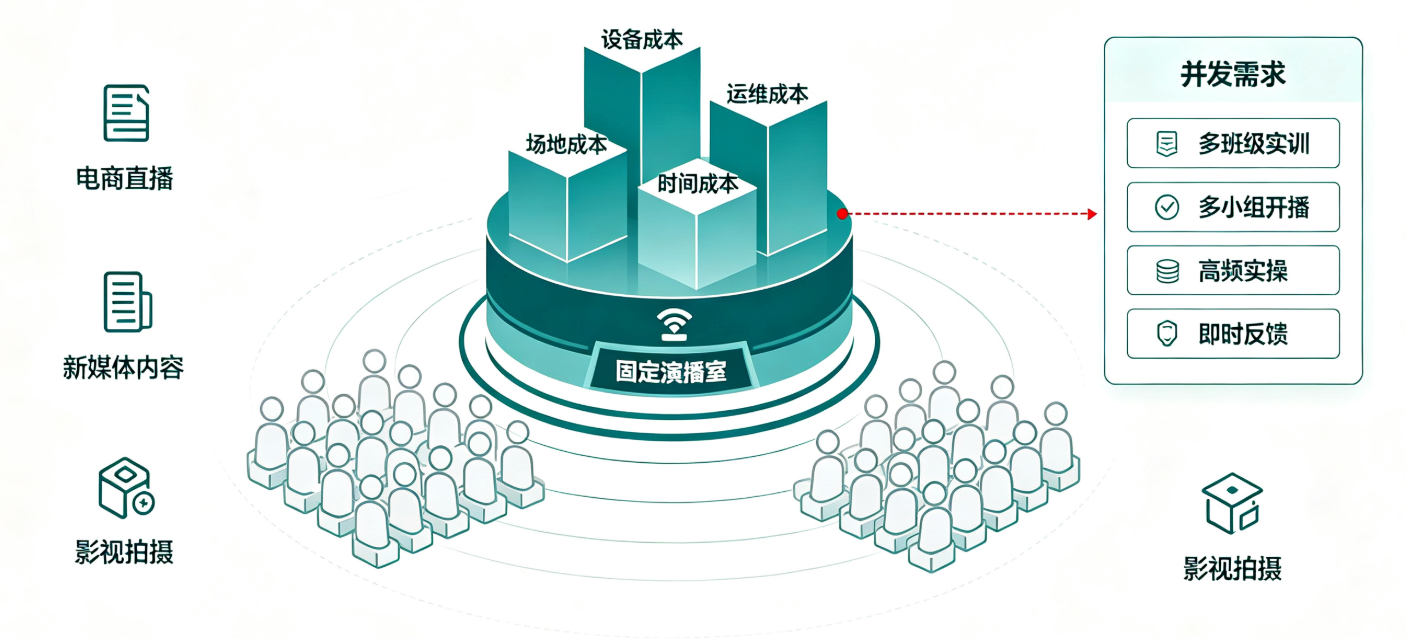
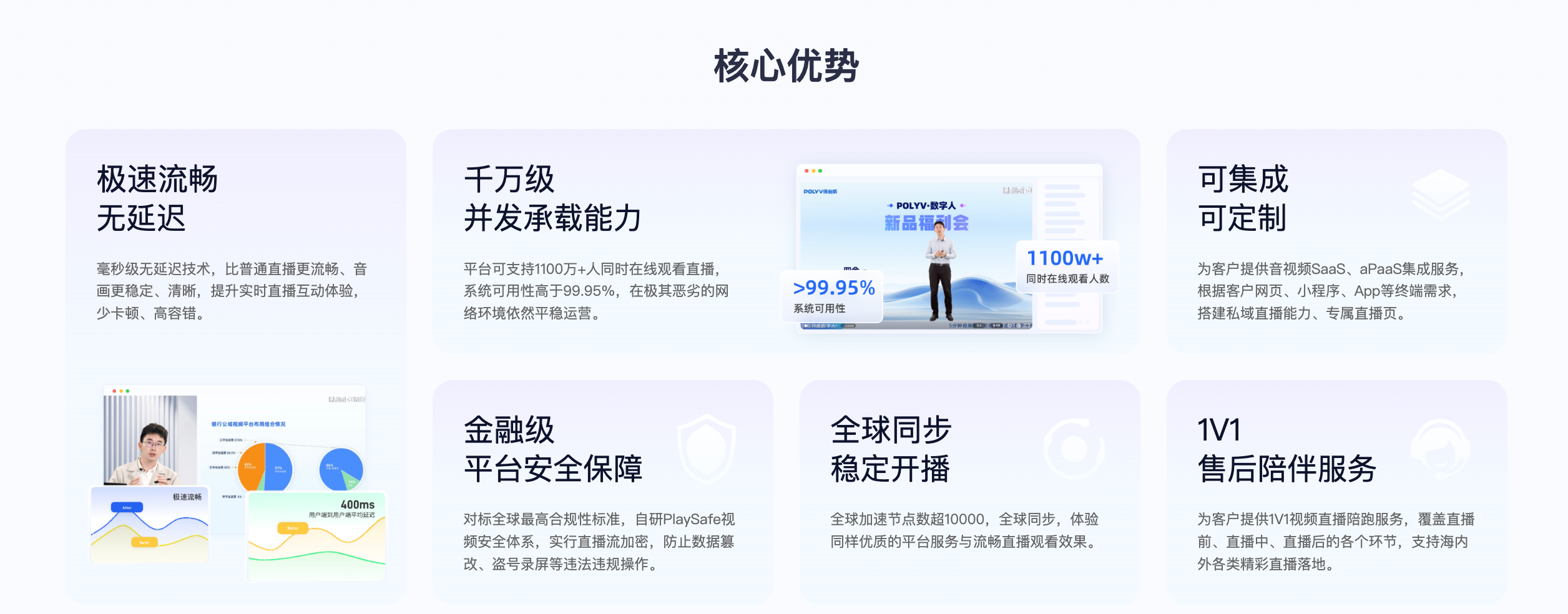
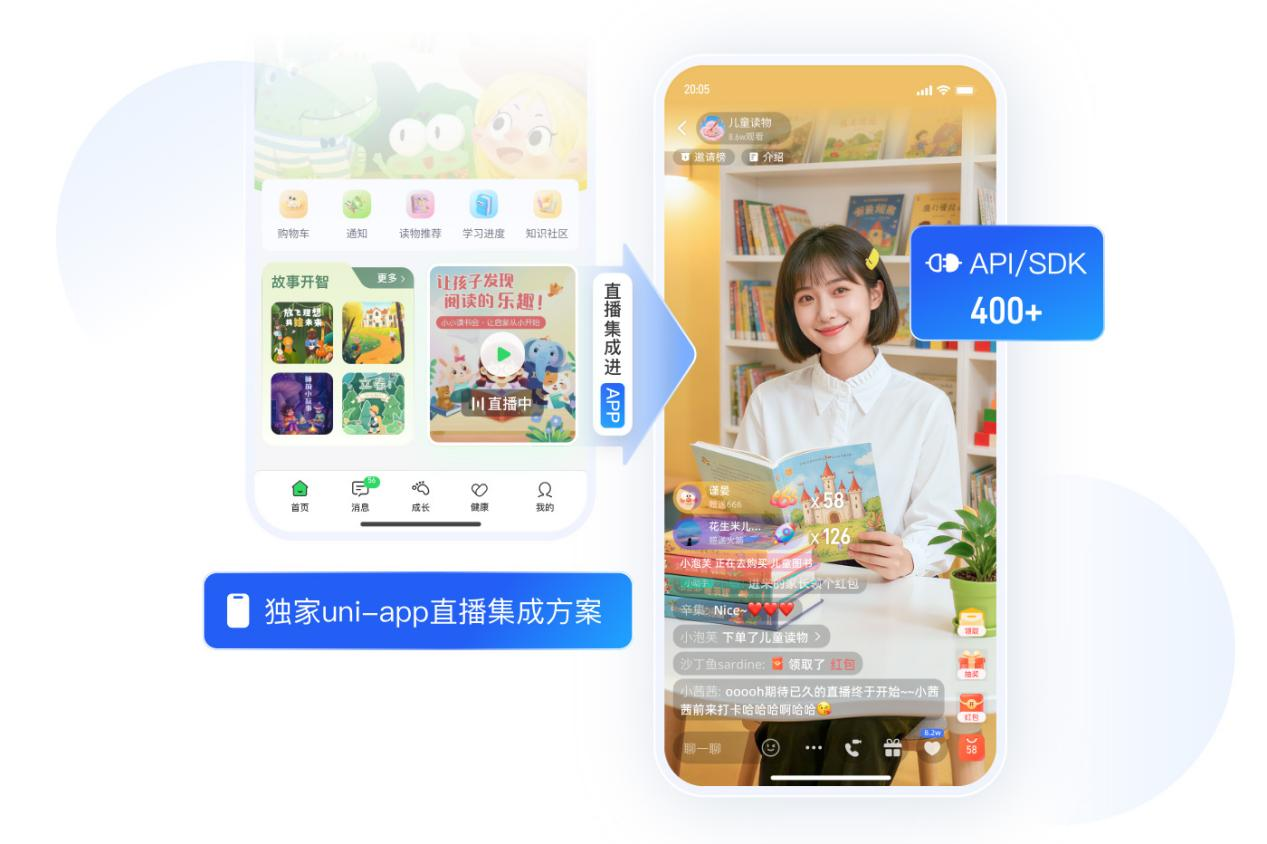
Higher‑education institutions already have digital teaching carriers such as in‑campus practical‑training management systems and educational administration platforms. They expect live‑stream practical‑training functions to be deeply embedded in existing systems for integrated teaching workflows. Nevertheless, audio‑video capabilities including live‑stream pushing, high‑definition playback, cloud‑based playback, high‑concurrency control and real‑time interaction require support from specialized technical teams. Self‑development by institutions means long development cycles, heavy manpower input, plus continuous subsequent costs for server deployment, bandwidth operation and system iteration. It involves extremely high technical barriers and operation‑and‑maintenance pressure with poor cost‑effectiveness.
(III) Lack of Practical‑Training Behavioral Data, No Data Support for Teaching Improvement
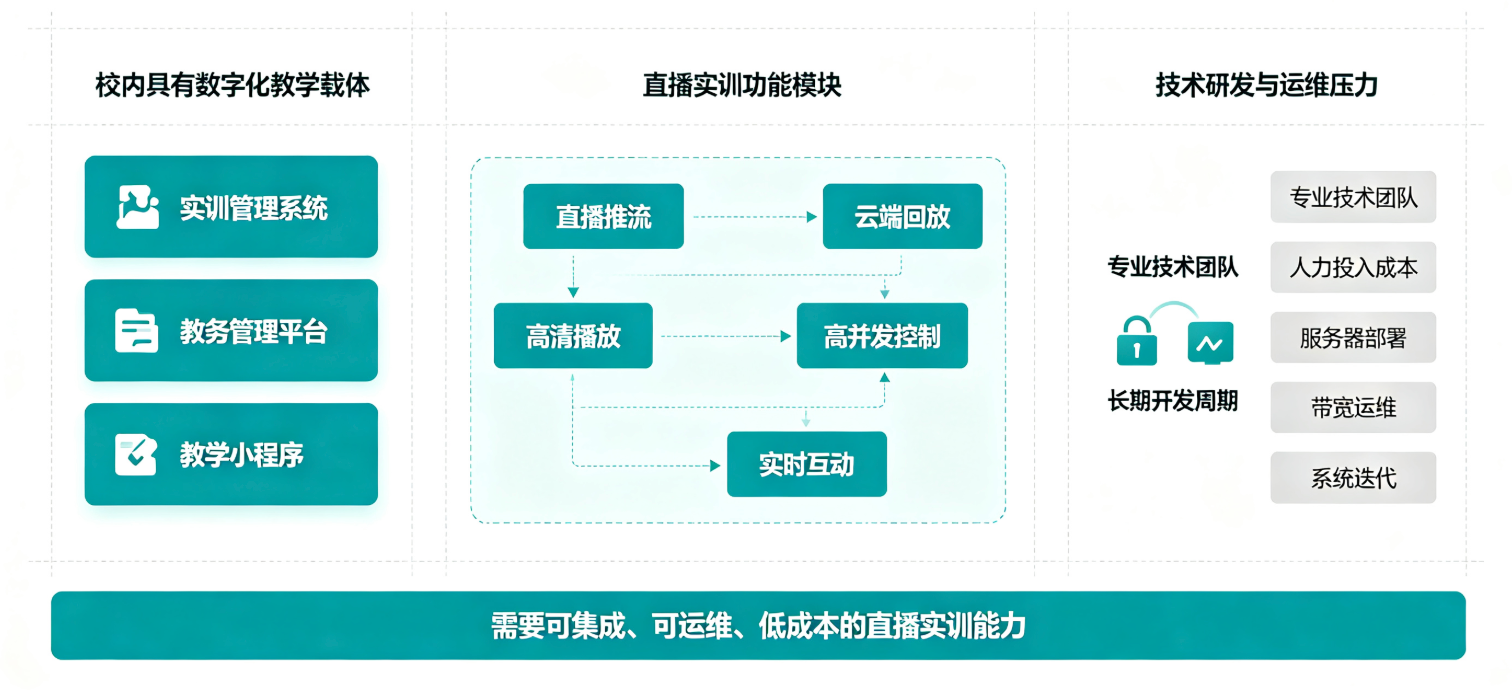
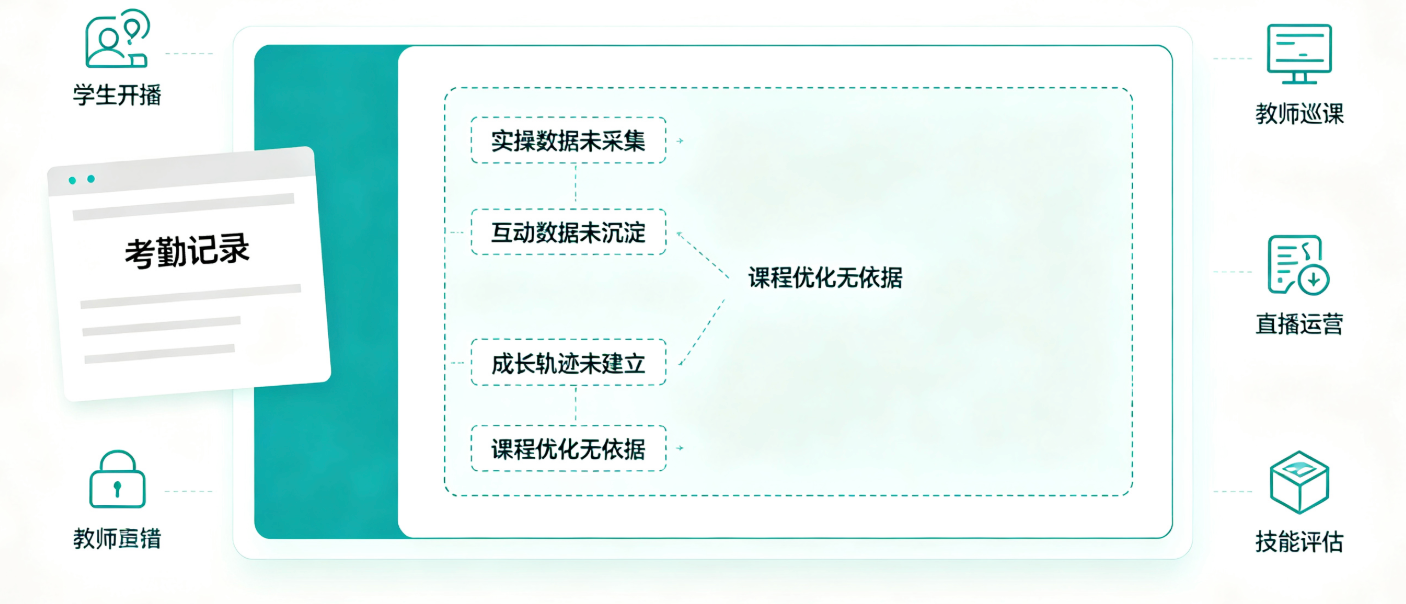
Traditional offline practical training and basic live‑stream modes can only record simple basic attendance information for student participation. They fail to collect multi‑dimensional behavioral data covering student live‑stream practice and interaction operations. Without standardized practical‑training data reports and growth files, teachers cannot continuously track each student’s practical‑skill development or accurately identify weaknesses in student performance. In addition, mass practical‑training data cannot be accumulated to provide scientific evidence for curriculum optimization, teaching reform and practical‑training program iteration.
(IV) Scattered Practical‑Training Materials and Difficult Accumulation of High‑Quality Teaching Resources
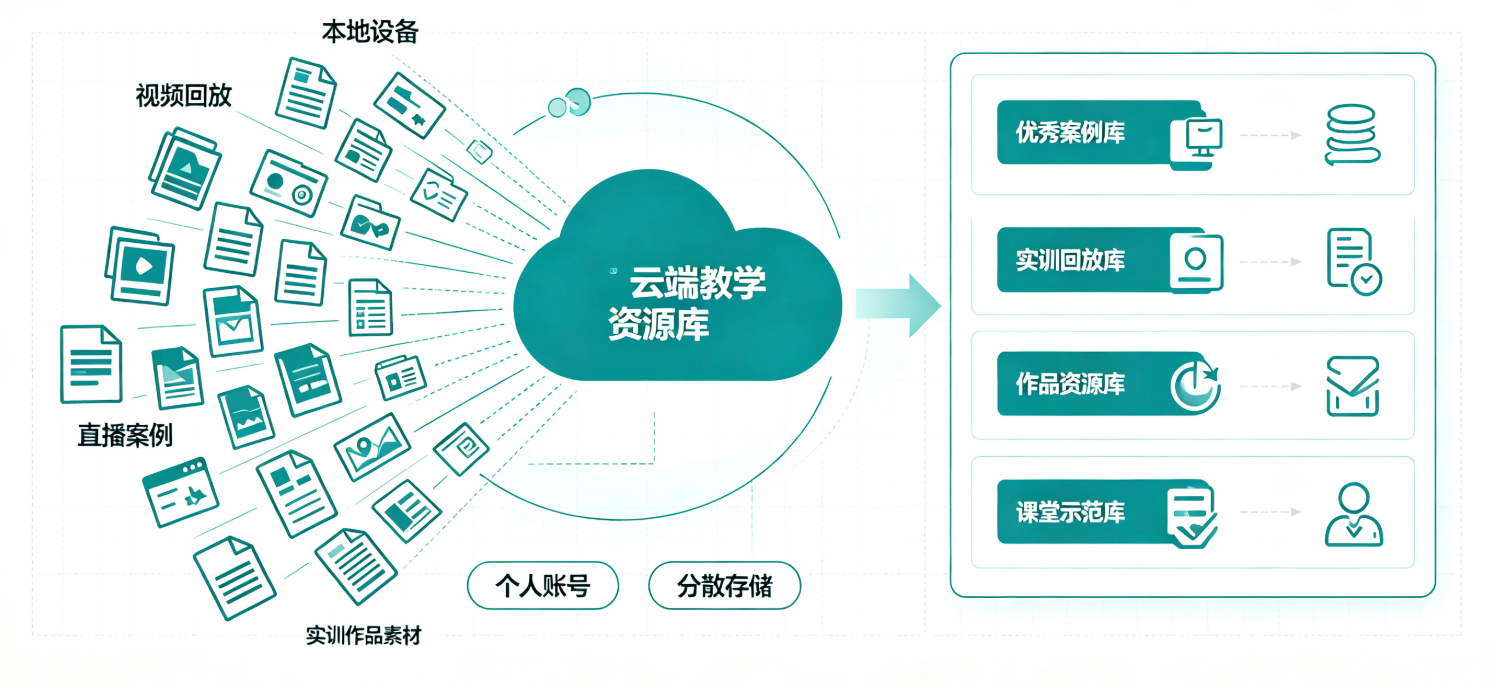
Students generate abundant high‑quality practice replays, outstanding live‑stream cases and standardized practical‑training deliverables during daily and skill‑specific training, which constitute core teaching resources for institutions. Under traditional models, however, live‑stream replays are stored dispersedly across local devices and personal accounts, without a unified cloud‑based media‑asset management system. Teachers cannot quickly filter, categorize or retrieve high‑quality practical‑training cases for classroom demonstration, skill evaluation and reference for new students. A large number of valuable practical‑training outputs cannot be converted into standardized professional teaching resource libraries, resulting in low reuse of teaching resources.
II. Building a Lightweight Institutional Live‑Stream Practical‑Training Platform
(I) Cloud‑Native Lightweight Architecture for Low‑Cost High‑Concurrency Practical Training
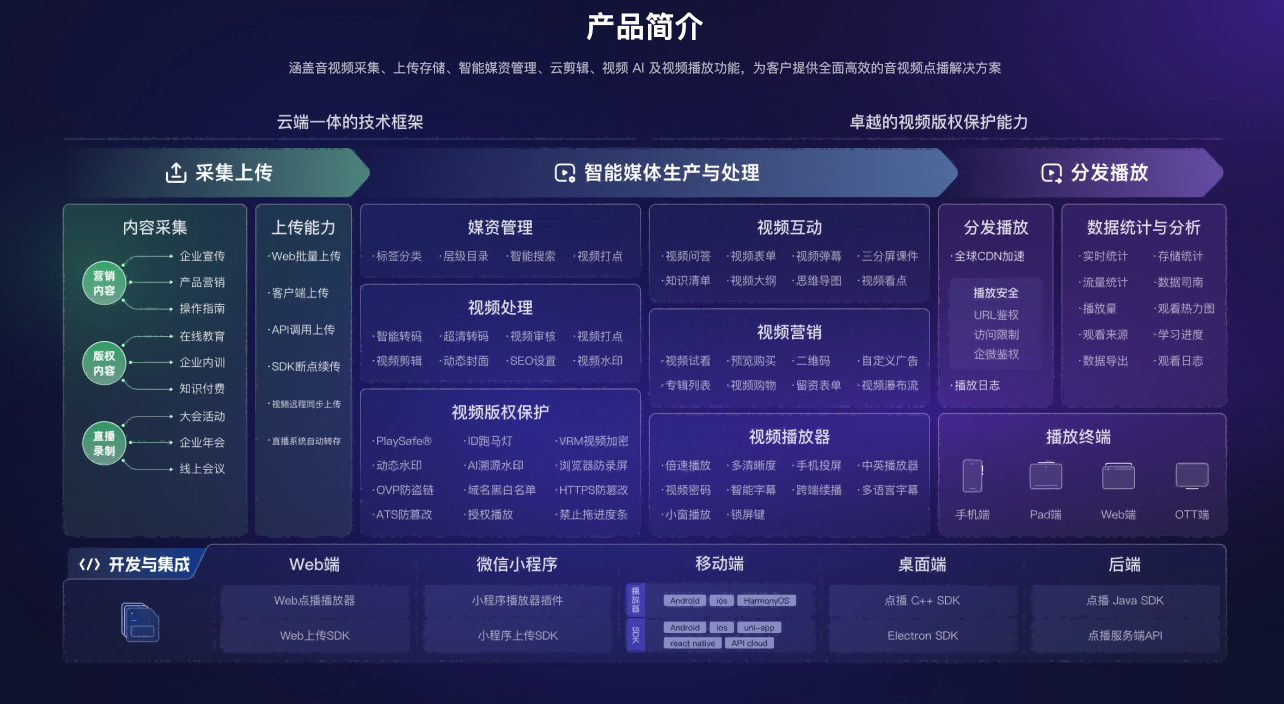
Adopting a fully cloud‑based live‑stream architecture, the solution moves away from hardware‑intensive and venue‑reliant broadcast‑studio building modes. No professional live‑switching equipment procurement or fixed‑site renovation is required. Using ordinary laptops, mobile phones and other common teaching devices, students can complete stream pushing, go live and conduct hands‑on exercises rapidly. Multiple classes and groups can carry out live‑stream practical training in parallel, greatly improving the utilization rate of training venues and equipment. Institutions can build regular live‑stream practical‑training positions without heavy hardware spending, shorten deployment cycles and fit the rhythm of large‑scale, high‑frequency professional practical teaching.
(II) Full‑Set Standardized Interfaces for Fast Integration with In‑Campus Teaching Systems
(III) Panoramic Practical‑Training Data Dashboard: Data‑Empowered Refined Teaching Management
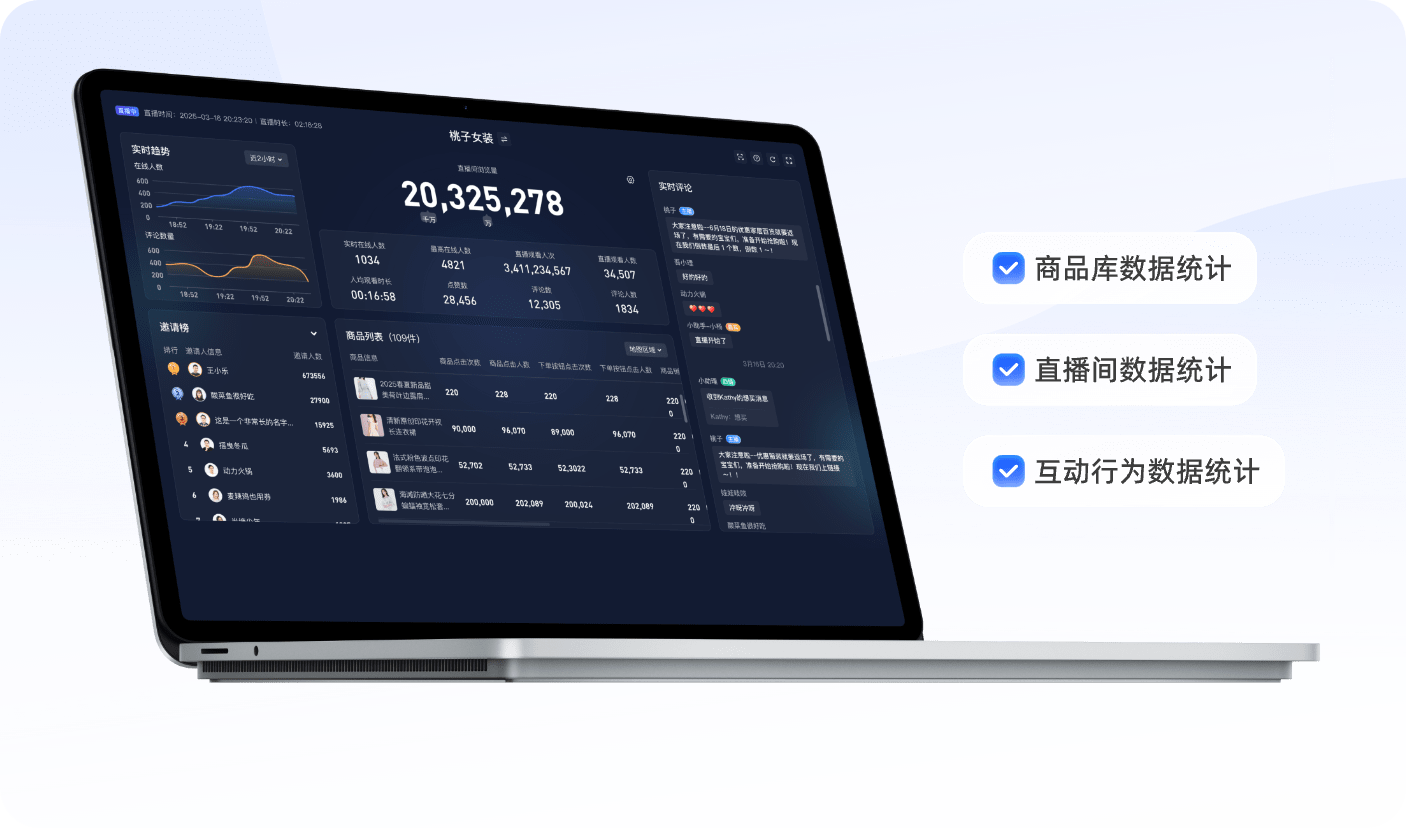
(IV) Intelligent Cloud‑Based Media‑Asset Archiving for Building Standardized Teaching Resource Libraries
A unified cloud‑based media‑asset management system is established. All student practical‑training live‑stream replays and high‑quality practice cases are automatically stored in the cloud. Intelligent tagging, classified archiving and centralized management are available by class, practical‑training project, skill theme and training cycle. Teachers can rapidly search and retrieve high‑quality practical‑training cases for classroom demonstration, skill assessment and instructional guidance for new students, realizing efficient reuse of valuable practical outputs. Long‑term accumulation will form systematic and standardized professional teaching resource libraries, continuously empowering routine teaching and practical‑training iteration.