Standardized‑Operation Solution for Real‑Scene Listing Videos: How Property‑Hunting Apps Optimize the Online Property‑Viewing Experience
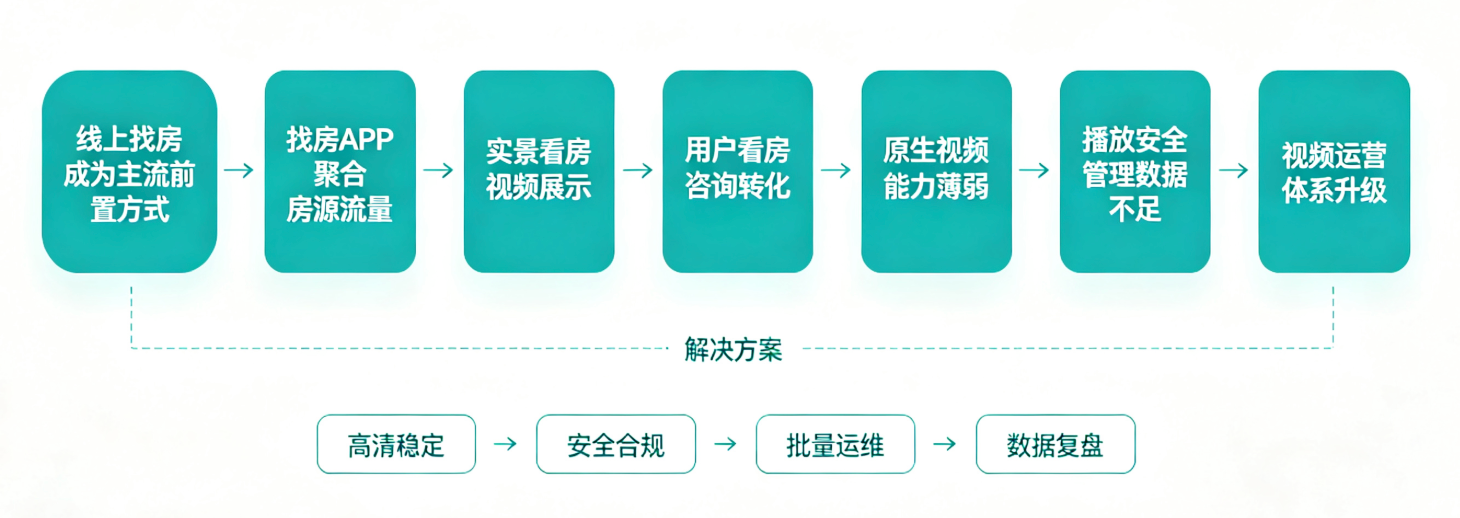
As online property searching has become a mainstream pre‑step for rental and home‑buying decisions, various property‑hunting apps have evolved into core hubs for real‑estate traffic aggregation, listing display and lead conversion. Compared with conventional graphic‑text presentation, real‑scene property‑viewing videos intuitively showcase unit layouts, renovation conditions, community environments and living amenities. They substantially lower users’ decision‑making costs and improve property‑search efficiency, serving as critical digital assets for platforms to boost user retention and inquiry conversion.
Nevertheless, most property‑hunting apps suffer from limited native video capabilities. Obvious deficiencies exist in high‑volume listing‑video distribution, agent private‑domain outreach, video‑content operation‑maintenance and user‑behavior analysis. Common pain points include sub‑par playback experience, rampant irregular listing promotions, disorganized material management and lack of data support for operations. These issues impair user property‑viewing experience and hinder upgrades toward compliant, refined and commercialized platform operations. Consequently, building a video‑operation system featuring high‑definition stability, security and compliance, batch‑processing‑enabled maintenance and reviewable data constitutes a key pathway for property‑hunting apps to improve quality‑and‑efficiency, standardize ecosystem governance and amplify traffic value.
I. Key Operational Pain Points for Videos on Property‑Hunting Apps
(I) Primitive Native Playback Capabilities Undermine Real‑Scene Viewing Experience
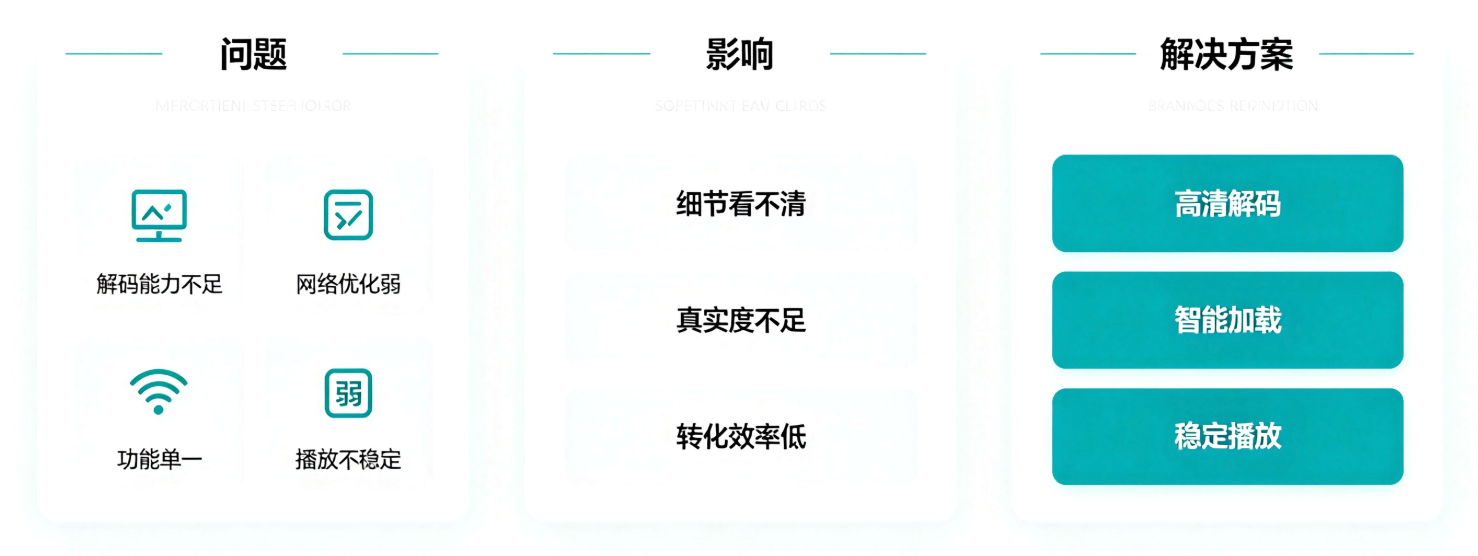
Most users conduct remote and cross‑city property selection via mobile apps and Mini Programs, placing high demands on video playback smoothness and image sharpness. The native players built into most property‑hunting apps have limited functions and lack professional decoding and network‑optimization modules. When rendering high‑definition on‑site listing footage, full‑house roaming videos and detailed commentary clips, frequent problems occur including slow loading, blurry visuals, stuttering, app crashes and abnormal playback under weak‑network conditions. Users fail to clearly observe housing details, spatial layouts and on‑site supporting facilities. The lack of realism in online viewing gives rise to expectation gaps and major discrepancies between online impressions and offline site visits, directly dragging down conversion rates for user inquiries, scheduled viewings and eventual transactions.
(II) Lack of Video Anti‑Theft Controls Fuels Unregulated Private‑Domain Lead Generation
Property‑hunting platforms host large numbers of resident agents. Private‑domain forwarding and short‑video lead generation represent core customer‑acquisition channels, leading to extremely frequent circulation of listing videos. However, native video systems on these platforms have no encryption, anti‑piracy or anti‑tampering safeguards. Video assets can be freely downloaded, screen‑captured and re‑edited. To grab traffic and compete for prospective clients, some agents arbitrarily alter listing prices, conceal housing defects and falsify amenity information. They deploy clickbait tactics using low‑price misleading videos, resulting in chaotic online listing information and pervasive false advertising. Such malpractices seriously mislead users and violate consumer rights, while corrupting the authentic‑listing ecosystem and damaging platform reputation and user trust.

(III) Rapid Listing Iteration Creates Cumbersome Maintenance for Massive Video Assets
Resale and rental properties feature high turnover. Every day, numerous new listings go live, properties are rented or sold, prices are adjusted, units are renovated and listings are taken down or reset. This generates huge volumes of on‑site video materials accumulated on platforms. Traditional file‑management modes lack standardized categorization, tagged archiving and bulk‑operation capabilities. Active, pending‑rent, sold‑out and unpublished materials get mixed together. Operation staff struggle to rapidly filter content, perform bulk publishing‑and‑removal and clean up obsolete assets. Expired videos often remain online, conflicts emerge between old and new listing information, and ghost stale listings persist. High manual maintenance costs and slow content‑update speeds make it hard to keep pace with the high‑frequency iteration rhythm of real‑estate inventories.

(IV) Limited User‑Behavior Data Hinders Refined Operational Decision‑Making
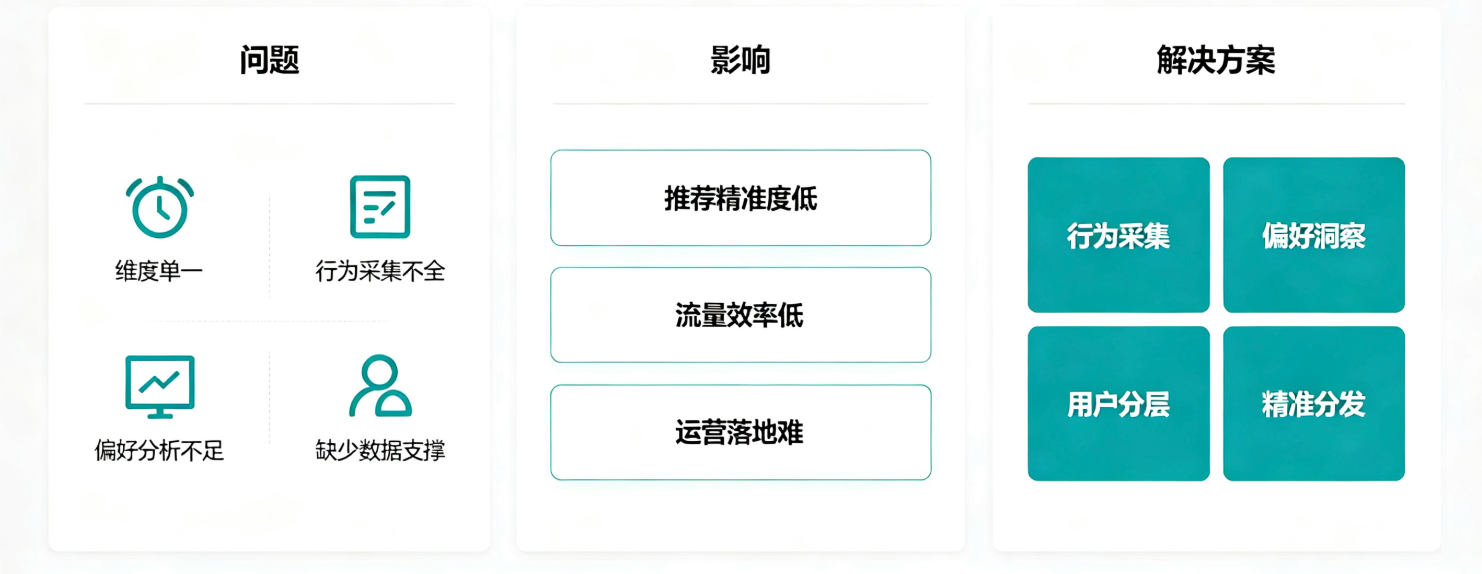
Ordinary property‑hunting apps only track basic playback metrics and cannot capture granular full‑funnel user viewing behaviors. Fine‑grained indicators such as viewing duration, re‑watch frequency for key segments, playback drag‑and‑drop trajectories, drop‑off points and frequently‑focused unit types go largely uncollected. Platforms cannot accurately identify user housing preferences, selection pain points and living requirements. Listing recommendation logic, homepage traffic allocation, themed campaigns and traffic‑delivery strategies are largely driven by subjective operator experience rather than data insights. User‑segmented operations and precise content distribution remain out of reach, resulting in low traffic‑utilization efficiency, insufficient high‑intent prospect mining and barriers to implementing refined operations.
II. How Can Property‑Hunting Apps Upgrade the Online Property‑Viewing Experience?
Polyv is deeply tailored for core scenarios of property‑hunting apps: real‑scene property viewing, listing showcase, compliant agent lead generation, massive‑asset maintenance and refined user‑centric operations. It delivers a standardized video solution integrating high‑definition playback, video‑security protection, structured media‑asset management and full‑scope data feedback. Targeting prominent pain points including poor playback performance, rampant irregular content dissemination, low maintenance efficiency and data scarcity, the solution empowers property‑hunting apps to elevate user experience, standardize platform ecosystems, cut costs, boost efficiency and realize data‑driven precise operations.
(I) In‑Depth Lightweight SDK Adaptation Enables High‑Definition and Smooth Playback across Terminals
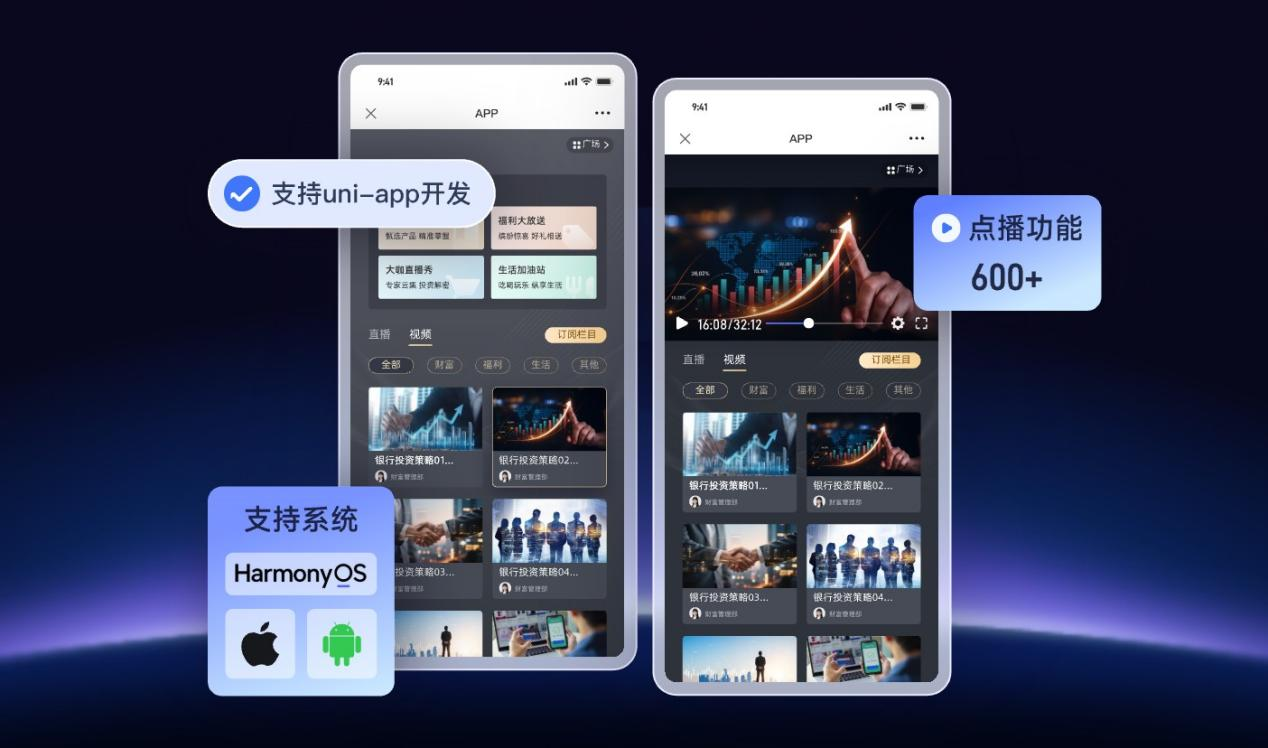
A standardized Uni‑App video SDK supports lightweight, rapid integration into property‑hunting apps and their matching Mini Programs. Heavy in‑house R&D expenditures are avoided while full‑terminal adaptation is quickly accomplished. Built‑in professional capabilities cover high‑definition decoding, weak‑network preloading, adaptive resolution adjustment and intelligent image optimization, effectively resolving stuttering, blurriness, crashes and slow loading for high‑definition listing videos. Real‑world elements including housing‑unit details, renovation status, spatial dimensions and community amenities are faithfully reproduced. The remote property‑viewing experience is significantly enhanced, gaps between online previews and offline inspections are narrowed, and user willingness to submit inquiries and book site visits improves measurably.
(II) Full‑Link Video‑Security Protection Regulates Private‑Domain Lead‑Generation Ecosystem
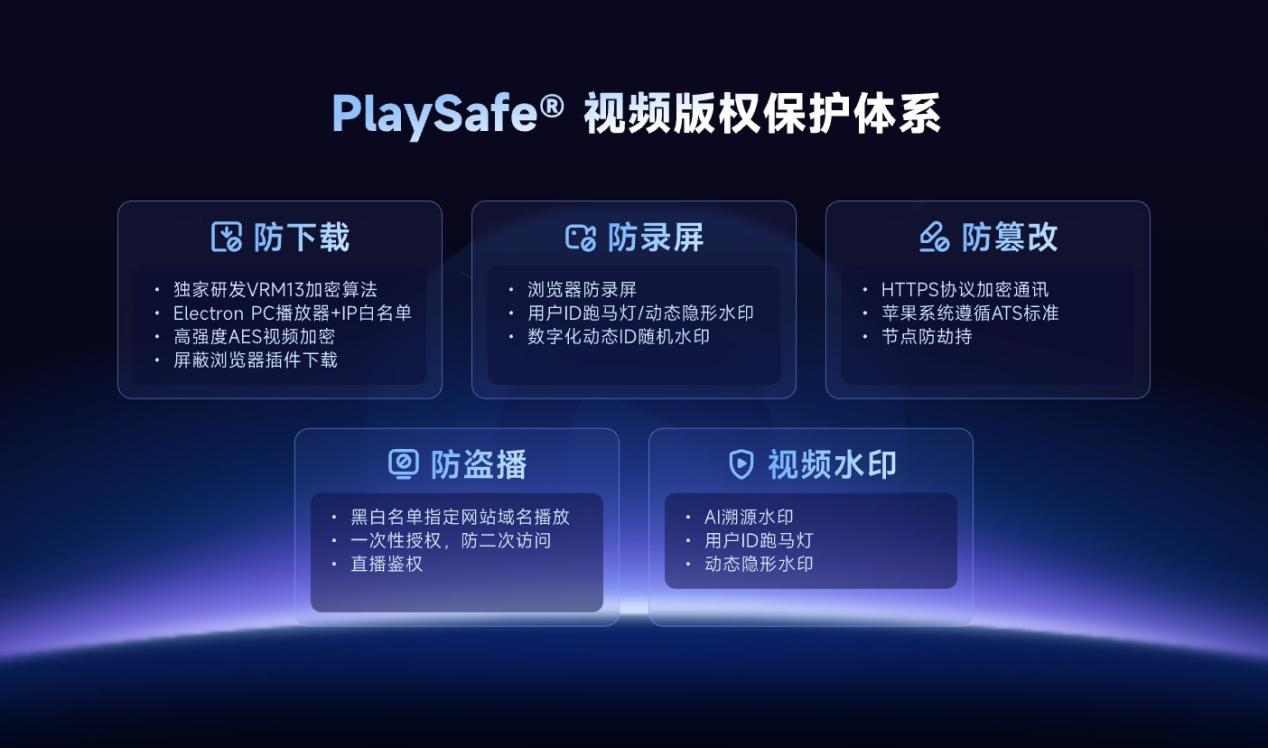
The PlaySafe® full‑link video copyright‑protection system deploys multi‑layer safeguards including encrypted cloud storage, original‑source download blocking, anti‑screen‑capture controls, anti‑tampering mechanisms and domain‑name anti‑leeching. It governs listing‑video dissemination permissions from the source. Real‑scene listing videos may only be played via officially‑authorized platform portals, putting an end to unauthorized downloading, editing, appropriation and tampering. When conducting private‑domain outreach, agents can only share standardized listing pages from the platform. Core information including listing prices, unit specifications, amenity descriptions and property status remains centrally controlled by the platform and cannot be arbitrarily modified or misrepresented. Clickbait low‑price marketing and false promotion are effectively curbed, unified cross‑channel listing communication standards are enforced, and the platform’s authentic and trustworthy listing ecosystem is safeguarded.
(III) Structured Intelligent Media‑Asset Library Supports Efficient Bulk Maintenance of Listing Materials
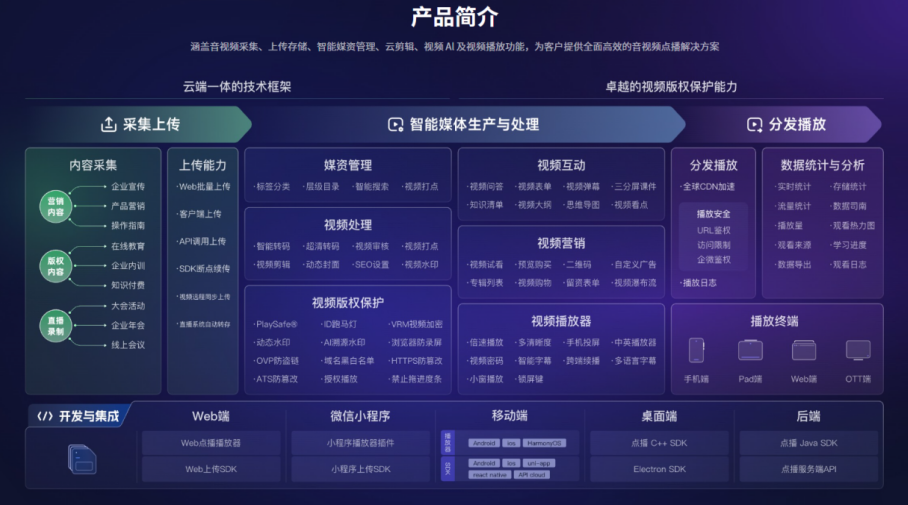
The enterprise‑grade structured media‑asset‑management system aligns with the business characteristics of high‑turnover and fast‑iterating real‑estate inventories. Custom tags support archiving by dimensions such as unit layout, floor area, price bracket, listing category, publication status and geographic location. Operators can bulk‑publish new‑listing videos, bulk‑take‑down invalid listings and bulk‑archive obsolete materials. Assets are clearly classified as active for sale/rent, pending occupancy, completed transaction and stale expired content. Material clutter, information obsolescence and conflicts between old and new content are fundamentally mitigated. Manual maintenance burdens are greatly reduced; listing‑content updating becomes faster and more accurate, ensuring platform listing information stays real‑time, valid, authentic and compliant.
(IV) Full‑Scope Behavioral‑Data Feedback Powers Precise and Refined Operations
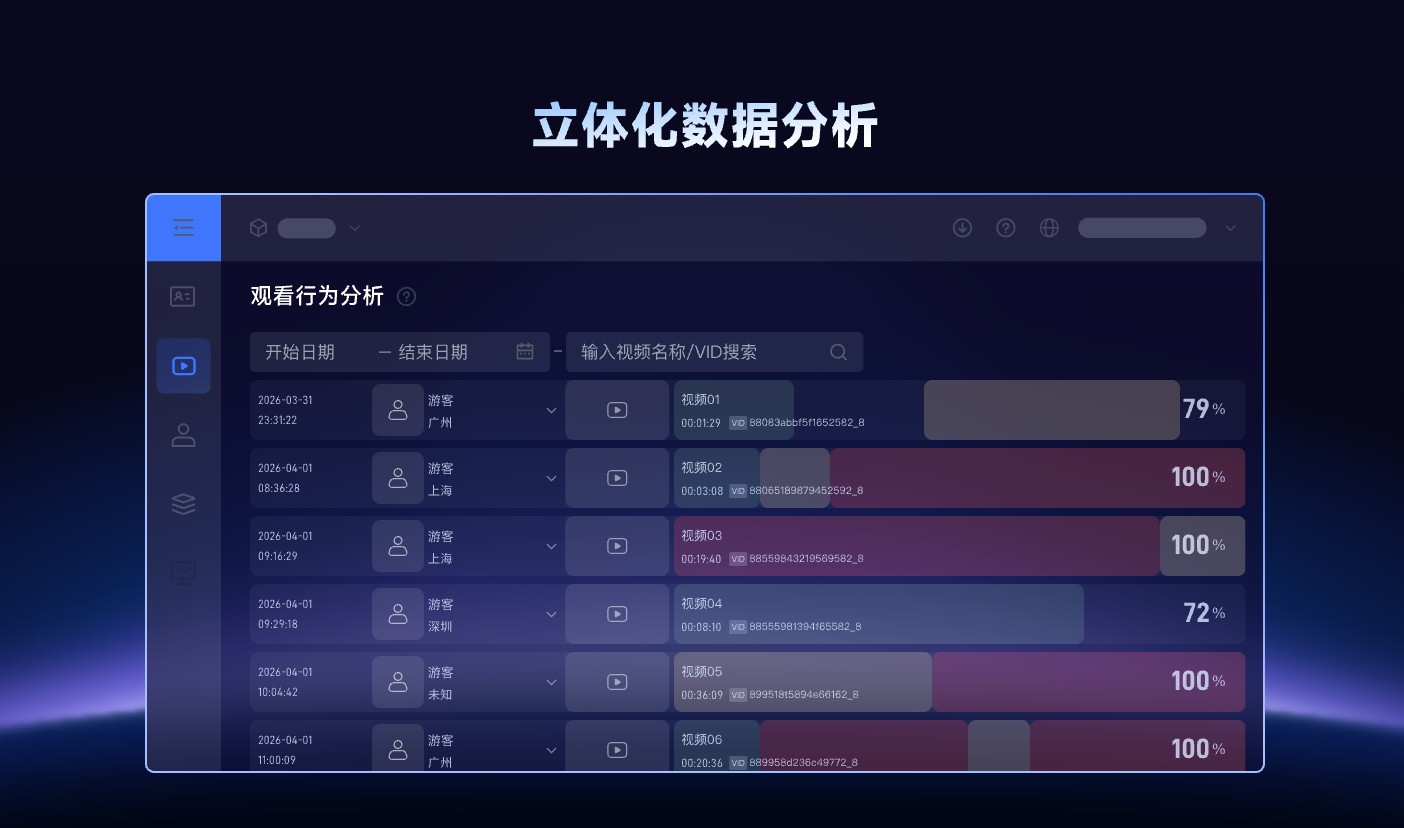
The system automatically collects multi‑dimensional user property‑viewing behavioral data, covering fine‑grained metrics such as total viewing duration, playback progress, drag‑and‑drop trajectories, repeat‑view counts for key segments and playback termination points. Real‑time data transmission to the platform’s business backend is available via standard APIs, furnishing solid data foundations for user‑profile construction, listing‑recommendation‑algorithm optimization and traffic‑strategy adjustment. Drawing on user housing‑search preferences, platforms can realize accurate listing distribution, segmented user operations and targeted campaign outreach. Legacy experience‑driven operation modes are replaced. Platform traffic value is maximized, high‑quality prospect‑mining efficiency rises, and overall transaction‑conversion performance improves.
III. Core Business Values Delivered by the Solution
Precisely matching the core demands of property‑hunting apps — user‑experience upgrade, content‑compliance governance, efficient material maintenance and refined traffic operations — this solution comprehensively addresses deficiencies in traditional video‑operation workflows. It helps property‑hunting apps build a high‑definition, secure, efficient and intelligent video‑operation system, and continuously improves platform user experience, compliance capabilities and commercial operational value.