How to Achieve Compliant Live Streaming for University Academic Lectures? Digital Solutions for Academic and Teaching‑Research Activities
Against the advancement of digital transformation in higher education, university academic lectures, expert sharing sessions and inter‑institutional academic seminars serve as vital vehicles for institutional scientific research exchange, faculty development and teaching‑research knowledge accumulation. Cross‑university joint lectures, remote attendance by off‑campus teachers and students, and invited exchanges with external scholars have become regular teaching‑research scenarios, making live streaming a primary channel for academic communication in higher‑education institutions. Public live‑streaming platforms feature low access thresholds, loose permission controls and inadequate data retention capabilities. They fail to satisfy universities’ unique requirements for academic privacy, cross‑region stability, archive‑ready materials and data‑driven review. Risks including unintended leakage of academic content, playback stuttering for remote participants, loss of lecture footage and missing teaching‑research data frequently occur. Therefore, building a proprietary academic live‑streaming system with controllable permissions, stable playback, persistent asset storage and traceable data has become an essential requirement for universities to standardize academic exchanges, complete teaching‑research archives and advance smart‑campus construction.
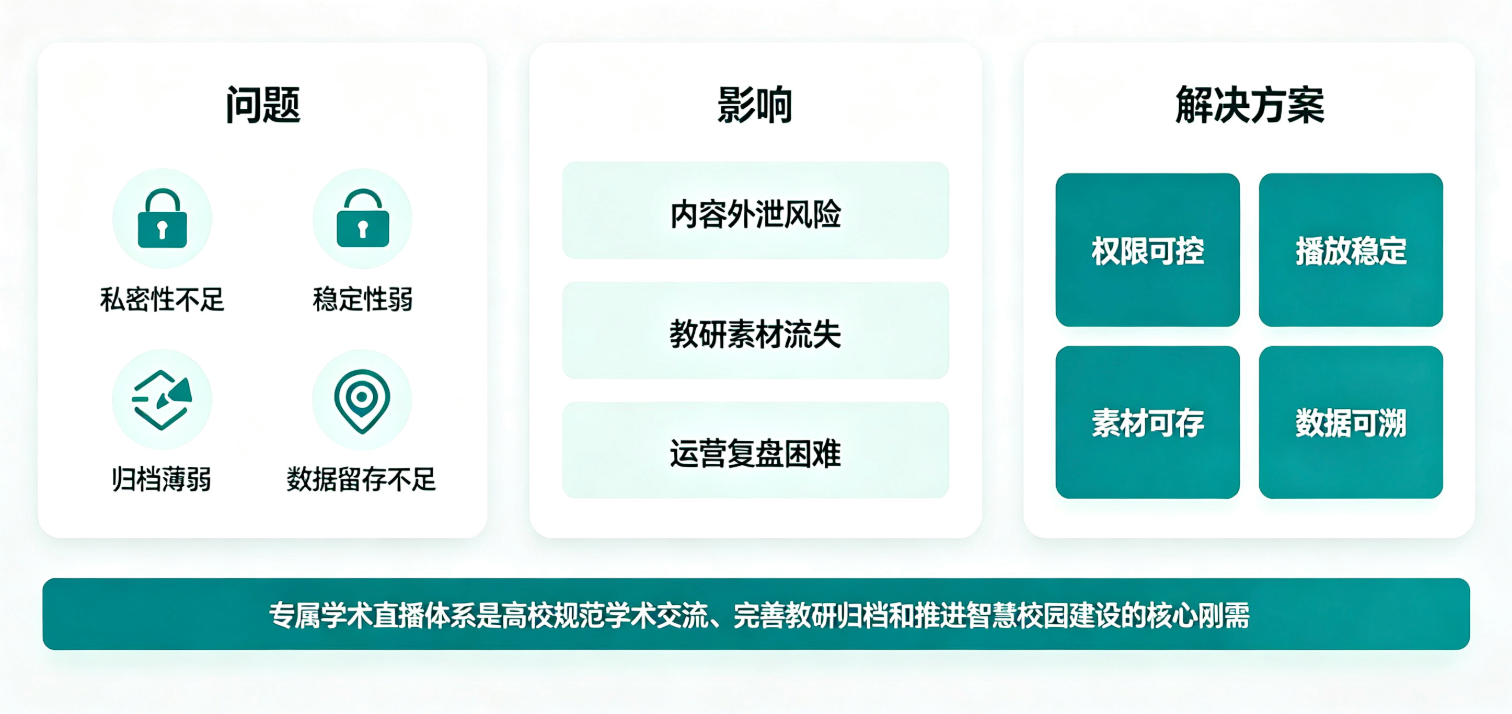
I. Core Pain Points of Live Streaming for University Academic Lectures
(I) Open Access on Public Platforms and Risks of Academic Content Leakage
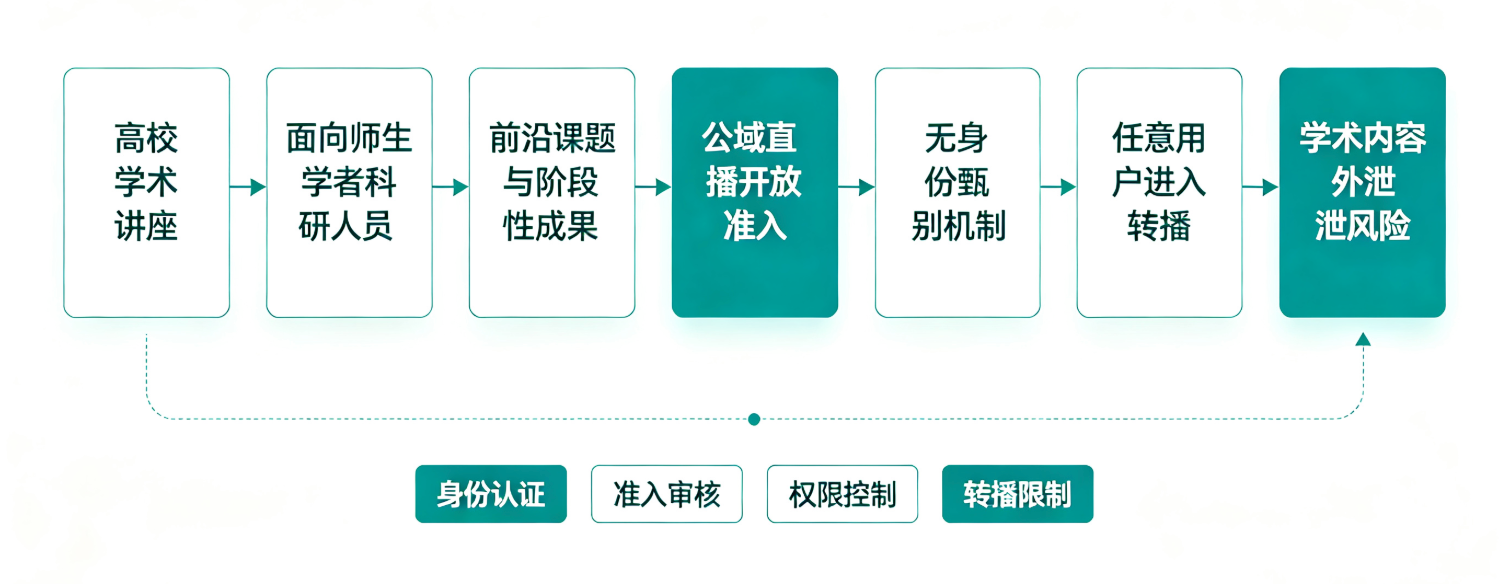
Academic lectures in universities target well‑defined audiences: internal faculty and students, invited external scholars and research personnel. Certain frontier‑topic presentations and phased research exchanges contain private, institution‑exclusive content unsuitable for open public dissemination. Conventional public live‑streaming platforms impose no entry restrictions or identity verification. Any internet user may enter live rooms freely and re‑broadcast sessions, causing proprietary academic resources to spread externally. This compromises the privacy of academic exchanges and may lead to exposure of preliminary research findings and unpublished academic viewpoints, hindering secure governance and standardized dissemination of institutional academic outputs.
(II) Uneven Cross‑Regional Network Conditions and Inconsistent Remote Viewing Experience
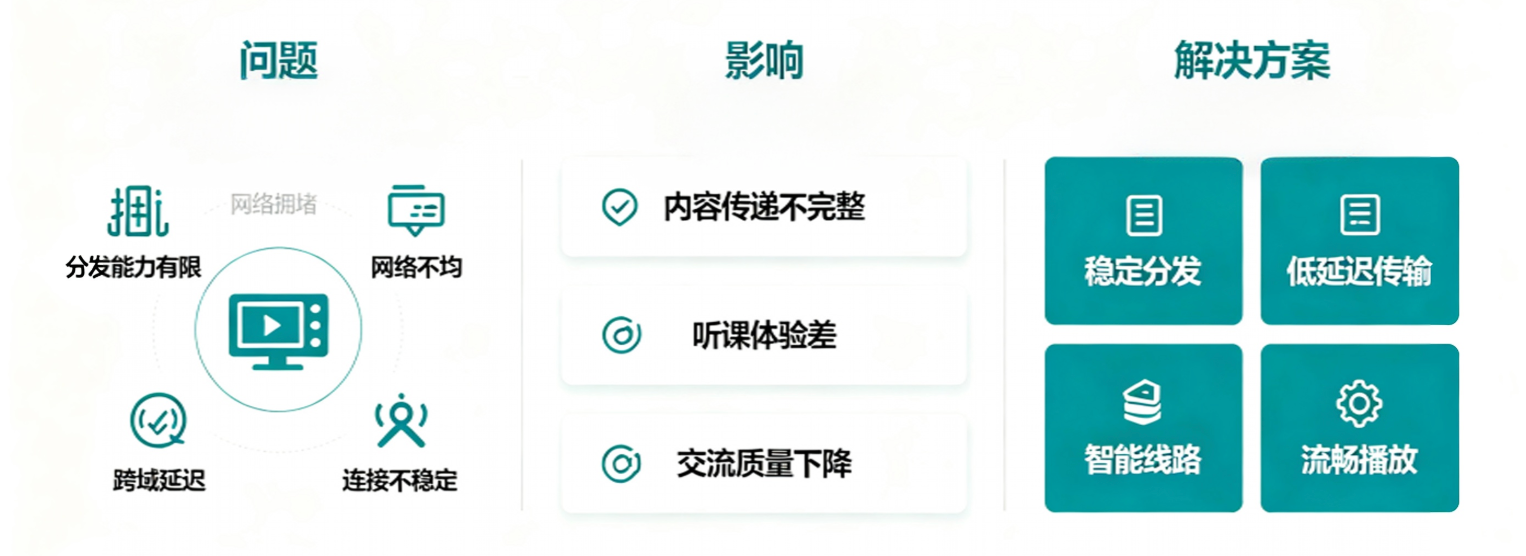
University academic exchanges are highly open and geographically diverse. Scenarios frequently involve remote participation by off‑campus faculty‑students, external collaborative researchers and even overseas participants. Generic live‑streaming tools have limited content‑distribution capacity. Cross‑region and cross‑border access often results in network congestion, video stuttering, audio‑video desynchronization and loading failures. Expert lectures, academic arguments and case studies cannot be delivered completely and in real time to remote audiences, creating disjointed information reception and poor viewing experience. This significantly undermines the quality of inter‑university academic exchange and teaching‑research outcomes.
(III) Difficulties in Lecture Footage Preservation and Cumbersome Archiving Workflows
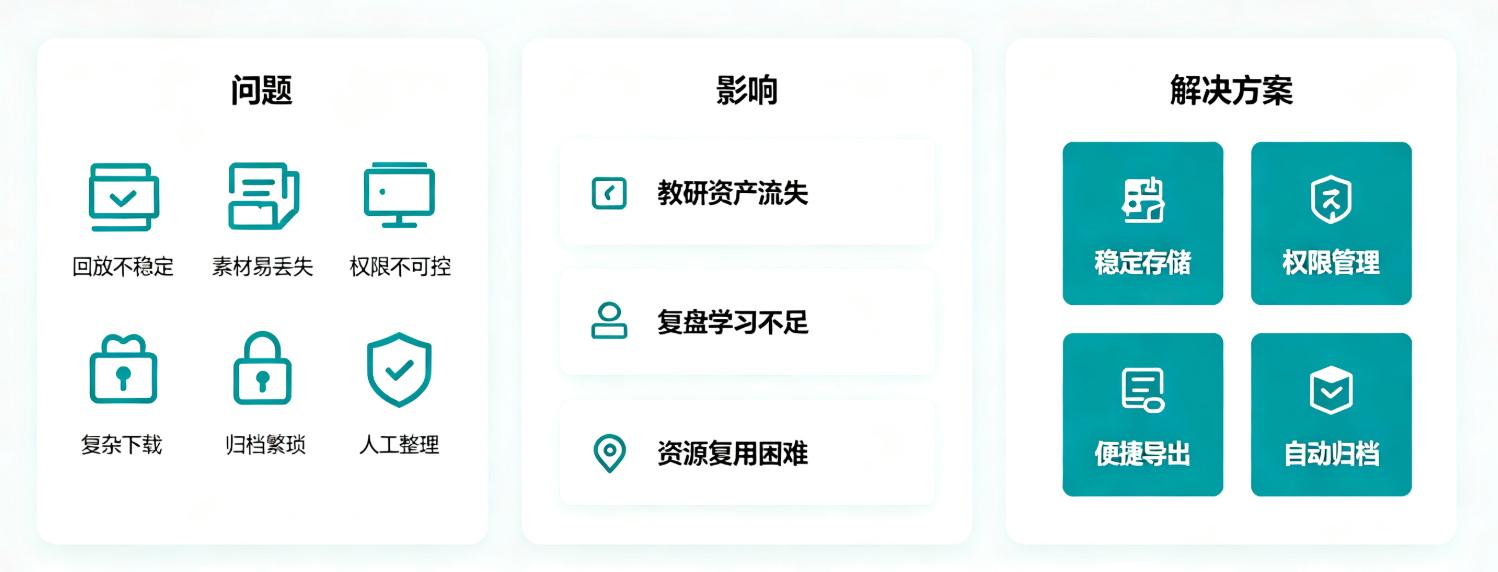
Each expert academic lecture constitutes valuable institutional teaching‑research assets that require long‑term complete preservation for post‑event review, teaching‑research summary, academic documentation and teaching resource library development. Nevertheless, live replays on public platforms are unstable, prone to expiry, loss and permission‑related access failures. Exporting and downloading footage involves complicated manual operations, making systematic archiving inefficient for administrators. This impedes structured accumulation and long‑term reuse of university academic resources.
(IV) Limited Activity Data Dimensions and Lack of Quantitative Evidence for Teaching‑Research Review
Reviewing academic lectures, conducting performance assessments and optimizing teaching rely on comprehensive participation‑related data, such as attendance scale, viewing duration and online‑engagement metrics. Common live‑streaming tools provide only basic viewing statistics without standardized full‑featured activity reports. University administrators cannot obtain clear insights into online participation and audience engagement. Teaching‑research reviews and effectiveness evaluations have to depend on manual counting and subjective judgment, lacking standardized quantitative support.
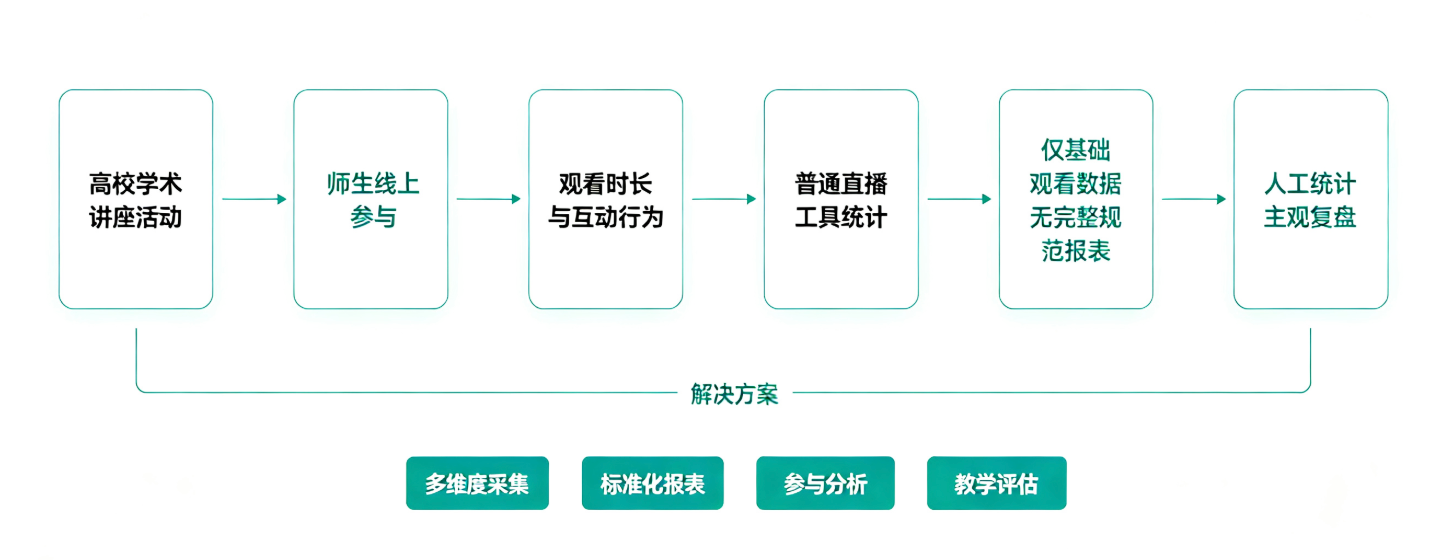
II. How Universities Build Live‑Streaming Systems for Academic Lectures
Polyv delivers deep scenario adaptation for university academic lectures, cross‑institutional research exchanges, expert presentations and teaching‑research archiving. Addressing four core requirements — academic content confidentiality, stable cross‑region viewing, lecture‑footage preservation and data‑driven teaching‑research review — Polyv builds a private, high‑stability, archive‑enabled and quantifiable live‑streaming solution tailored for higher education. It helps universities standardize academic communication, digitize teaching‑research accumulation and refine event operations.
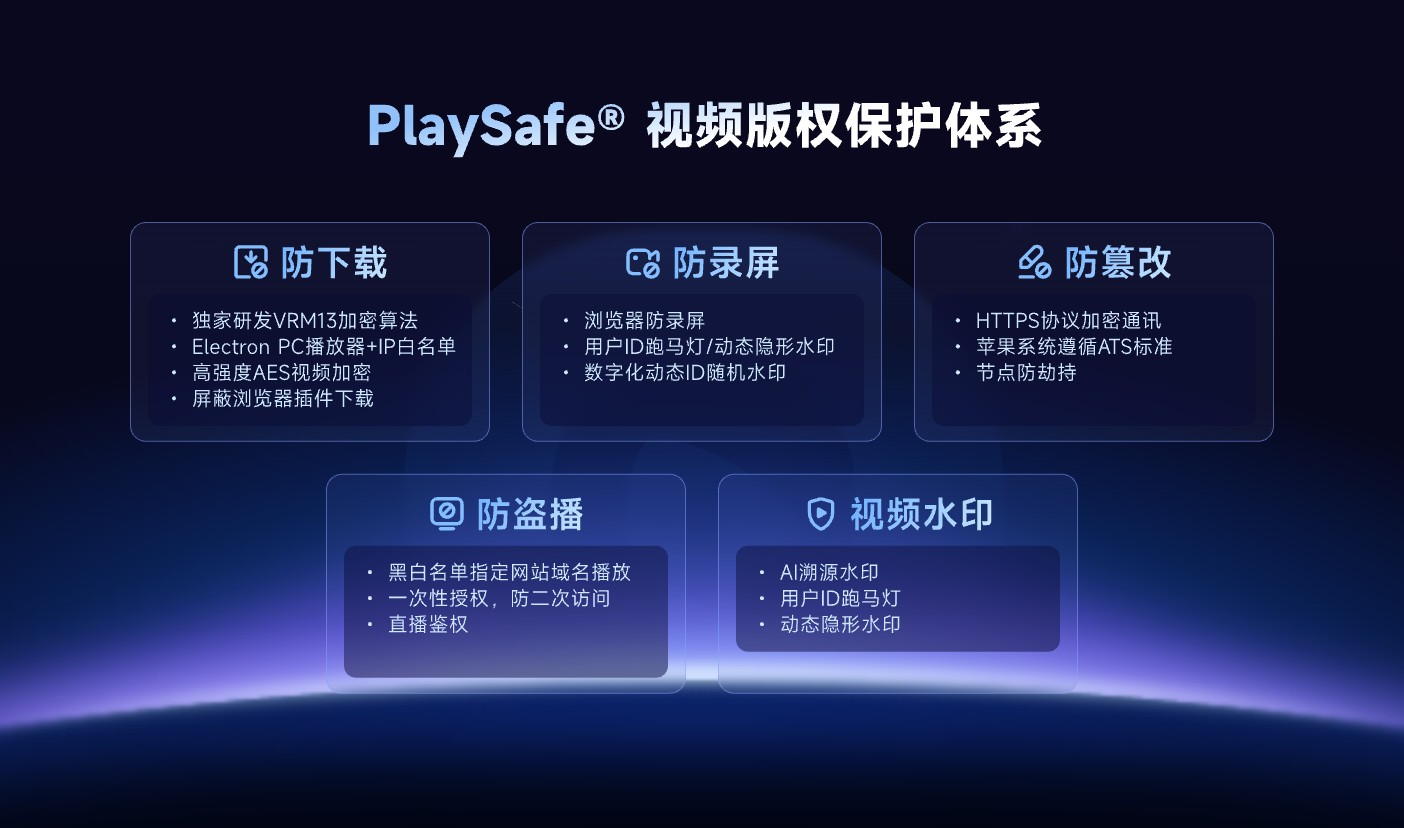
(I) Multi‑Layer Authorization Mechanisms for Private Academic Content Protection
The system implements multi‑level viewing authentication, supporting private‑access modes including password entry, exclusive whitelists and identity verification, in contrast to fully open public live streaming. Administrators may pre‑register internal faculty‑student profiles and invited‑scholar lists; only authorized users gain verified entry into live rooms, effectively blocking unauthorized external visitors. It fundamentally prevents public dissemination and unauthorized re‑broadcasting of academic content, safeguarding the privacy of frontier research sharing and phased research exchanges for non‑public seminars, project discussions and expert lectures.
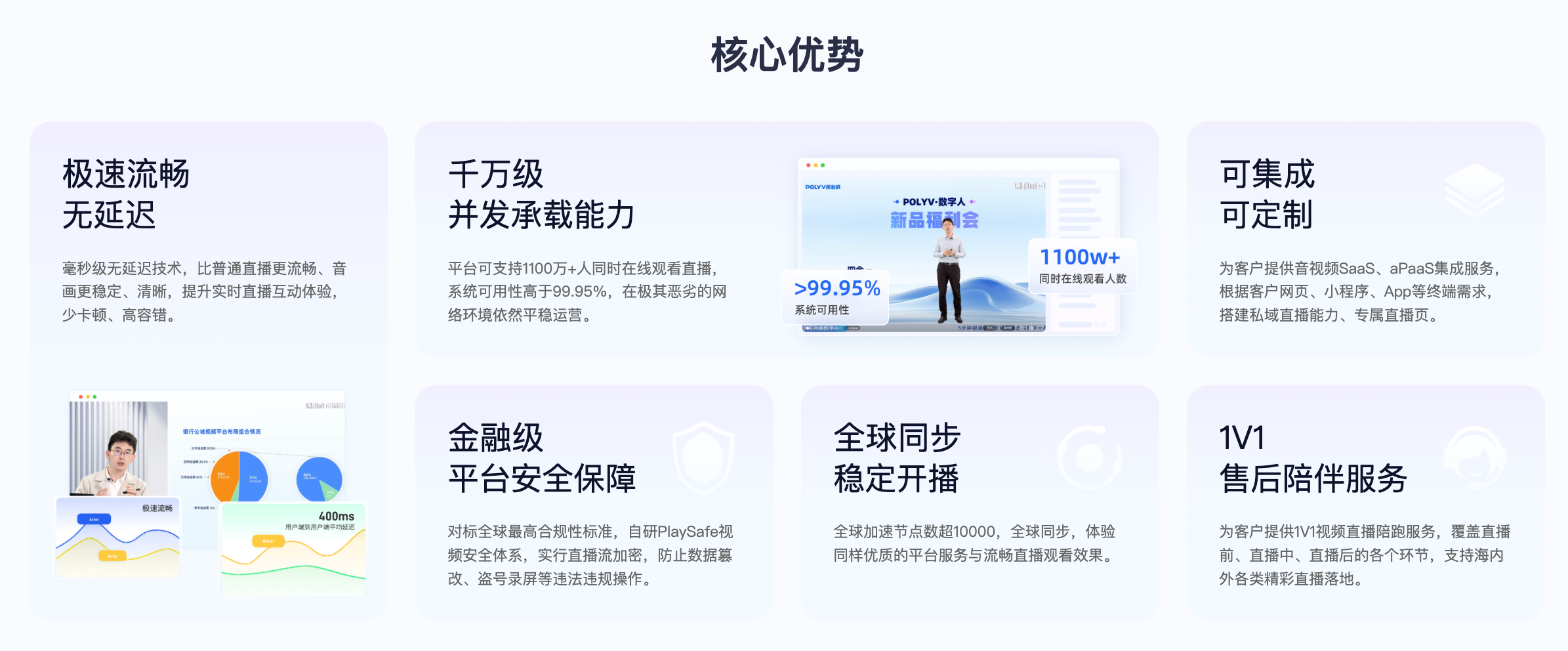
(II) Intelligent Global CDN Distribution for Smooth Cross‑Region Viewing
Powered by distributed global CDN networks, the solution establishes high‑speed transmission links covering domestic and cross‑border scenarios, with intelligent node optimization for remote and overseas connections. It mitigates common issues such as cross‑regional stuttering, slow loading and audio‑video misalignment. Whether for on‑site campus audiences, remote off‑campus participants or overseas scholars joining online sessions, users enjoy high‑definition, smooth and low‑latency viewing. Expert insights and lecture materials are delivered reliably and completely, improving the quality of geographically dispersed academic exchanges.
(III) Automatic End‑to‑End Recording for Campus Teaching‑Research Asset Accumulation
Live sessions are automatically recorded throughout broadcast. Standard on‑demand replay files are generated immediately upon stream conclusion without manual recording operations. Stable platform storage eliminates replay expiry and content loss risks. Full lecture videos support one‑click export and organized archiving. Universities can incorporate lecture recordings centrally into teaching resource libraries for subsequent review, teaching‑research case analysis and academic heritage, greatly simplifying archiving workflows and efficiently accumulating high‑quality campus academic assets.
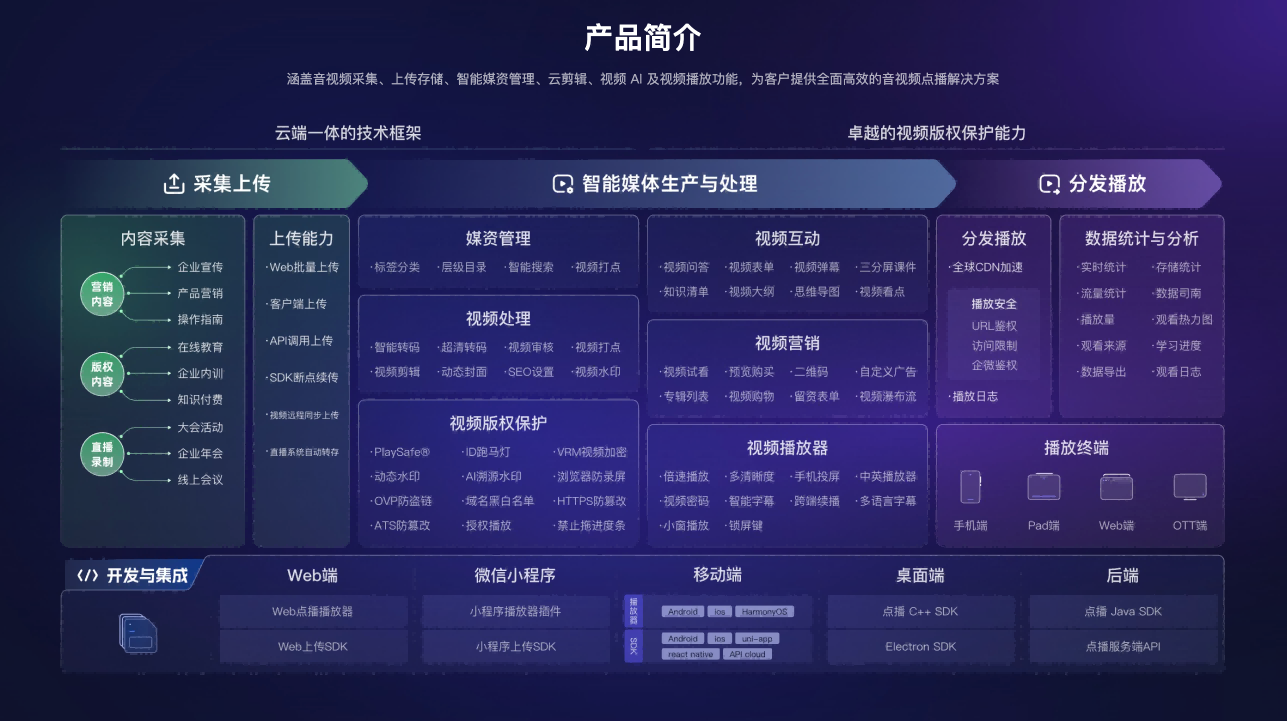
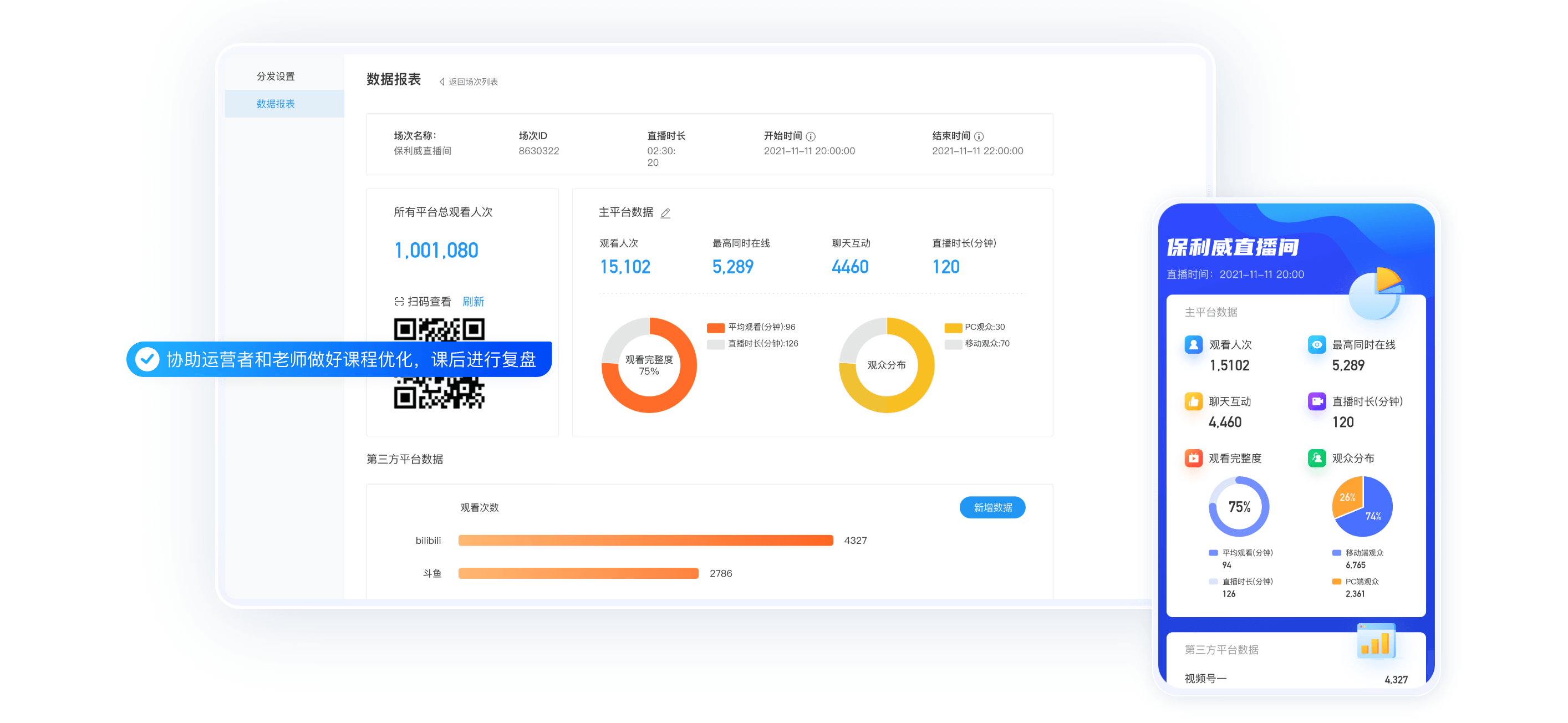
(IV) Specialized Data Dashboards Enabling Quantitative Teaching‑Research Review
Dedicated university‑oriented live‑streaming dashboards automatically collect multi‑dimensional metrics including real‑view audience size, total viewing duration, per‑capita attendance length, interactive frequency and viewing‑device distribution. Standardized activity reports can be auto‑generated. The solution delivers a holistic overview of online‑event participation, providing accurate quantitative evidence for teaching‑research reviews, effectiveness assessment and academic‑event optimization. It replaces labor‑intensive manual statistics and boosts the digital and refined governance of campus teaching‑research activities.
III. Core Implementation Values
Tailored to real‑world campus scenarios of university academic lectures and cross‑institutional research exchanges, this solution addresses key limitations of public live‑streaming platforms for higher‑education use cases. It enables universities to deploy a secure, stable, standardized and digital academic live‑streaming system, supporting regularized campus academic exchanges, systematic teaching‑research accumulation and refined teaching administration.