Efficient Operation & Maintenance of University Classroom Recordings: Solutions for Secure Course Playback Control and Data Review
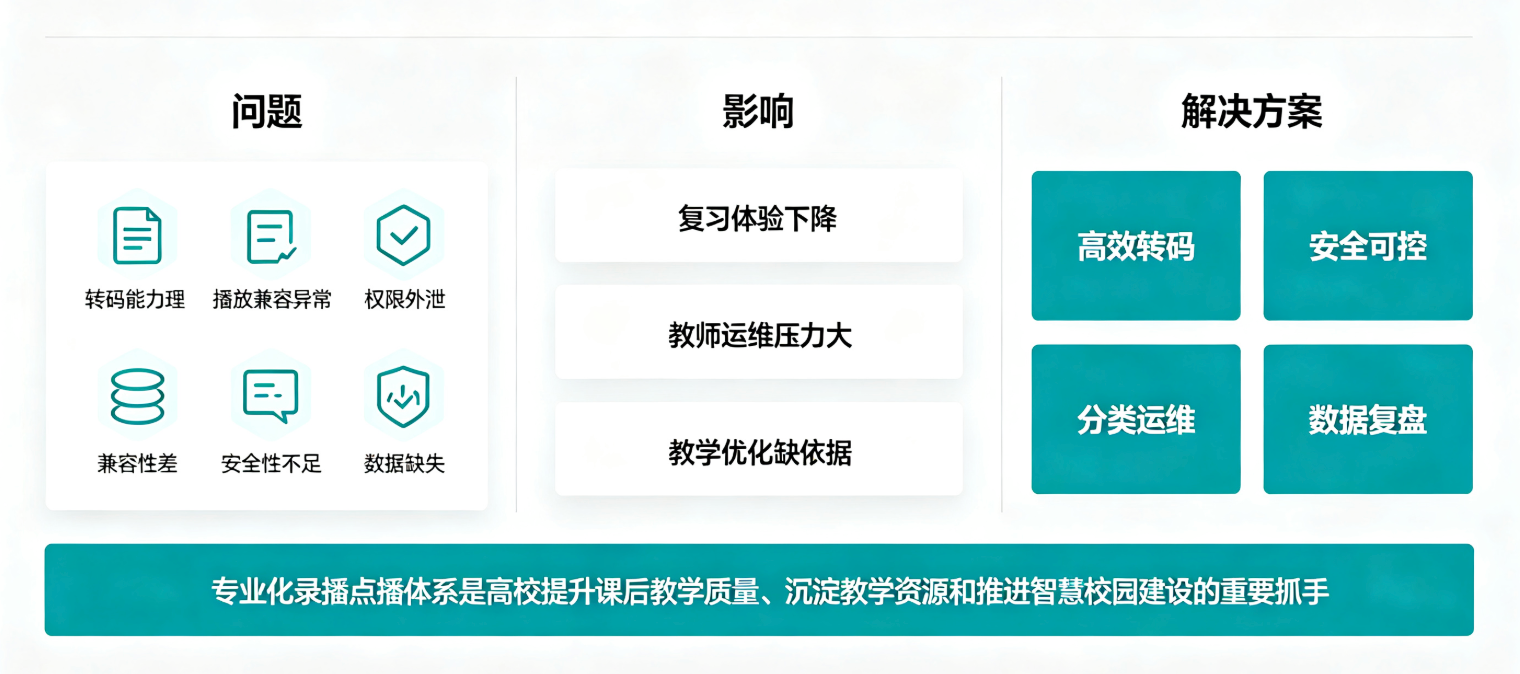
Against the backdrop of advancing smart‑campus development, classroom recording and playback have become core approaches for after‑class knowledge consolidation, make‑up learning for missed classes, course review and teaching resource accumulation in higher‑education institutions. Routine classroom recording generates massive volumes of teaching video footage, forming vital components of institutional digital teaching resource libraries. Nevertheless, conventional cloud disks and general‑purpose video tools suffer from poor scenario adaptability, commonly marked by weak large‑file processing capacity, unsatisfactory playback compatibility, high risks of teaching‑resource leakage, disorganized asset management and insufficient playback‑related data. These drawbacks not only impair students’ after‑class self‑review experience but also impose heavy operational burdens on instructors for course‑asset maintenance. Meanwhile, they fail to deliver valid data support for institutional teaching improvement and learning‑situation analysis. Accordingly, building a professional recording‑on‑demand system featuring efficient transcoding, robust security controls, categorized operation‑maintenance and data‑driven review has become a key measure for universities to refine their digital teaching systems and enhance after‑class teaching quality.
I. Core Operational Pain Points of University Classroom Recording and Playback
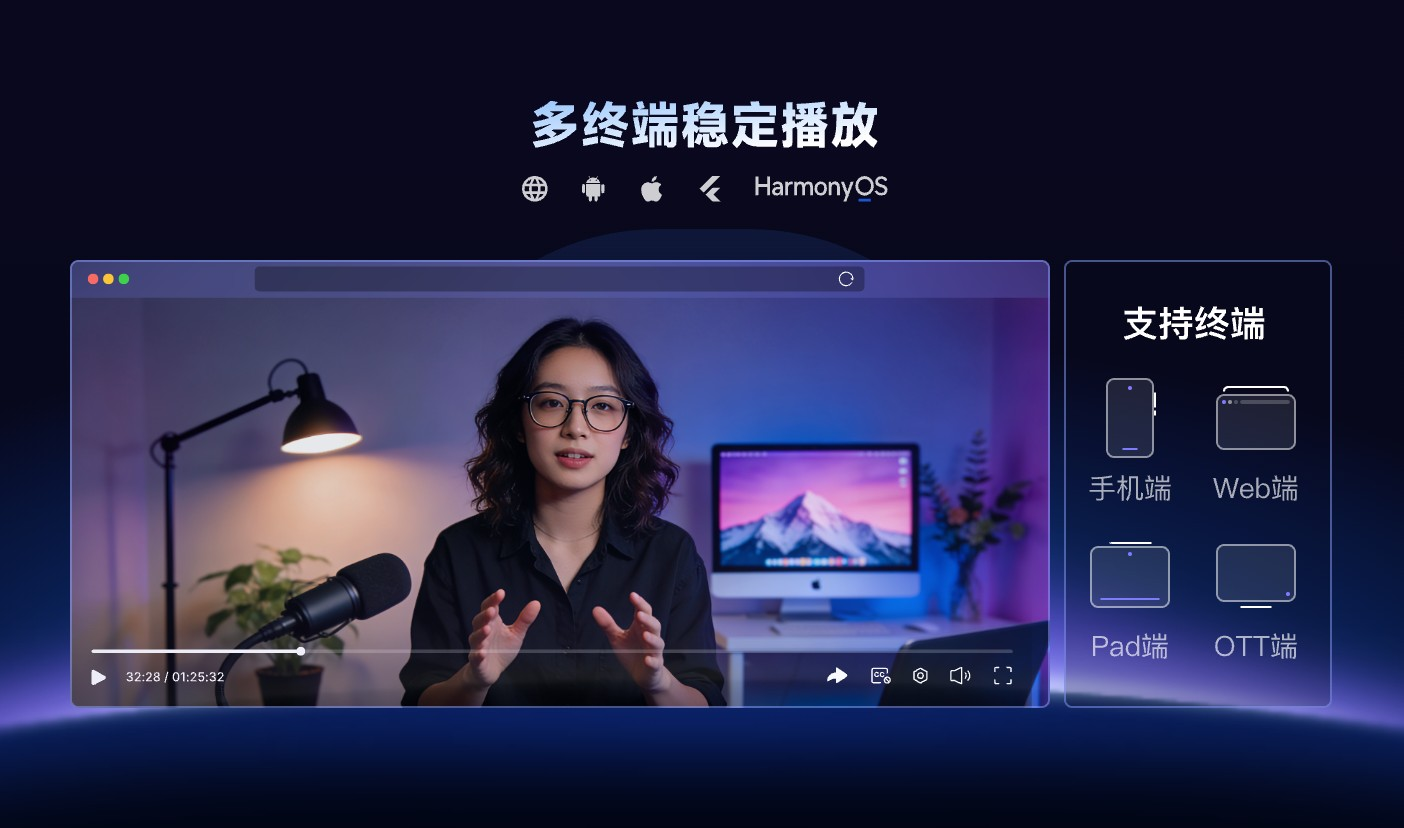
(I) Inefficient Processing of Large‑Size Footage and Poor Multi‑Terminal Playback Experience
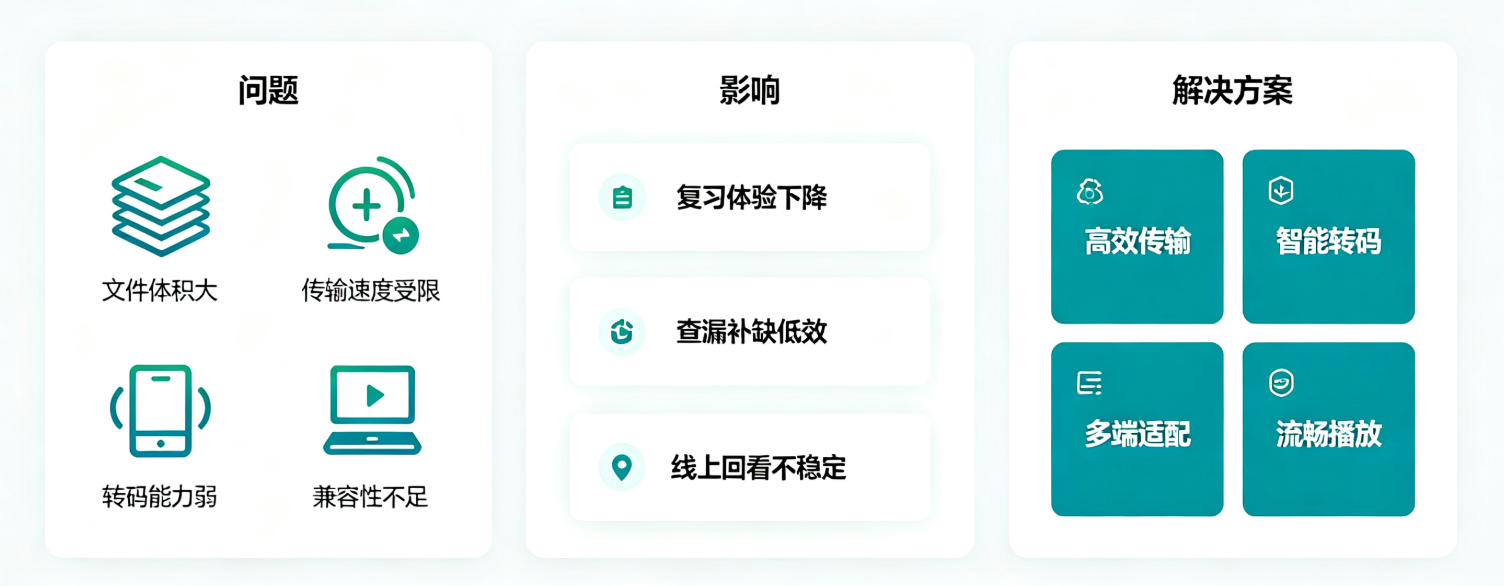
Full‑length recorded university lectures are long‑duration and large‑volume files. The cumulative number and total capacity of course footage keep growing each semester. Constrained upload‑download speeds plague traditional cloud disks and generic video tools, resulting in low efficiency for batch‑processing large teaching‑video files, alongside the absence of professional intelligent transcoding capabilities. Original classroom videos feature high bitrates and poor adaptability. When students access playback across diverse terminals including PCs and mobile phones, they frequently encounter slow loading, playback stuttering and abnormal screen adaptation. Inadequate multi‑terminal compatibility severely undermines students’ fragmented after‑class review and make‑up‑learning experience, failing to satisfy the demands of regular online playback.
(II) Open Access to Teaching Resources and Risks of Course‑Content Leakage
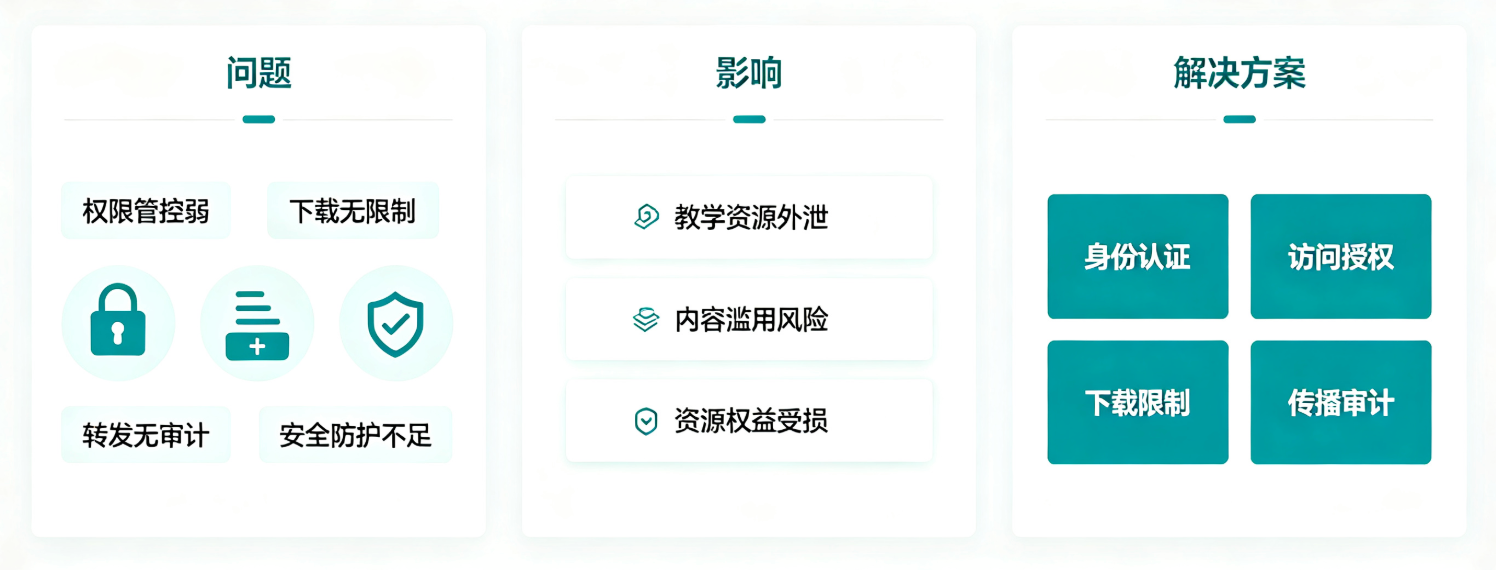
Recorded university classroom videos are exclusive internal teaching resources intended for faculty and students within the institution only. Certain specialized and featured courses contain proprietary campus‑specific content unsuitable for public internet distribution. Traditional storage‑and‑playback mechanisms lack dedicated security safeguards. Once uploaded, videos may be downloaded, saved, redistributed and disseminated externally by unauthorized users, giving rise to unauthorized circulation and widespread online exposure of teaching assets. Such incidents lead to leakage of institutional teaching achievements, impair intellectual‑property interests of universities, and may trigger misuse and piracy of teaching content, hindering secure governance of internal teaching resources.
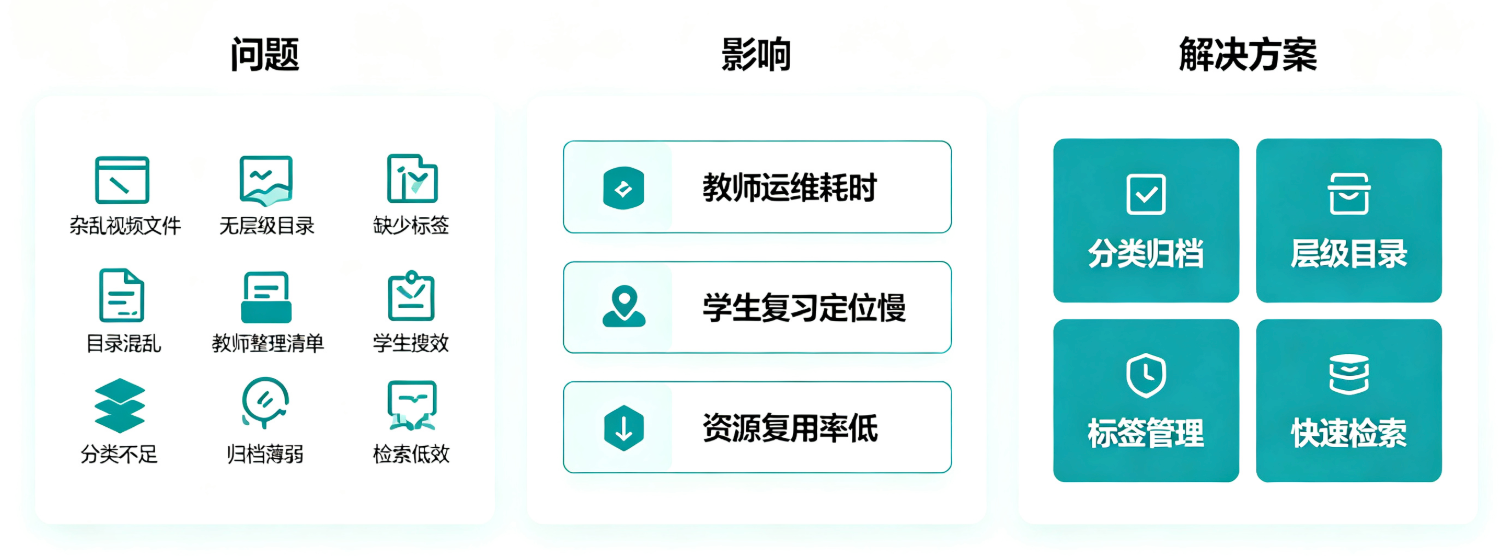
(III) Disorganized Accumulation of Recorded Footage and Low Retrieval & O&M Efficiency for Teachers and Students
Universities continuously accumulate massive recorded classroom footage as semesters progress and courses get updated, with course videos from different grades, semesters and disciplines piling up. Conventional storage tools lack systematic classification and archiving functions, leaving recordings stacked without hierarchical directories. Instructors spend excessive time sorting, organizing and updating course assets, increasing operational overhead. Students struggle to locate target lecture clips for review, dragging down the efficiency of after‑class revision and teaching‑resource reuse.
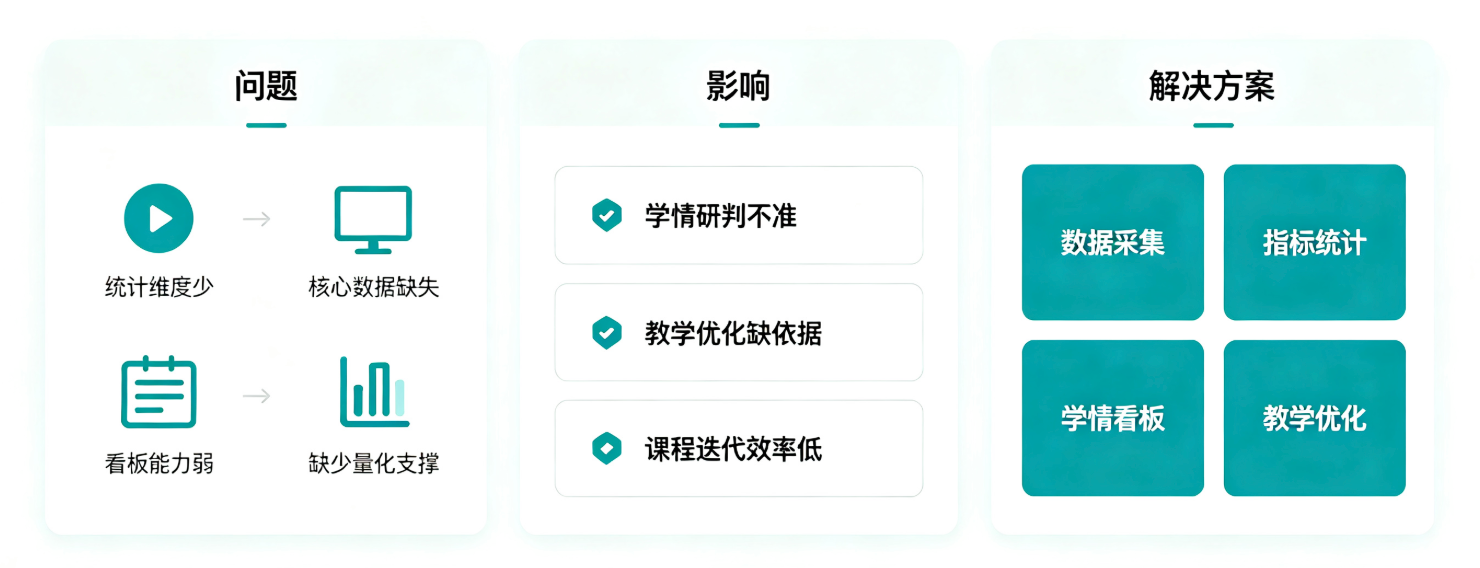
(IV) Missing Playback‑Behavior Data and Insufficient Evidence for After‑Class Learning‑Situation Review
Post‑class playback statistics serve as critical references for universities to evaluate teaching effectiveness, identify learning gaps and optimize instructional content. However, conventional recording‑playback tools only offer basic video‑playing functions without systematic data‑collection modules. They cannot accurately capture core metrics such as play counts, student viewing duration, course completion rates and repeated‑view frequencies. Institutions therefore find it difficult to identify popular courses, challenging lecture segments and after‑class‑participation levels. Judgements on students’ post‑class learning status, teaching optimization, curriculum iteration and learning‑situation assessment largely rely on subjective experience rather than quantitative evidence.
II. University Classroom Recording and Playback Solution
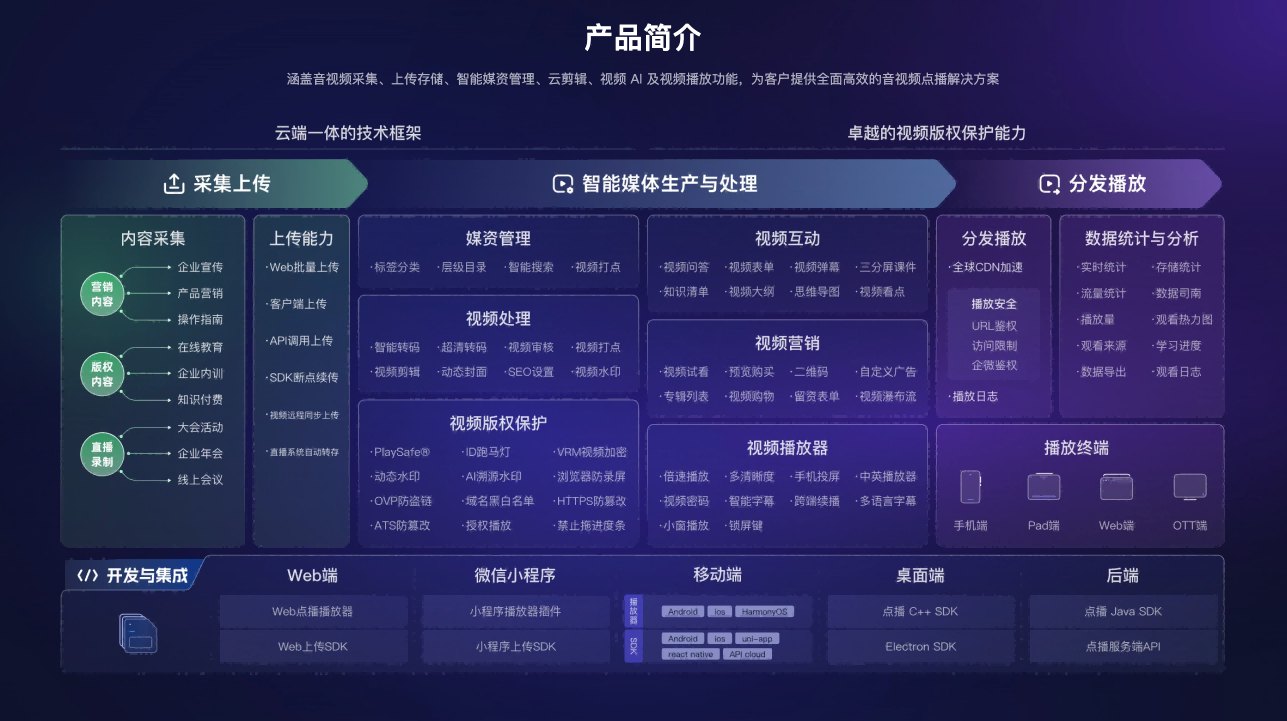
Polyv deeply adapts to core teaching scenarios in higher education, including classroom‑recording storage, playback operation‑maintenance, resource security and learning‑situation review. Targeting industry‑wide pain points such as inefficient large‑file processing, sub‑par playback experience, resource‑leakage risks, disorganized asset management and deficient statistics, Polyv delivers an efficient, secure, well‑structured and quantifiable on‑premises recording‑on‑demand solution. It empowers universities to standardize teaching‑resource administration, improve after‑class learning experience and realize data‑driven teaching review.
(I) Batch Transcoding and Global Distribution for Smooth Multi‑Terminal Playback
Leveraging professional on‑demand capabilities, the platform supports high‑speed batch upload of large‑volume lecture videos, eliminating transmission bottlenecks of traditional cloud disks. Built‑in intelligent multi‑definition automatic transcoding dynamically adjusts bitrates and resolution according to end‑user devices and network conditions. Supported by global CDN distribution networks, videos achieve near‑instant local loading. Students enjoy stutter‑free, near‑instant playback across PCs, mobile phones and other terminals, resolving loading delays, stuttering and device‑adaptation failures to enhance students’ self‑directed after‑class review experience.
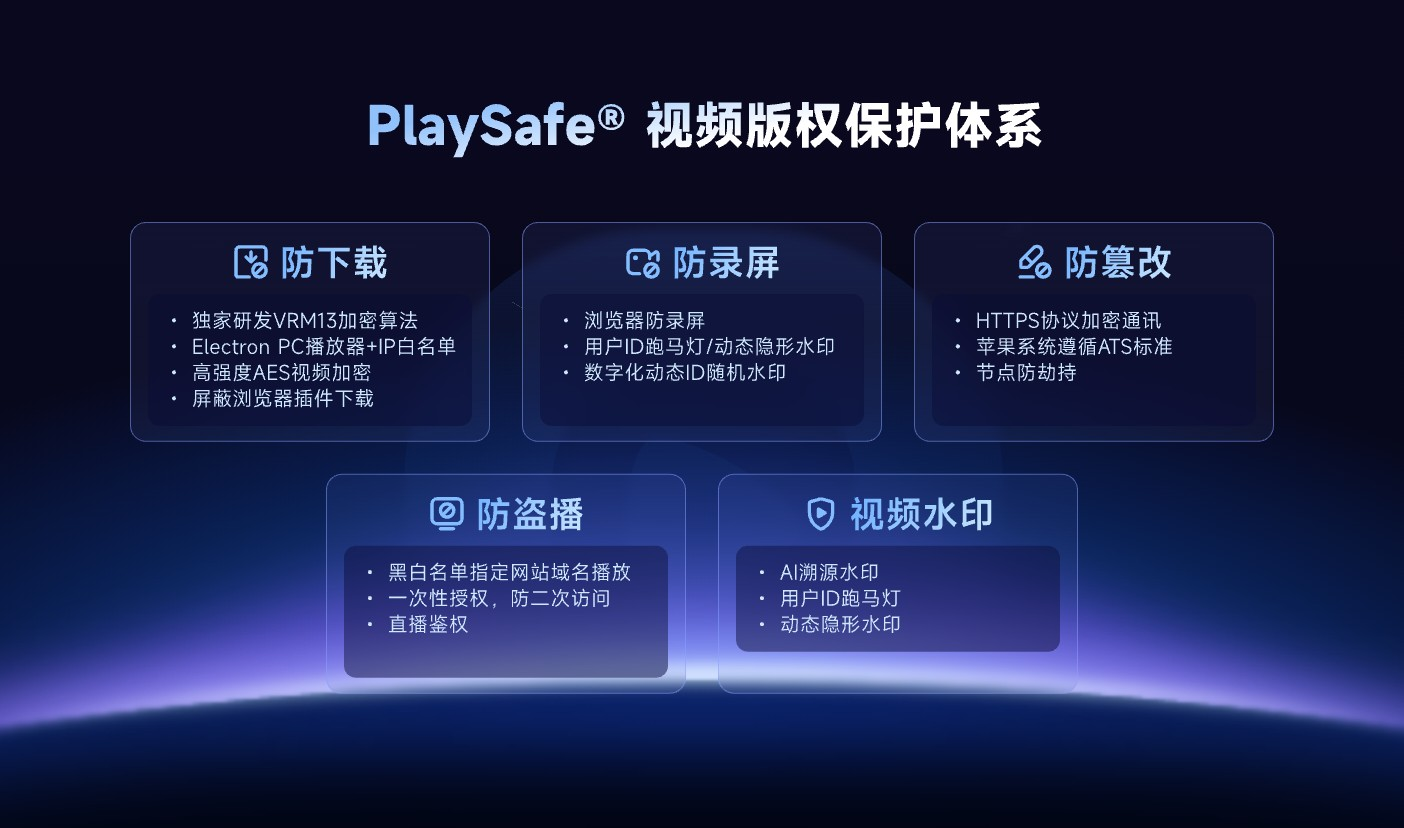
(II) PlaySafe® End‑to‑End Protection for Teaching‑Resource Safeguarding
Equipped with the PlaySafe® end‑to‑end video copyright‑protection system, the solution integrates proprietary VRM encryption technology, full‑domain anti‑hotlinking, dynamic visitor watermarks, cross‑terminal screen‑recording prevention and unauthorized‑dissemination interception to build a multi‑layered security shield for internal teaching assets. All recorded classroom videos are encrypted throughout storage and authorized playback. It fundamentally blocks unauthorized downloading, screenshotting, screen‑recording, redistribution and external piracy. Access scope is strictly confined to authenticated faculty and students of the university, mitigating leakage and pirated‑dissemination hazards for proprietary teaching content.
(III) Hierarchical Categorized Archiving to Boost Asset Retrieval and O&M Efficiency
The on‑demand backend incorporates professional asset‑classification workflows, enabling multi‑dimensional custom archiving by discipline, semester, class, lecture and course type. Administrators can establish standardized hierarchical course‑resource directories to separate legacy and newly‑added recordings for orderly asset accumulation and streamlined governance. Instructors can rapidly upload, categorize, update and retire course videos to cut operational workload. Students quickly retrieve target lecture recordings and locate required classroom segments, raising both teaching‑resource reusability and after‑class‑review productivity.
(IV) Panoramic Data‑Dashboard Statistics Empowering Teaching and Learning‑Situation Review
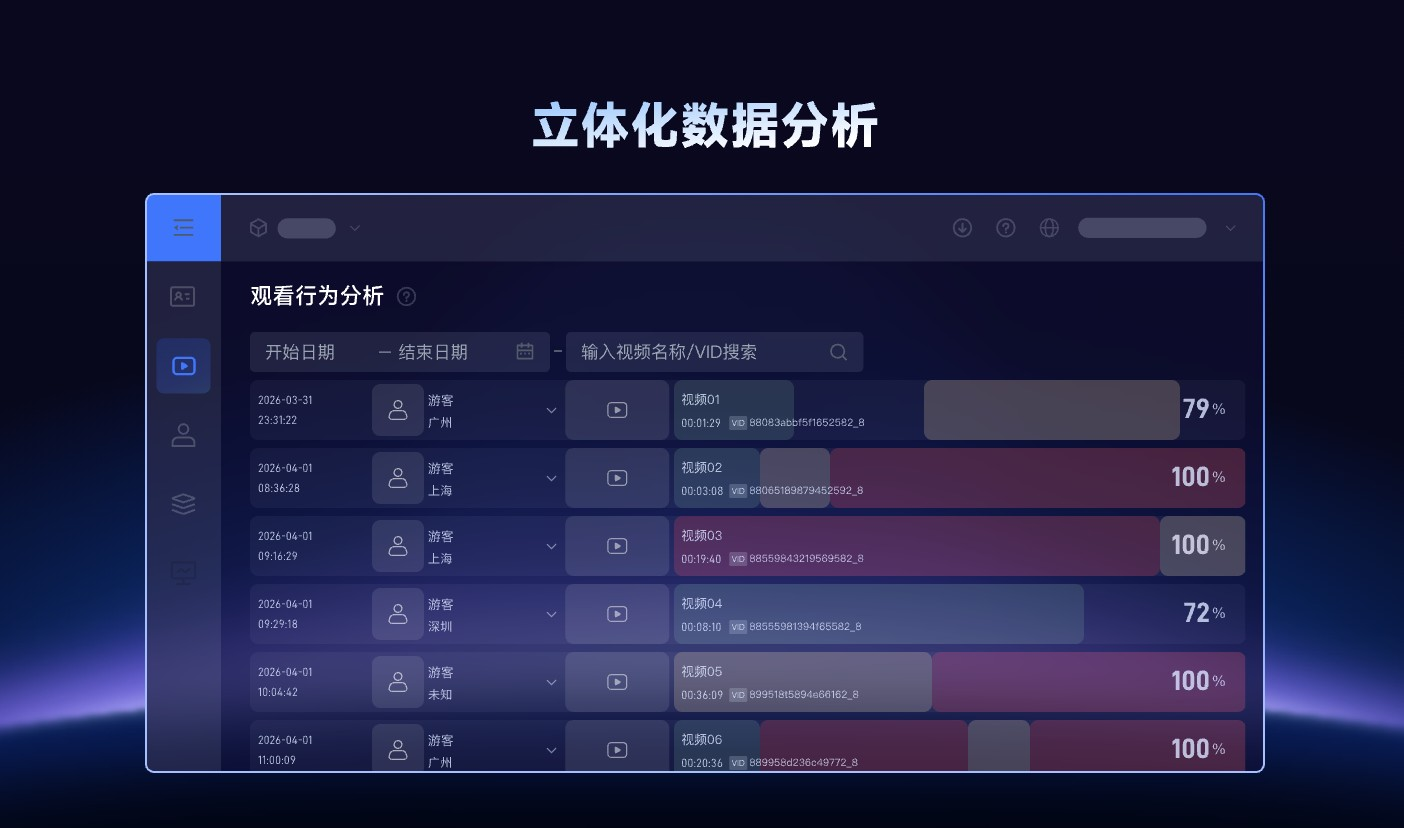
Custom‑built university‑oriented on‑demand dashboards automatically aggregate multi‑dimensional learning‑situation indicators: play counts, cumulative viewing duration, per‑capita viewing time, completion ratios and frequently‑revisited segments. The system precisely logs post‑class playback trajectories and visualizes learning popularity and review completion for individual courses and lectures. Universities and instructors leverage quantitative metrics to pinpoint teaching priorities and student knowledge gaps, objectively assess after‑class learning outcomes, and obtain reliable data evidence for curriculum refinement, instructional‑method adjustment and targeted student tutoring.
III. Core Implementation Values
Tailored to university requirements for classroom‑recording operation‑maintenance, after‑class knowledge consolidation, teaching‑resource accumulation and data‑backed learning‑situation review, this solution comprehensively remedies drawbacks of legacy recording‑management models. It helps higher‑education institutions deploy standardized, secure, efficient and data‑oriented recording‑resource management frameworks, consolidating the digital‑teaching foundation of smart campuses.