B2B Regional Live-Marketing Tools: Central Content and Local Customer Follow-Up
摘要: Connect headquarters content with regional invitations and service while keeping source attribution and customer ownership distinct.
When headquarters produces content and regional offices invite customers, one B2B live event spans brand management, local business teams, and customer service. Headquarters needs a consistent presentation, while each region needs to understand its customers’ participation. Cross-regional relationships can also create duplicate invitations and follow-up.
Evaluate POLYV enterprise live streaming, channel promotion, and WeCom capabilities for centralized content and regional engagement. Design content production, invitation source, customer ownership, and request handling as separate responsibilities. Promotion links identify distribution paths; business rules determine who serves the customer.
01 Standardize the content while preserving local relevance
Headquarters confirms product information, speakers, and the core agenda. Regional teams connect that content to local customer questions. Invitation wording can emphasize a relevant task, while product scope, schedule, and service commitments remain consistent.
Collect regional questions before the event. Decide which belong in the shared presentation and which need local follow-up. Combining every local requirement into one session can weaken its focus.
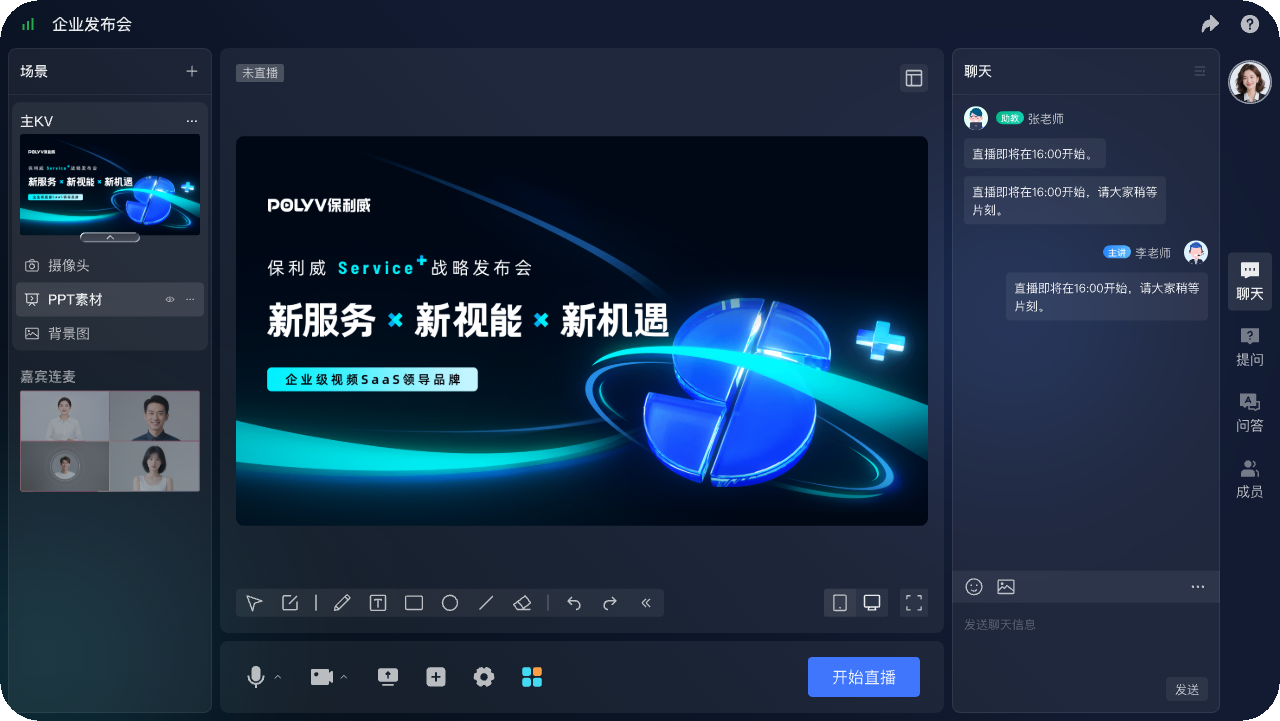
POLYV’s presenter console organizes scenes and materials for the common presentation. Maintain a clear version so regions do not distribute outdated screenshots or documents. Give them an agenda, audience description, and consultation process, not just a promotional graphic.
02 Record invitation source and customer ownership separately
POLYV channel promotion provides corresponding links or QR codes and associated records. Teams can plan regional or campaign entries to understand how audiences reach the event.
Arrival through a regional link identifies a source, not necessarily the long-term service owner. Contracts, account coverage, or existing relationships may determine responsibility. Forwarded links make automatic ownership assumptions especially unreliable.
Keep separate fields for invitation source and service owner. For cross-regional requests, confirm the existing relationship before assigning follow-up to avoid multiple teams contacting the same customer about the same issue.
03 Collect the information needed for routing
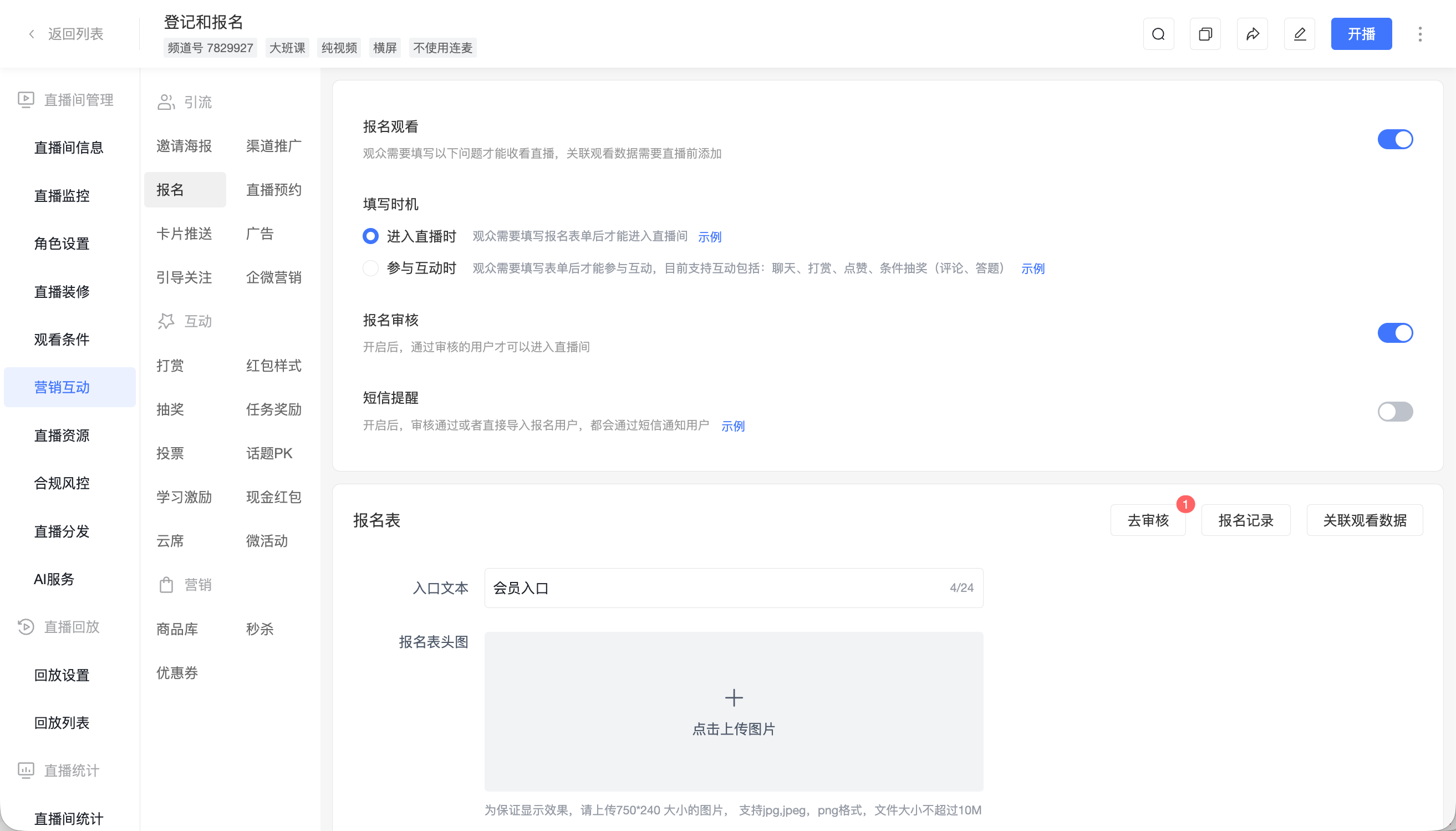
Registration may include company, role, region, and the main question, but each field should serve an action. Region can support routing, company can support relationship checks, and questions can inform content. Fields with no use need not be mandatory.
POLYV registration supports configurable fields and approval workflows. Where associations with viewing or interaction records are required, configure and test them before the event using regional test identities.
Define data visibility too. Regional staff should receive what they need to handle their work; headquarters reviews the appropriate overall information. Establish account permissions, exports, and handoff methods explicitly.
04 Configure WeCom around the real organization
Teams already serving customers through WeCom can assess POLYV’s relevant employee-invitation and collaboration capabilities. Review administrator authorization, application visibility, customer-contact permissions, and applicable activation requirements.
Whether headquarters and branches share the same organizational identity affects implementation. Describe that structure before choosing a configuration. Cross-organization service needs a defined approach rather than an assumption that every region can share customers through one account.
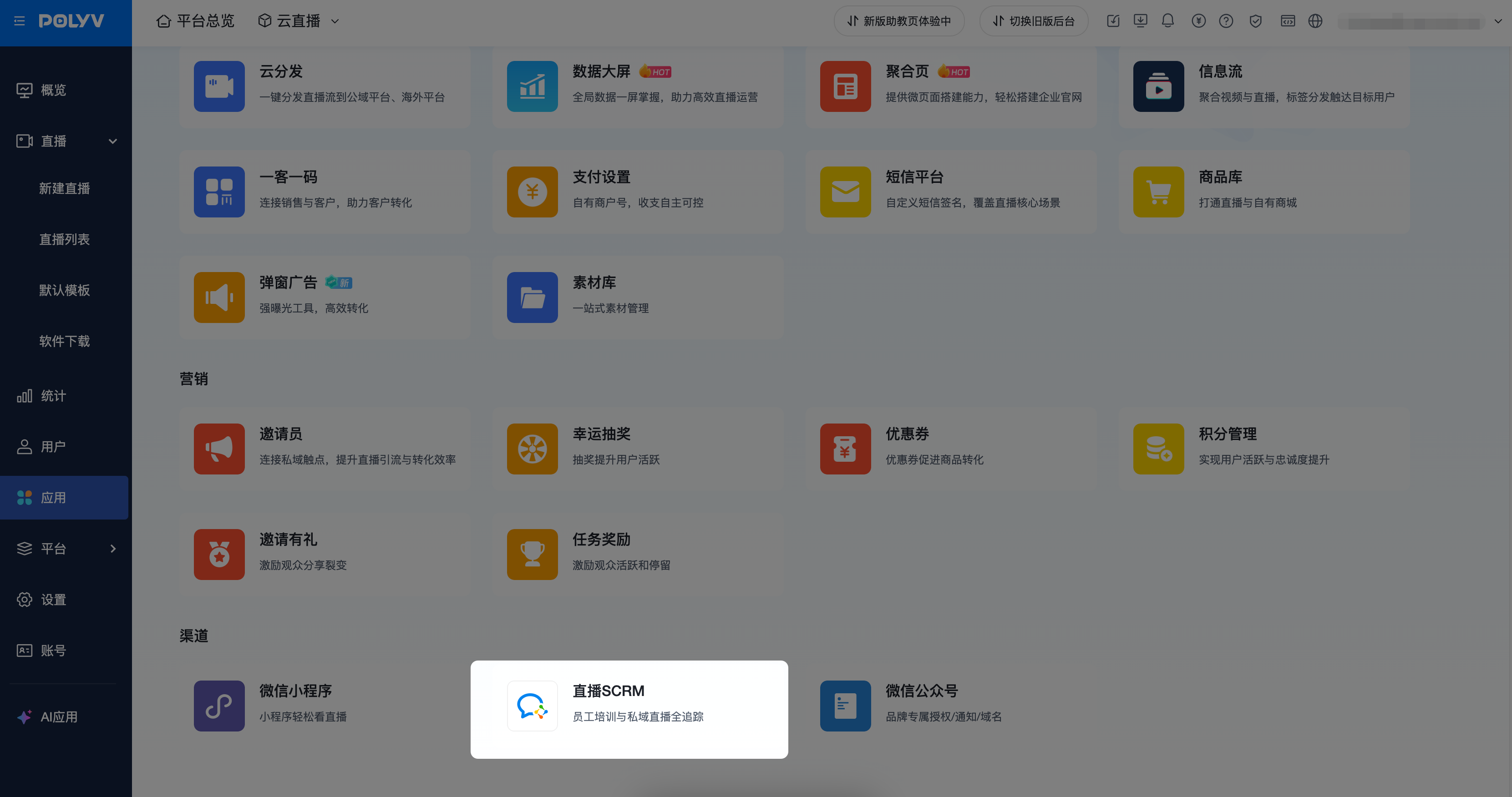
Have an actual regional employee send an invitation, locate the participation information, and handle an explicit request. This reveals permission gaps that an administrator-only demonstration can miss.
05 Give consultations a consistent entry and destination
Headquarters speakers explain common questions. Avoid having several regions simultaneously post different contact details in public chat. A shared consultation entry can collect the request and necessary routing information.
POLYV cards can link to a form or service page. The form records successful submission, and the business team records receipt and handling. Clicks indicate entry use; effective requests drive regional assignments.
Existing customers normally follow the enterprise’s established ownership rules. Unassigned, cross-regional, repeated, or incomplete requests need agreed treatment before the event.
06 Compare regions in context
Regions differ in customer base, industry mix, and existing relationships. Viewing totals alone are a weak basis for comparison. Review invitation coverage, participation, question types, and service requests alongside local conditions.
Record differences in invitation messages and schedules. Results may reflect topic relevance as well as execution. These findings can support targeted regional sessions instead of simply increasing reminder volume.
Maintain common event identifiers, material versions, and field definitions across the program. Local additions can coexist with stable reporting rules.
Pilot with two regions that have different business conditions—for example, one serving established accounts and another reaching newer audiences. The purpose is to test the workflow, not declare a winner.
Provide a handoff mechanism when regional staff change roles. Pending requests should move with responsibility, rather than remain attached to the original inviter. Headquarters can monitor unresolved items while regional teams confirm progress.
Keep product statements aligned centrally and local implementation arrangements confirmed locally. When an event is canceled or rescheduled, update central information and have each region confirm notification to invitees.
07 Frequently asked questions
7.1 Is one headquarters link enough?
It can be sufficient for shared viewing. Use separate entries when source analysis has a defined purpose, and test that purpose explicitly.
7.2 Does the inviting region own the follow-up?
Not automatically. Source and service ownership are different. Apply existing relationships and cross-regional rules to avoid duplicate contact.
7.3 Must each region host a separate broadcast?
Shared content can be centralized, with local issues handled through Q&A or later sessions. Separate events become useful when content, timing, or audiences materially differ.
08 About POLYV
POLYV provides enterprise live streaming, registration, channel promotion, and WeCom collaboration capabilities. B2B enterprises can use them to connect headquarters content with regional service while retaining clear distinctions between distribution, participation, and request handling.