How Foreign Enterprises Can Launch Internal Live Streaming in China: 2026 Live Streaming Solution for Multinational Corporate Training
After multinational enterprises set up regional headquarters, R&D centers and chain stores in China, the radius of internal communication extends thousands of kilometers. Corporate strategy briefings, product training and compliance courses from headquarters need to be delivered to every employee across China on schedule. Live streaming tools commonly used overseas hit roadblocks when deployed locally. Domestic regulations require live streaming platforms to host data within China for data retention and content compliance. The stability of cross-border links needs to be revalidated. Frontline employees also face barriers understanding English-language content. In addition, clear security boundaries must be defined for reuse of internal materials. These intertwined challenges complicate vendor selection. Many enterprises spend a quarter on evaluation only to restart their requirements sorting from scratch.
I. Key Pain Points of Internal Live Streaming for Foreign Enterprises Entering China
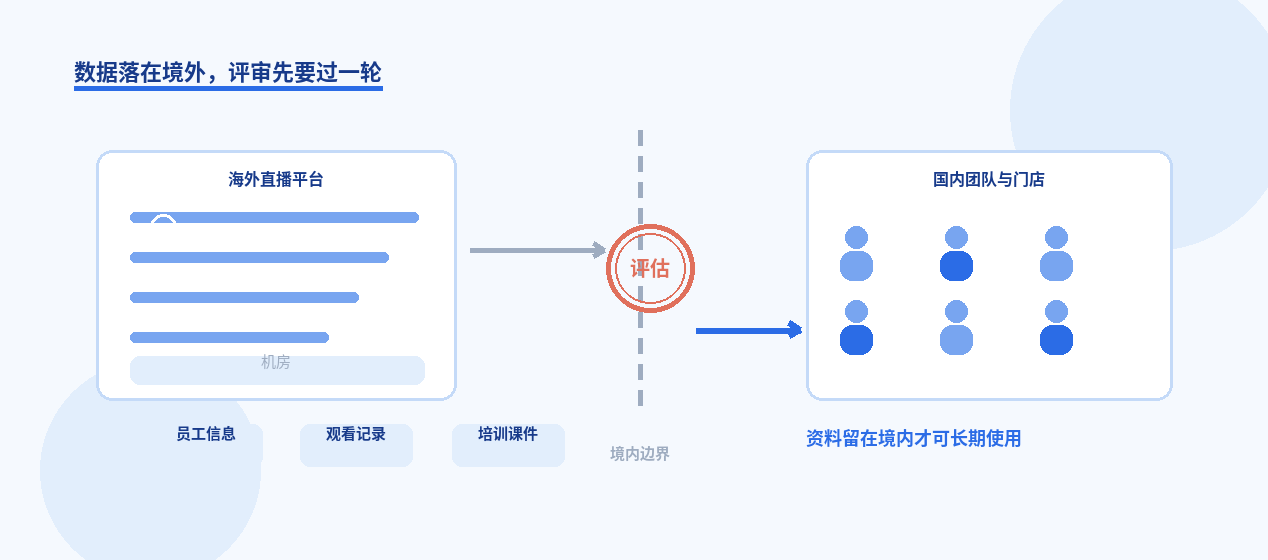
(1) Overseas Platforms Fail Compliance Requirements and Cannot Support Domestic Live Streaming
The servers and operation systems of mainstream overseas live streaming tools are hosted outside mainland China. Employee data, viewing records and training materials would be stored offshore. Domestic regulators set clear rules for such scenarios. The IT and compliance teams of foreign enterprises need to complete data outbound assessment, which involves lengthy document preparation and ongoing reporting after approval. Overseas platforms follow content moderation rules developed for international markets. Internal policy briefings and compliance courses require extra adaptation for local delivery. Many foreign enterprises abandon their existing tools during the selection phase and source alternative platforms for long-term use. This splits the unified global workflow of headquarters.
(2) Unstable Cross-Border Connections Cause Poor Access for Domestic Staff
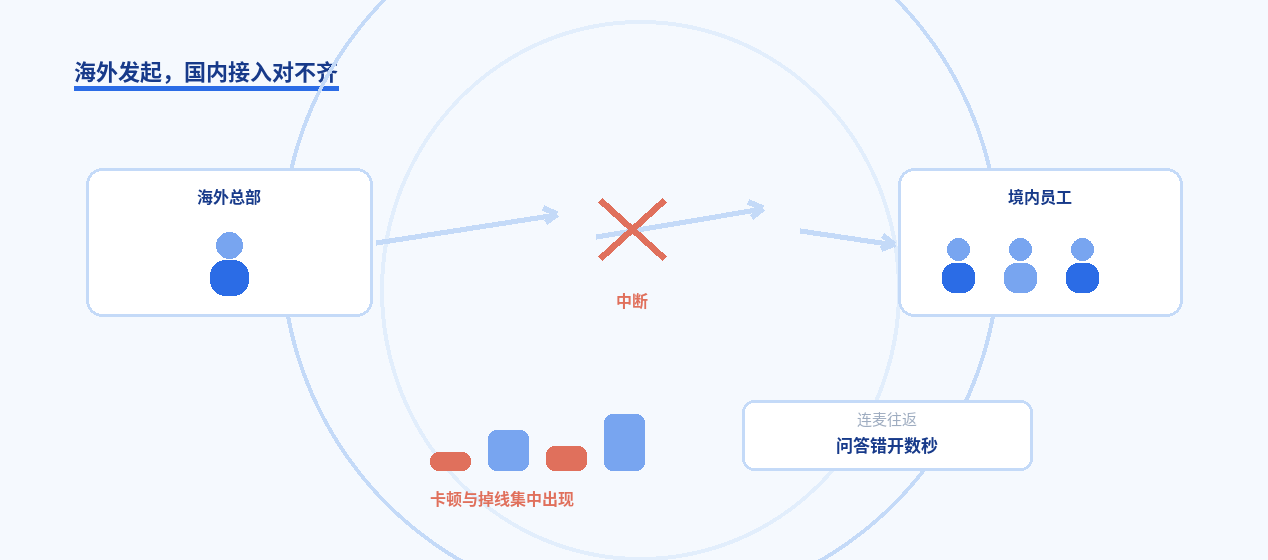
Quarterly strategy meetings and new product training are often hosted by headquarters speakers based overseas. When thousands of domestic employees join concurrently, signals travel across continents via multiple relay nodes. Congestion on public networks leads to long waiting times and slow loading at the start of sessions. Screenshots of stuttering and disconnections flood IT support groups. Remote co-hosting is further impacted by high latency. Employees wait several seconds for their questions to reach speakers, and responses take another round trip. A single Q&A exchange can take half a minute, discouraging employees from joining the mic. Communication quality degrades as headquarters and domestic teams struggle to hear each other clearly.
(3) Lack of Subtitle Support Hinders Comprehension of Multilingual Content
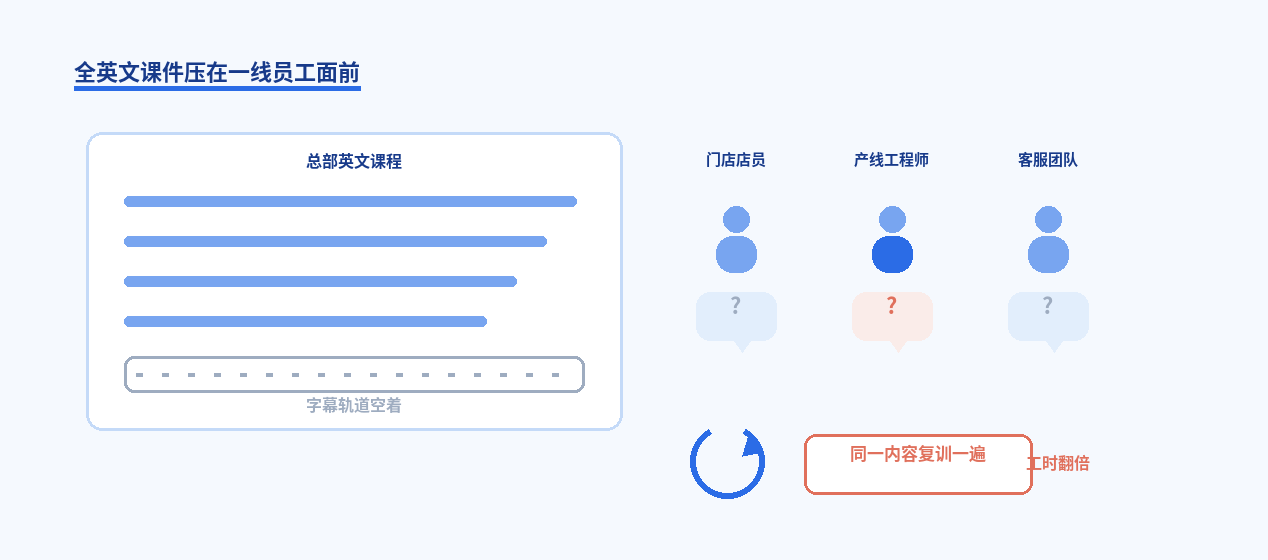
Most original internal courses and new product briefings from headquarters are delivered in English. Speakers have varied accents, and sessions contain dense industry terminology. Store staff, factory engineers and customer service teams often lack sufficient English proficiency. After a two-hour training, frontline workers usually retain only half of the critical information required for implementation. Training feedback surveys consistently show high rates of poor content comprehension. Training teams are forced to arrange separate Chinese repeat sessions, doubling the time spent by instructors and employees. This slows the localization of headquarters knowledge assets and delays new product launch schedules.
(4) Unprotected Replay Content Creates Risks of Internal Document Leakage
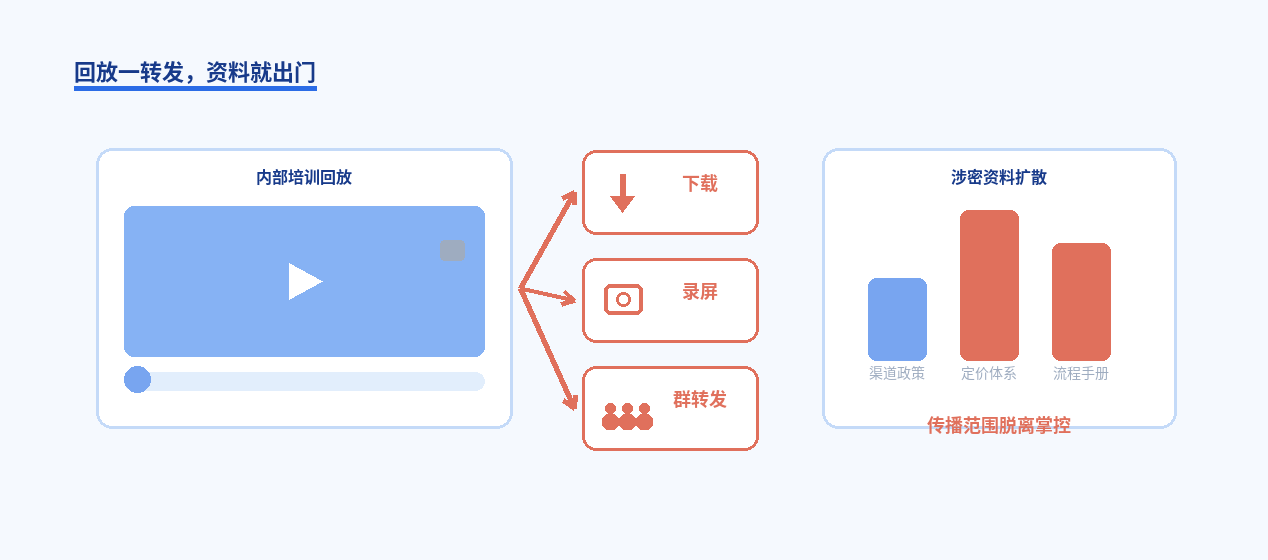
Internal training materials contain sensitive information including channel policies and pricing frameworks, alongside process manuals and product roadmaps. Once replays are downloaded, screen-recorded or forwarded to external groups, confidential content spreads out of control and disrupts subsequent commercial arrangements. Overseas platforms mostly limit replay access control to link sharing. They offer limited options for encrypted video storage and screen recording prevention. Granular access segmentation by department or job role and detailed viewing duration tracking are also constrained. After a leak, security teams lack traceable evidence. Organizations respond by tightening replay access, which sacrifices employee convenience. The more valuable the training content, the sharper this conflict between security and usability becomes.
II. How to Build an Internal Live Streaming System for Foreign Enterprises Operating in China
Polyv addresses the internal communication needs of multinational enterprises in China with robust domestically compliant deployment and global distribution links. Combined with AI-powered real-time subtitles and replay security protection, it connects content output from headquarters with high-quality learning experiences for domestic employees on a unified pipeline, supporting scalable, regular internal live streaming operations within China.
(1) Domestic Compliant Deployment for Local Internal Learning
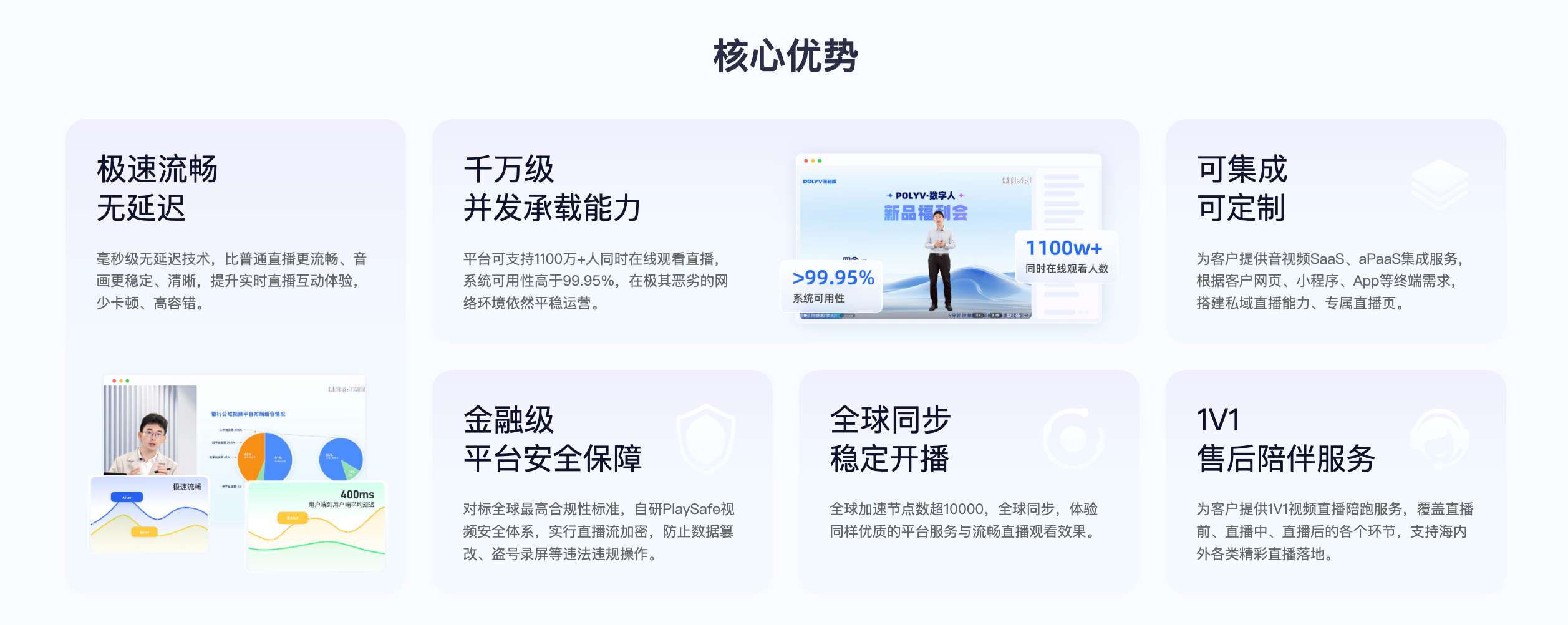
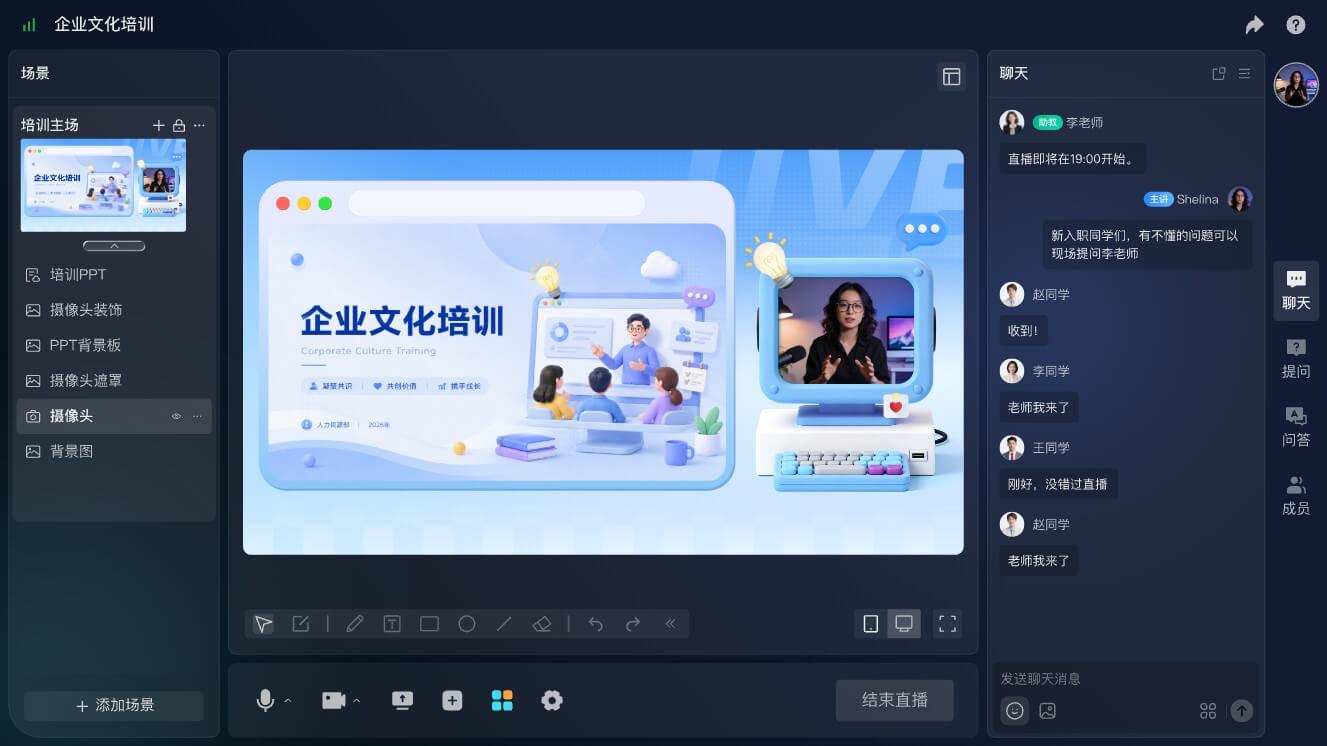
Polyv offers private cloud deployment, with all data storage and business operations hosted within China to align with domestic laws and regulatory requirements. This simplifies assessment workflows for the IT and compliance teams of foreign enterprises and accelerates project rollout. Built specifically for corporate internal training scenarios, the platform integrates live streaming, recorded sessions, replay playback and viewing analytics. It supports strategy briefings, policy communication, product training and compliance courses for domestic employees on one unified system. Enterprises can retain their existing headquarters content and broadcast workflows while delivering sessions locally using the same course materials. IT teams consolidate vendor selection onto a single platform.
(2) Global Distribution Network for Stable Synchronized Cross-Border Connections
Powered by globally distributed CDN nodes and low-latency real-time transmission, the platform maintains stable performance even when hosts and viewers are located in different regions. When overseas headquarters start a live stream, domestic employees pull streams from local mainland nodes for fast initial loading, reducing stuttering and disconnection reports even under concurrent viewing by thousands of staff. Remote co-hosting bridges overseas moderators and domestic participants with acceptable round-trip latency for questions and replies, restoring smooth interaction and normal Q&A frequency. The stable technical foundation enables synchronized cross-regional communication, so headquarters and domestic teams receive identical audio and video feeds during the same live session.
(3) AI Intelligent Subtitles to Improve Multilingual Content Comprehension
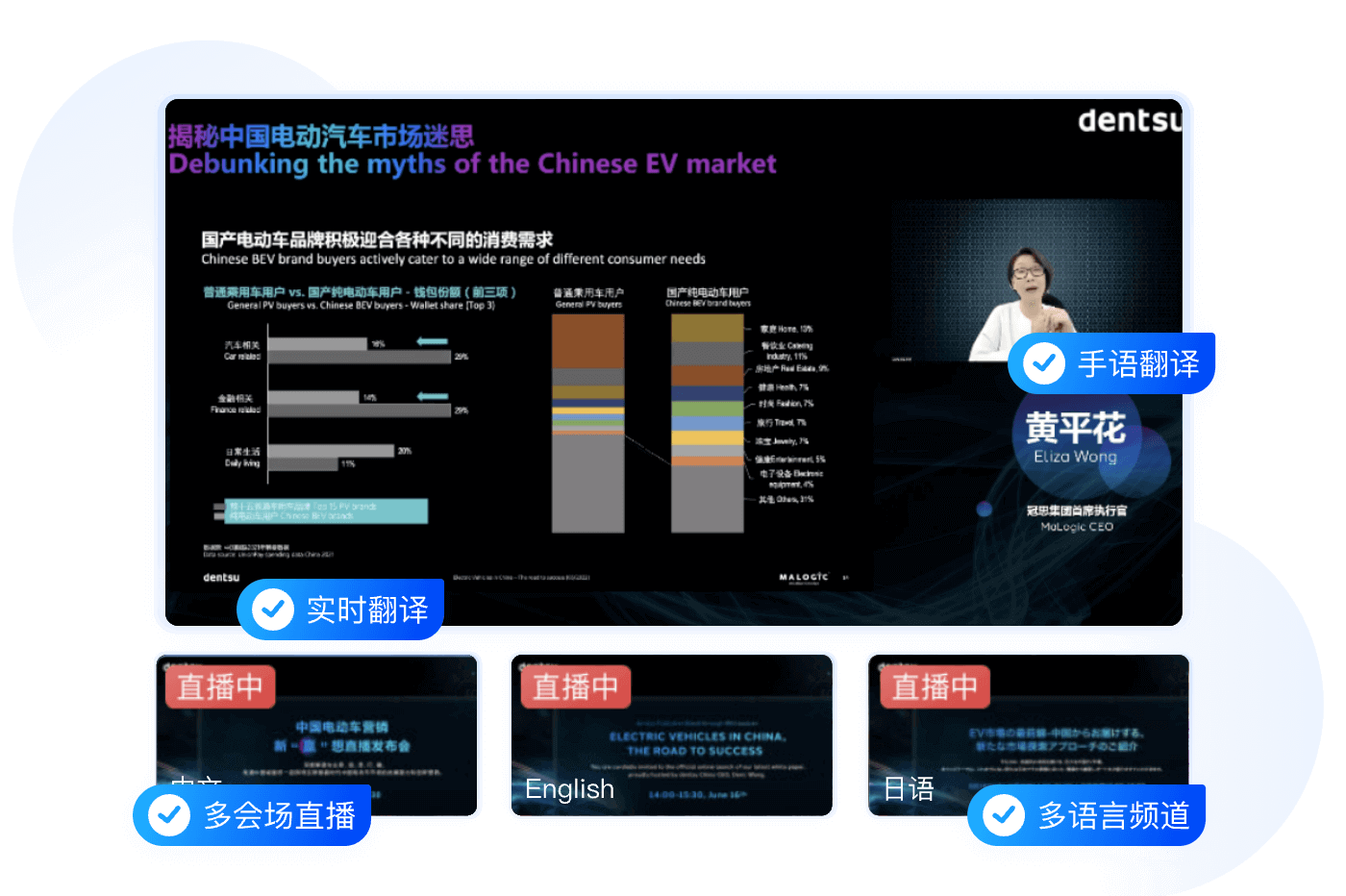
The platform features built-in multilingual AI real-time subtitles. English courses and headquarters sharing sessions generate captions during live broadcast. Employees can select original-language subtitles or bilingual Chinese captions according to their preferences. Subtitles remain available on replay pages, paired with chapter markers generated by AI indexing. Frontline staff can click subtitles to jump directly to unclear segments and verify industry terminology against captions. Headquarters courses only need to be delivered once to achieve local comprehension for domestic teams. This reduces working hours spent on repeat Chinese training and shortens the knowledge transfer cycle from headquarters to retail stores.
(4) Encrypted Watermark Controls to Secure Internal Documents
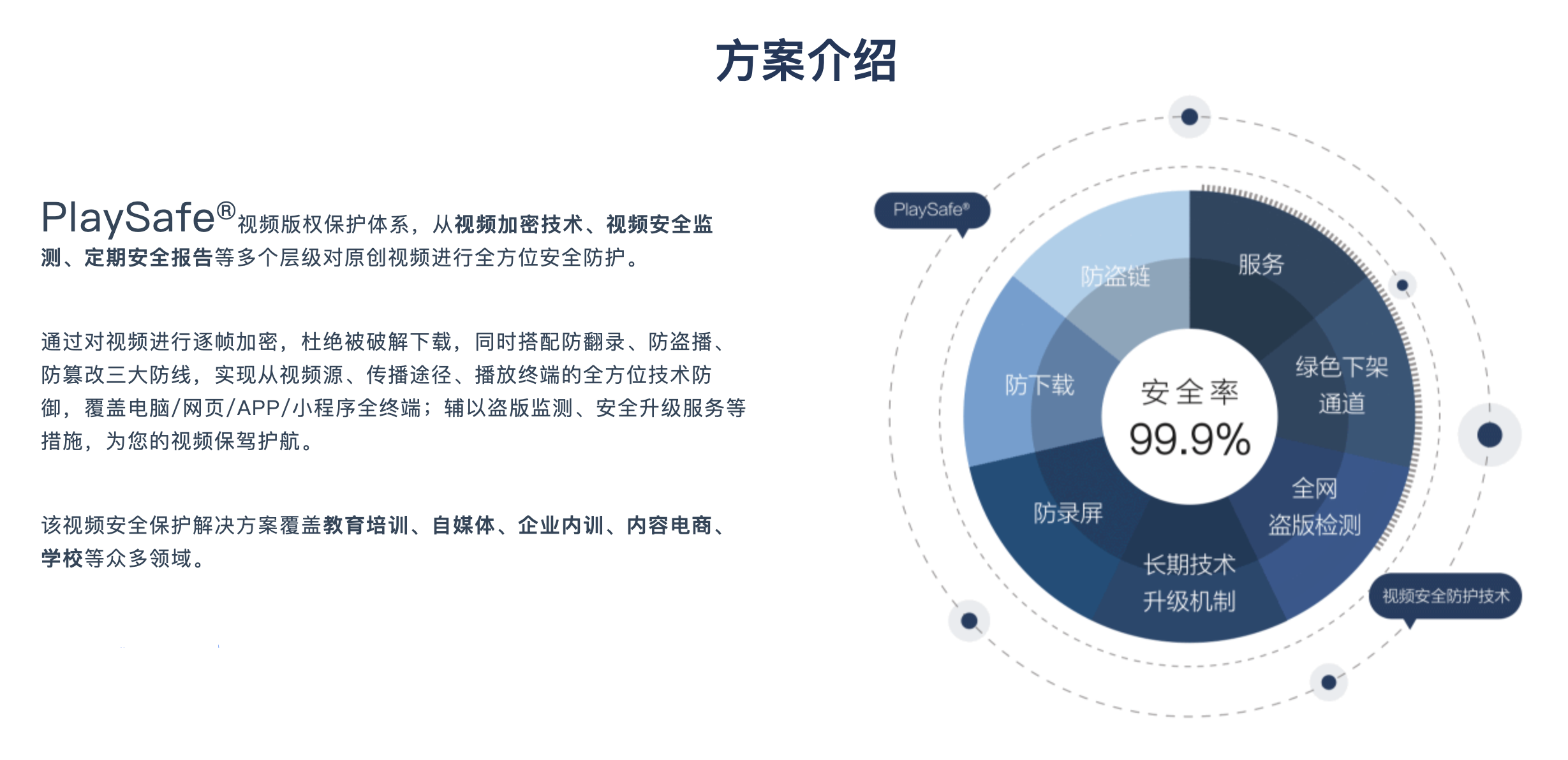
Replay videos are fully encrypted during storage, transmission and playback. Dynamic watermarks are overlaid on playback pages, screen recording is restricted, and download and secondary sharing channels are blocked. Access can be limited to approved staff by department and job role, with permissions configurable down to hourly validity periods. Access rights are promptly revoked after employee departure or project closure. Complete viewing logs are retained in the backend, providing traceable evidence for security teams investigating leaks. Enterprises retain full control over the spread of internal materials, balancing security requirements and learning convenience and easing concerns when headquarters shares full course packages with domestic teams.
III. Core Value of the Solution
The four capabilities resolve the core pain points of internal live streaming for foreign enterprises entering China. Domestic compliant deployment clears assessment barriers and speeds project rollout, enabling headquarters and domestic teams to resume unified workflows. The global distribution network stabilizes connections between overseas hosts and domestic viewers, synchronizing audio and video and restoring interactive Q&A during cross-border sessions. AI intelligent subtitles allow domestic frontline staff to absorb English courses directly, cut overtime for repeat training and accelerate knowledge asset localization. Encrypted replays, dynamic watermarks and time-bound access controls protect headquarters internal materials, with permission segmented by job function to preserve both replay usability and security.
Once the internal communication pipeline is established, strategic intentions from headquarters align with execution by domestic store teams. Corporate culture and product knowledge flow down through the same channel. As multinational enterprises expand their teams in China, internal live streaming capacity scales alongside business growth. Regular training and corporate events for local operations run continuously on one unified system, forming a reliable communication infrastructure for foreign enterprises’ long-term operations in China.