How Can Rental Platforms Upgrade Virtual Property Viewing?Solutions for Compliance Control and Refined Operation of Listing Videos
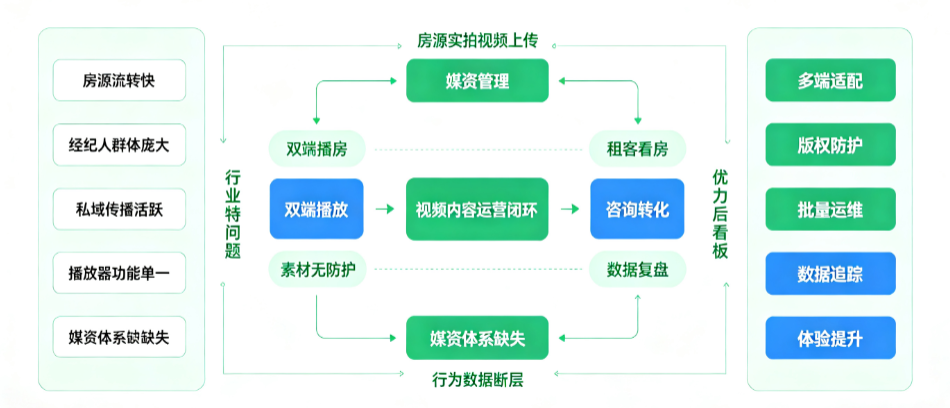
Nevertheless, most rental platforms suffer from inadequate native technical capabilities: basic built-in players with limited functions, lack of security protection for materials, absence of media asset operation systems, and disjointed user behavior data. Coupled with industry characteristics including massive onboard agents, active private-domain sharing and rapid listing turnover, platforms frequently encounter poor playback experience, rampant false promotion, disorganized material management and lack of data support for operations. These issues severely undermine tenants’ viewing experience, damage platform brand credibility and hinder refined operational efficiency. Under such circumstances, building a professional video system featuring multi-terminal compatibility, robust security control, batch-enabled operation and data review capability has become an essential requirement for rental platforms to improve quality and efficiency through digitalization.
I. What Are the Deficiencies of Online Video Operations on Rental Platforms?
(1) Weak Native Playback Capabilities Lead to Uneven Remote Viewing Experience
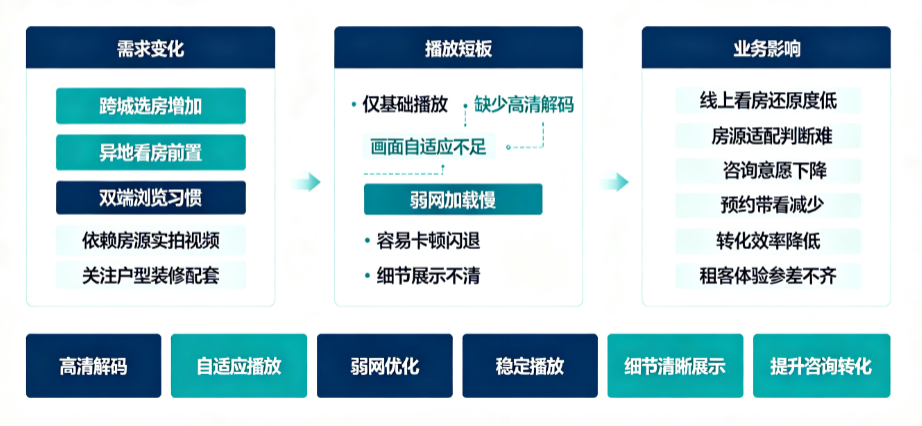
Most tenants rely primarily on rental Apps and Mini Programs to shortlist properties remotely across cities for preliminary screening. However, the dual-terminal native players deployed by platforms only support basic playback functions without professional capabilities such as high-definition decoding, adaptive rendering and weak-network loading optimization. When playing long high-definition on-site listing videos with detailed footage, problems including blurry images, buffering stuttering and playback crashes frequently occur. Tenants cannot clearly view unit layouts, renovation details and supporting amenities. Low restoration fidelity of virtual viewing prevents tenants from accurately evaluating property suitability, directly cutting conversion rates for listing inquiries and scheduled viewings.
(2) Lack of Video Anti-Piracy Control Triggers Misconduct in Agents’ Private-Domain Communication
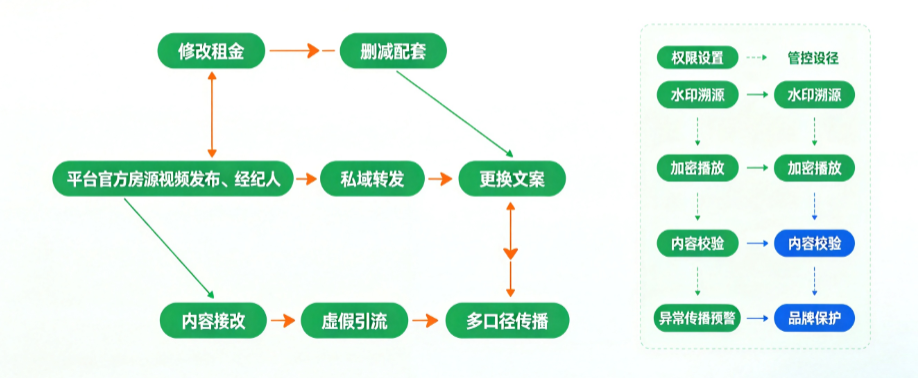
Rental platforms host large groups of agents, who commonly forward listing links via private domains to acquire clients, generating strong demand for content dissemination. Yet native players grant unrestricted access to original video downloads without any anti-leakage or anti-tampering mechanisms. Agents can freely download and capture official listing videos, arbitrarily revise rental quotations, delete supporting facility information and modify commentary before redistribution. This results in inconsistent promotional descriptions for identical properties, leading to persistent problems such as lowball marketing, misrepresentation of amenities and misleading advertising. Such practices confuse tenants and severely impair platforms’ core brand positioning of “authentic listings, genuine footage and transparent pricing”, greatly eroding platform credibility.
(3) Rapid Listing Turnover Results in Low Efficiency for Mass Media Asset Maintenance
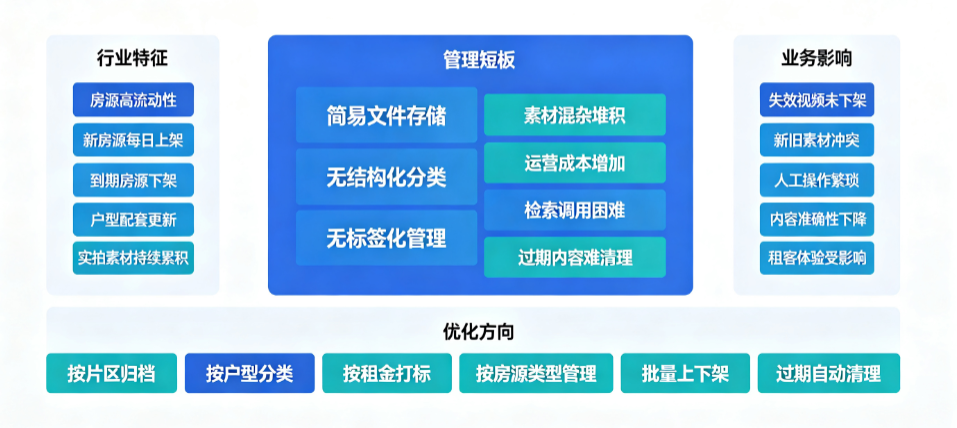
Rental listings feature high mobility and frequent updates. Every day sees new listings launched, expired listings removed and constant revisions to layouts and supporting facilities. Continuous accumulation of on-site footage and explanatory videos generates massive media asset inventories. Platforms’ basic file storage systems lack structured and tag-based classification capabilities, making hierarchical archiving by district, layout, rent bracket and property type impossible. New, expired and active materials are mixed together. Operation staff face obstacles in quick retrieval, batch onboarding/offboarding and archiving of outdated content. Cumbersome material maintenance easily causes delayed removal of videos for vacated properties and conflicts between old and new materials, pushing up platform operational costs.
(4) Single Collection of Behavioral Data Fails to Support Platform Refined Operations
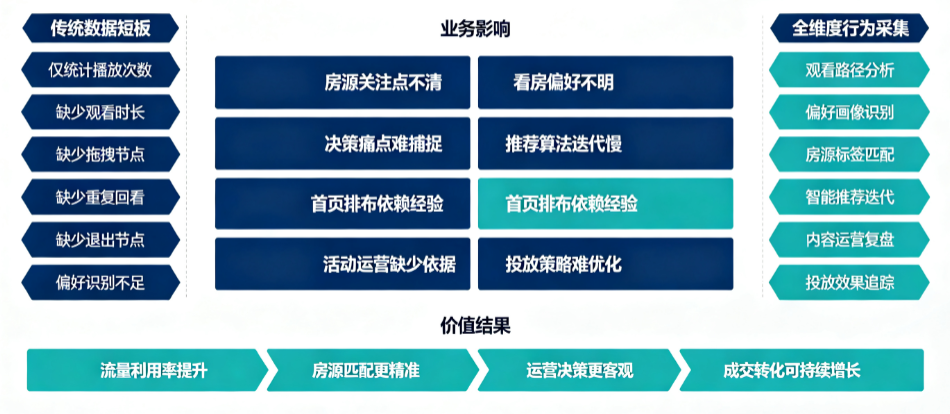
Traditional rental platforms only count basic video view volume and cannot collect multi-dimensional granular data on tenants’ virtual viewing behaviors. Core indicators including total watch duration, drag timestamps, repeated playback of key segments and playback exit points are missing. Platforms cannot precisely identify tenants’ property concerns, viewing preferences and decision-making pain points. Iteration of listing recommendation algorithms, homepage layout design, thematic campaign planning and traffic delivery strategies rely merely on operators’ subjective experience. Without data support, targeted distribution and operational optimization cannot be realized, making it hard to sustain improvements in traffic utilization and rental transaction conversion efficiency.
II. How Rental Platforms Realize Refined Operations for Virtual Property Viewing
(1) In-depth Uni-App SDK Integration Enables Smooth High-Definition Virtual Viewing Across Terminals
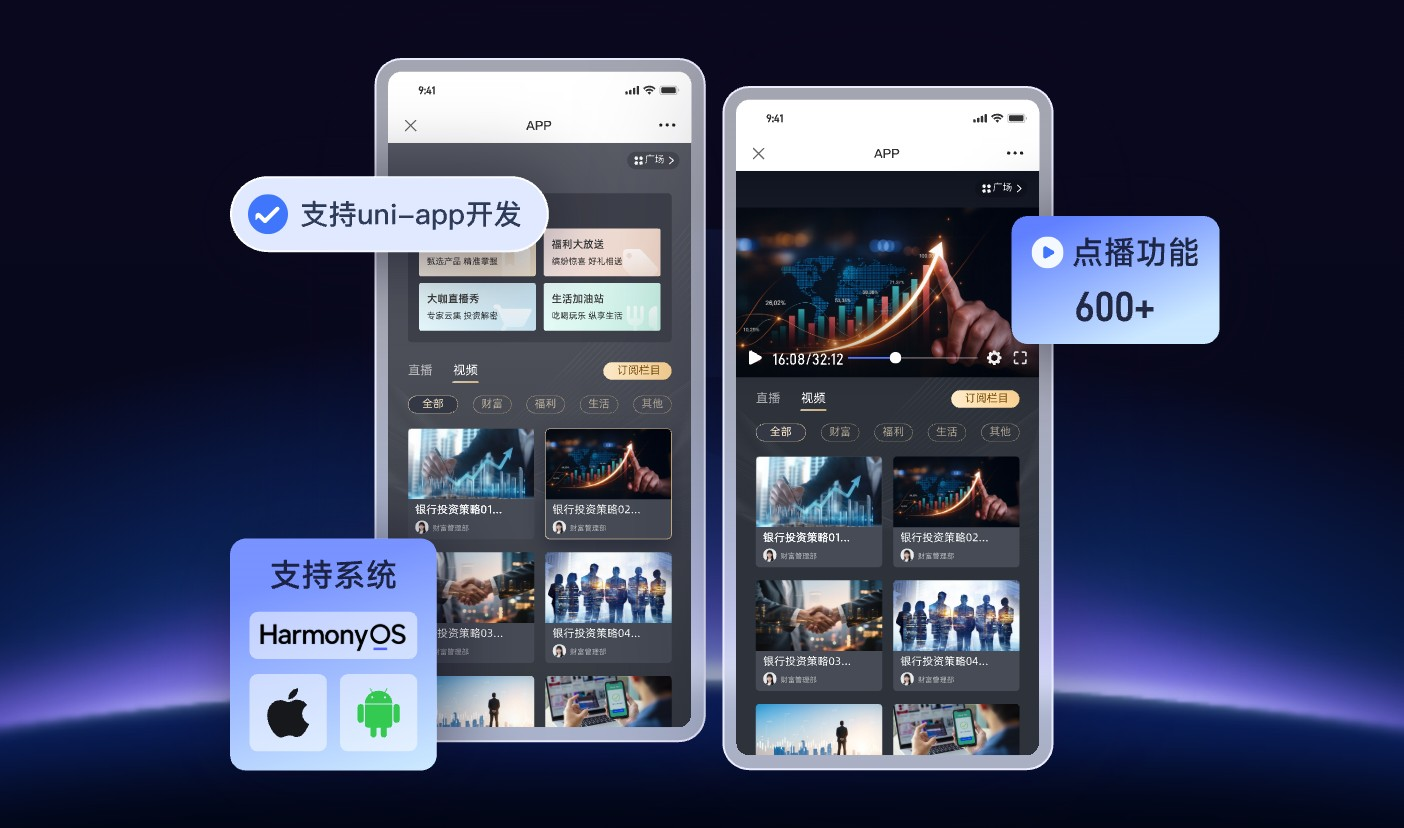
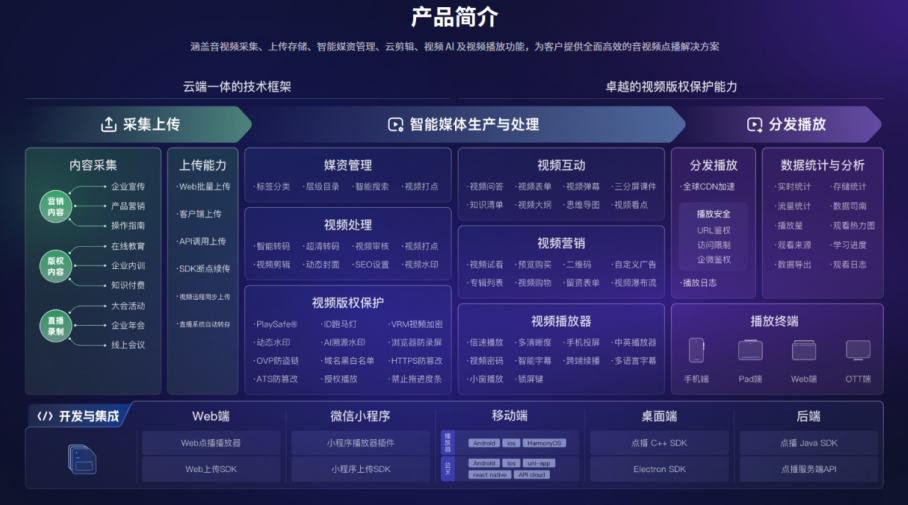
We provide standardized native Uni-App video SDK for lightweight deep integration into existing App and Mini Program projects. Platforms avoid large-scale independent R&D and repeated multi-terminal debugging to realize one-stop cross-terminal adaptation. Embedded with core capabilities including high-definition decoding, adaptive resolution, weak-network preloading and image stabilization, the SDK perfectly supports playback of all types of high-definition on-location listing videos and thoroughly eliminates stuttering, blurriness and crashes plaguing native players. It fully restores property information including unit layouts, interior finishes and community amenities, improves the immersive virtual viewing experience for remote tenants, helps tenants complete preliminary property screening efficiently, and effectively lifts conversion rates for listing inquiries and scheduled viewings.
(2) Full-Link Video Encryption Control Standardizes Private-Domain Communication Standards
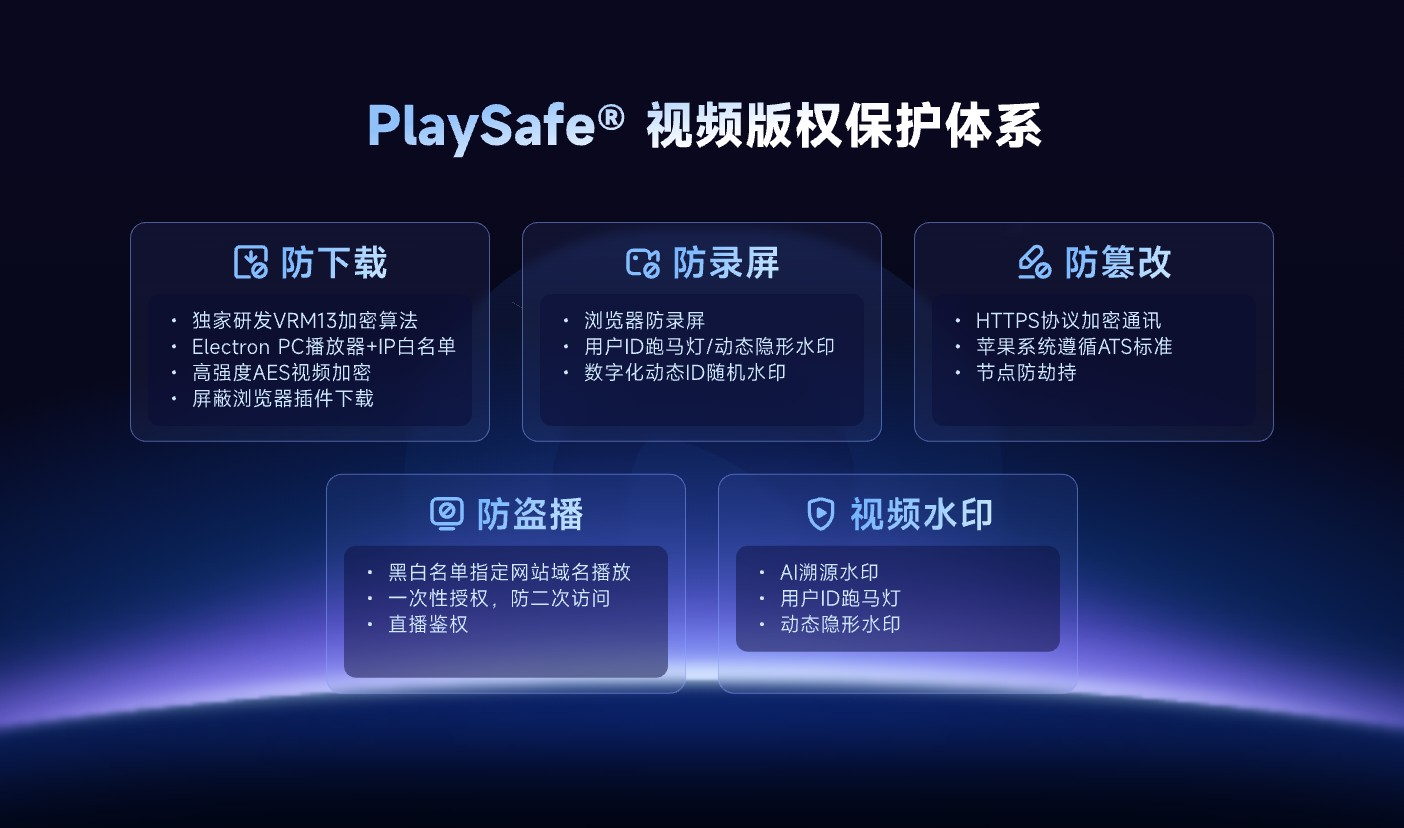
Supported by POLYV video cloud security capabilities, full-link protection mechanisms including encrypted video storage, prohibition of raw resource downloading and anti-screen-recording tampering are enabled. Listing videos can only be authorized and played within official platform Apps and WeChat Mini Programs, fundamentally blocking agents from downloading, capturing and editing source files without permission. When agents expand client reach via private domains, they can only forward standardized platform listing pages. Rent quotations, unit parameters and facility descriptions on these pages remain centrally controlled by platforms and cannot be arbitrarily modified or falsely packaged. The solution curbs industry misconduct such as lowball marketing and misleading advertising, unifies listing communication standards across all channels, and safeguards platforms’ core brand advantage and credibility built on authentic listings.
(3) Enterprise-Grade Structured Media Asset Library Supports Efficient Batch Material Maintenance
Equipped with POLYV enterprise-grade structured media asset management system, the platform accommodates the high-frequency iteration and fast turnover characteristics of rental listings. Custom multi-dimensional tags can be configured based on districts, layouts, rent brackets, property types and publication time for classified archiving. Operators can conduct batch uploading of videos for new listings, batch removal of videos for vacated units and batch archiving of expired materials. Assets are clearly categorized into available, pending, leased and expired inventory to eliminate mixing of outdated and updated resources. It helps operation teams rapidly retrieve and uniformly manage massive listing videos, substantially reduce manual maintenance overhead, accelerate content iteration and ensure real-time, accurate and valid online listing information.
(4) Full-Domain Behavioral Data Reporting Enables Refined Operations via API Feedback
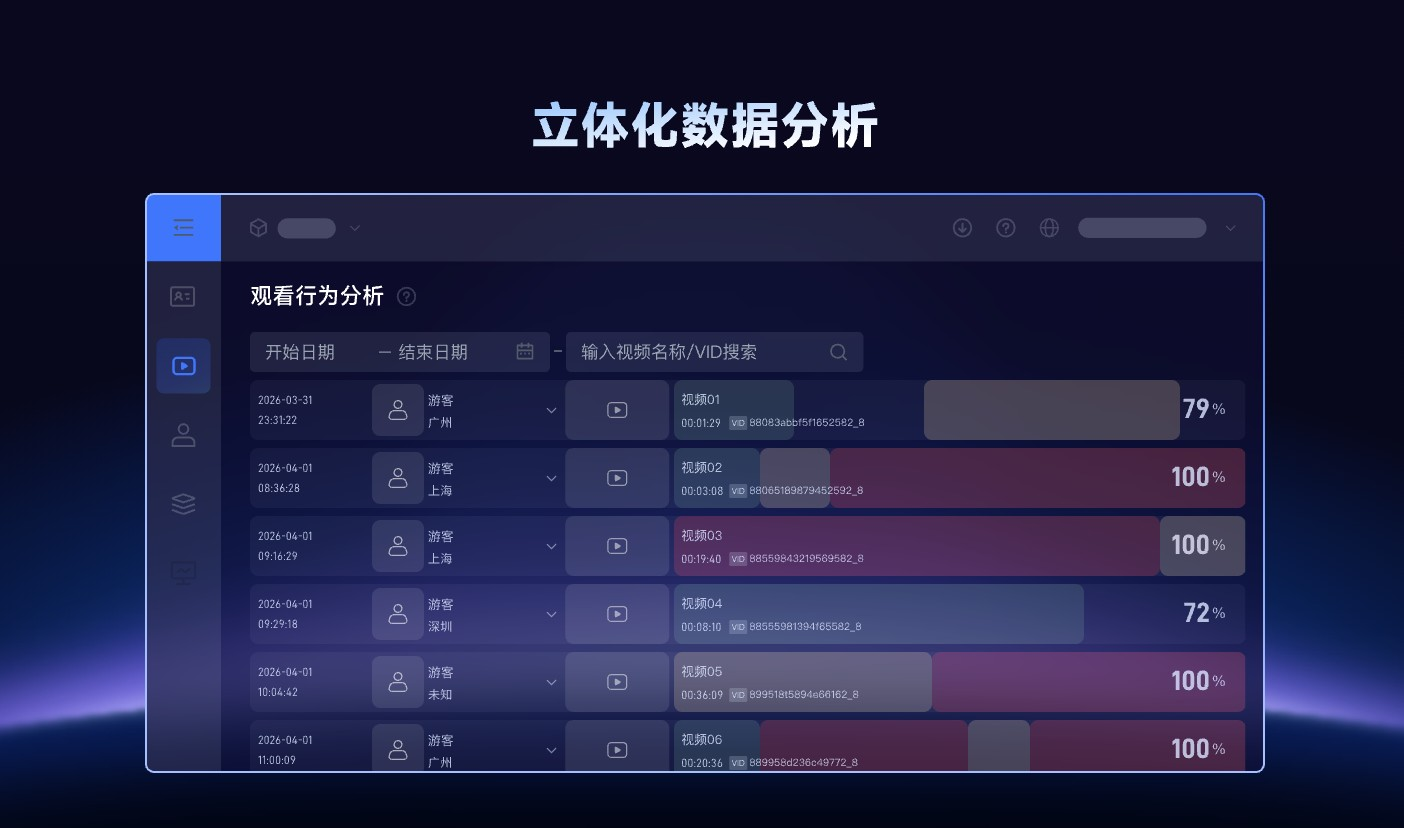
The SDK automatically collects granular multi-dimensional tenant viewing behavior data, including total video watch duration, drag timestamps, repeated playback frequency of key segments and playback termination positions. Complete datasets can be fed back to the rental platform’s internal business backend in real time via standard APIs, furnishing precise data foundations for platform algorithms and operation teams. Based on tenant viewing behavior portraits, platforms can iterate intelligent listing recommendation algorithms, optimize homepage traffic layout, design targeted operation campaigns, and accurately capture tenants’ housing preferences and core demands. Operations evolve from experience-based practice to data-driven models, enabling precise traffic distribution, user-segmented operations and continuous content optimization, comprehensively improving traffic utilization and rental conversion rates.