Efficient Online Case Discussion for Law Firms: Low-Latency Collaborative Solution for Legal Seminars
Case discussions, case reviews and litigation strategy demonstrations are core work links that drive quality and efficiency in law firms’ case handling. They play a vital role in refining courtroom response strategies, improving case handling quality and raising the odds of winning lawsuits. As law firms expand in scale and establish cross-regional branches, lawyers working at remote offices or on-site client assignments have become commonplace. Traditional offline in-person discussions are constrained by geography and travel expenses, making frequent, regular collaborative reviews unfeasible.
Generic online meeting and live streaming tools suffer from high latency, heavy image compression, loose permission control, weak document collaboration functions and insufficient security protection for shared content. They fail to meet the professional demands of law firms for confidential case discussions, case file annotation and multi-party collaborative reviews. This easily leads to inefficient communication, disclosure of case secrets, leakage of client privacy, and an absence of traceability for accountability, giving rise to compliance risks. Accordingly, building a professional online live discussion system featuring low latency, high confidentiality, robust collaboration and full traceability has become an essential requirement for modern law firms to boost operational efficiency, strengthen compliance risk control and enable seamless cross-team collaboration.
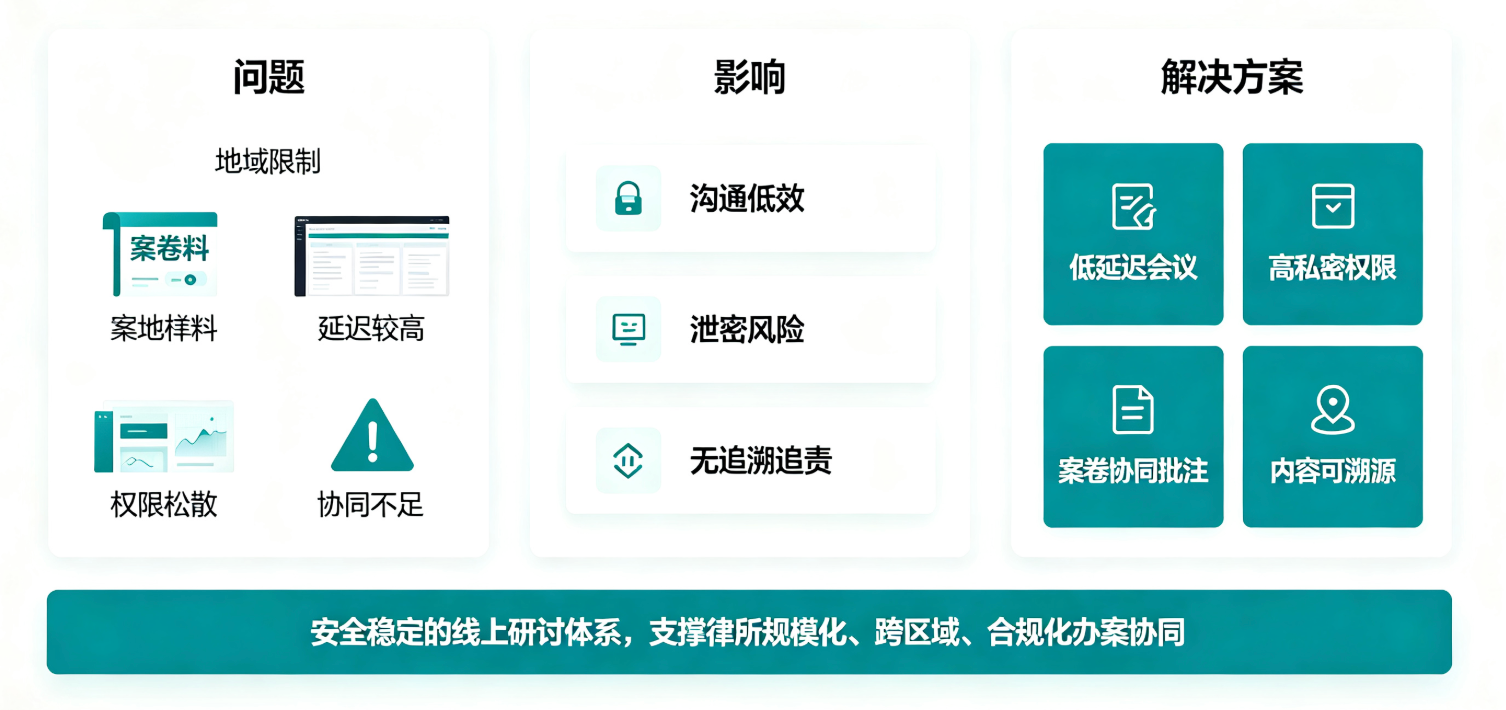
I. Key Pain Points of Online Case Discussions for Law Firms
(1) High Latency for Cross-Regional Multi-Party Calls & Low Efficiency of Collaborative Case Annotation
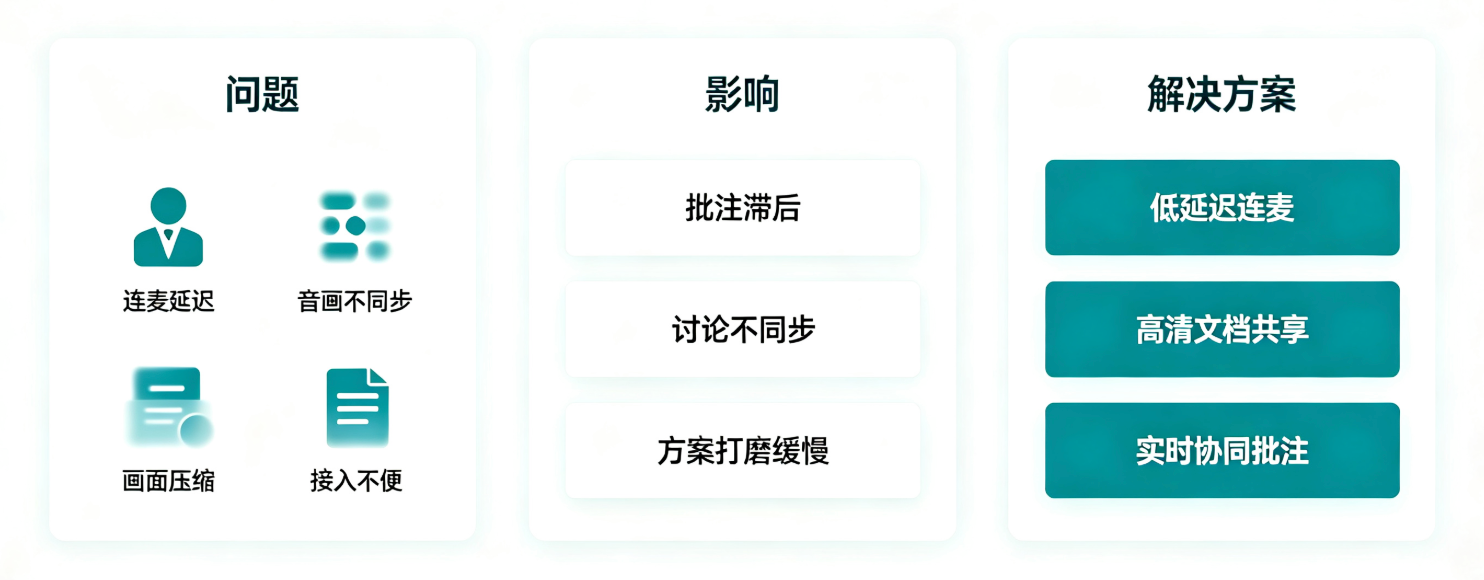
Large-scale law firms commonly operate multiple branches and handle cases across regions, making it impossible for lawyers at remote offices or field staff to attend offline case discussions on demand. Conventional meeting and live streaming tools deliver high latency and audio-video desynchronization during multi-participant calls. When sharing contracts, case evidence and docket files, displayed images become blurry with critical textual details obscured.
Furthermore, traditional meeting access involves cumbersome procedures and complicated setup, creating high barriers for field and remote lawyers to join sessions. Real-time online marking, clause annotation and highlighting of disputed points cannot be smoothly coordinated across participants. Team members are unable to jointly analyze core disputes or refine litigation strategies anytime, resulting in delayed cross-branch case collaboration, lengthy communication chains and slow progress in case reviews and strategy optimization. Online discussions thus fail to proceed efficiently.
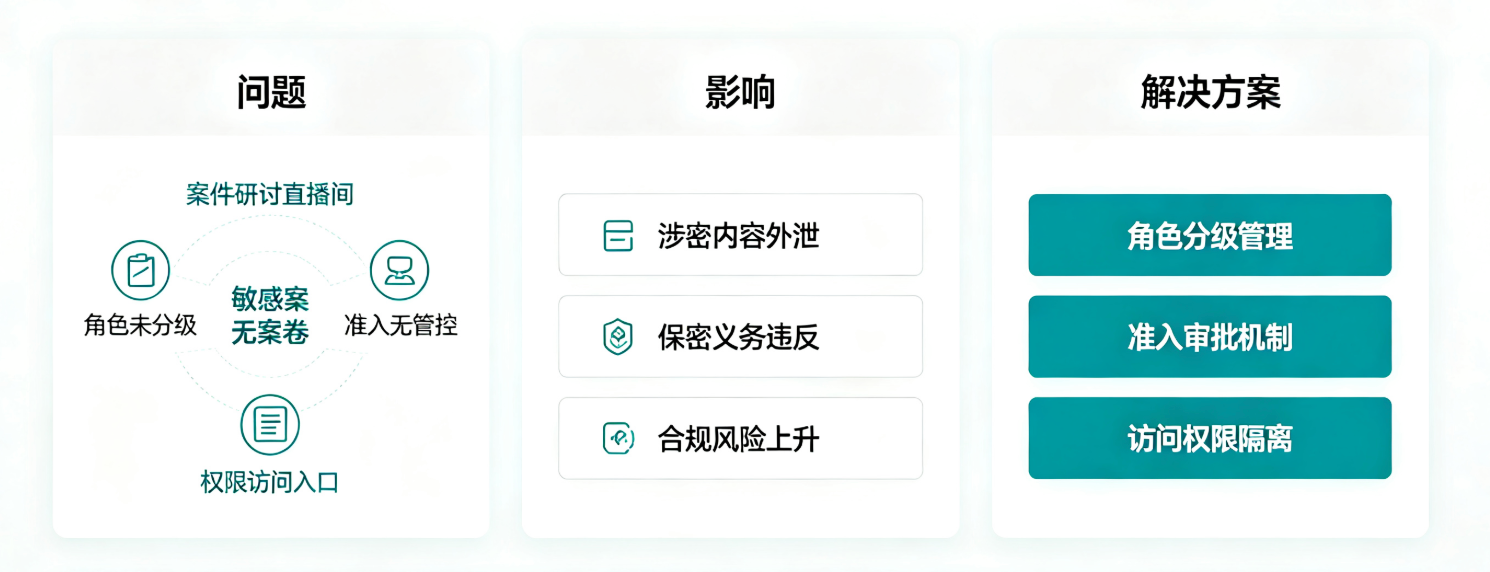
(2) Undifferentiated Live Stream Permissions Bring Risks of Confidential Case Leaks
Content covered in case discussions is highly sensitive, including confidential client information, undisclosed litigation strategies, courtroom tactics and core case evidence, all subject to strict legal confidentiality obligations and industry compliance standards. However, generic live streaming tools lack refined role-based permission grading and access control. Live rooms feature no permission isolation, allowing trainee lawyers, administrative staff, outsourced personnel and other non-core case handlers to freely enter and view confidential case materials.
Without tiered visibility for sensitive content, all participants gain unrestricted access, which creates a high risk of case information leakage. Violations of industry confidentiality norms may result in compliance penalties and damages to the interests of both the law firm and its clients.
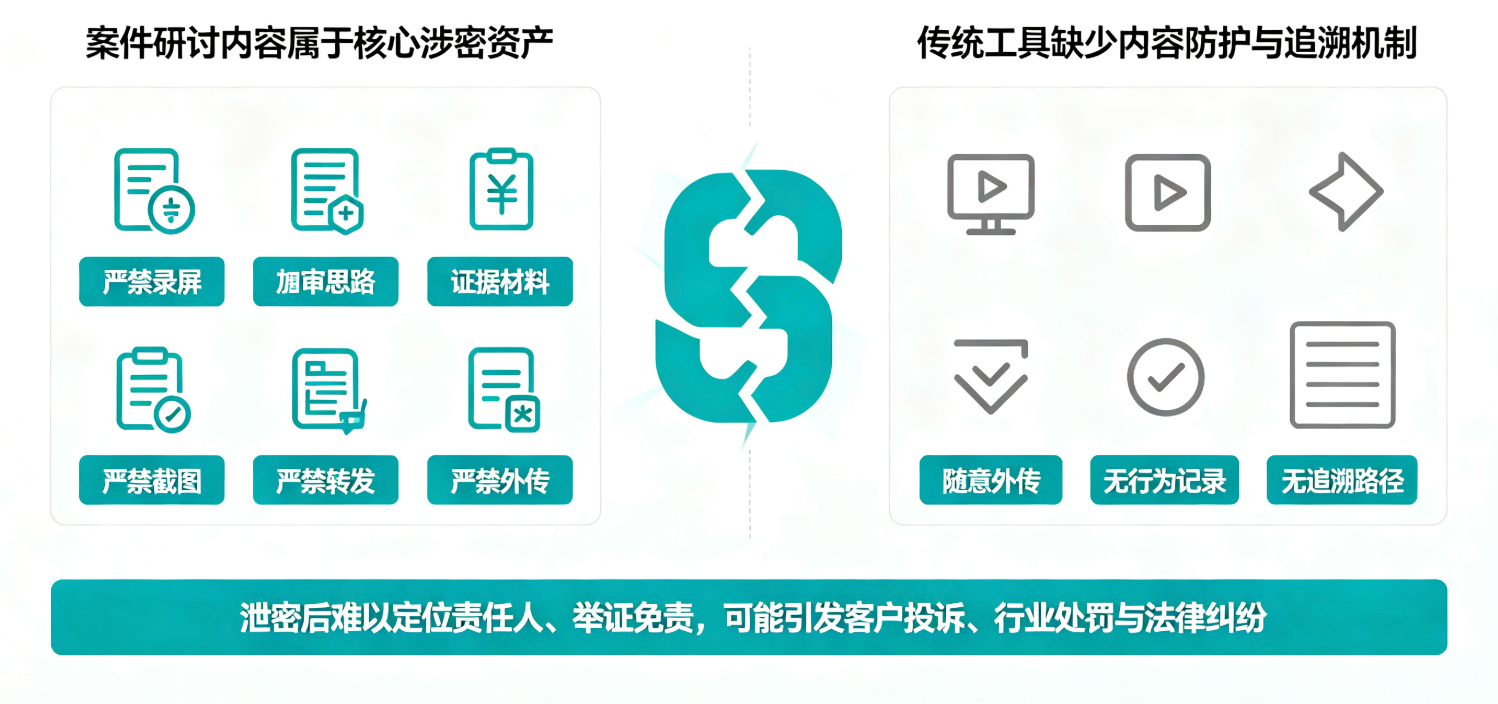
(3) Unregulated Dissemination of Discussion Content with No Traceability for Information Leaks
Courtroom reasoning, evidentiary materials and clients’ commercial data generated during case reviews constitute core confidential assets that are strictly prohibited from being privately screen-recorded, captured via screenshots or forwarded externally. Traditional online discussion tools lack content protection and traceability mechanisms. Attendees may freely record screens, take screenshots and share recorded discussion footage and documents.
Once confidential client data or litigation strategies are leaked, there exist no operational logs, activity records or identity tracking trails to identify the responsible party. Law firms cannot provide evidence to exempt themselves from liability, which may trigger client complaints, industry sanctions and even legal disputes, severely undermining the firm’s reputation and credibility.
(4) Limited Document Processing Capacity Hinders In-Depth Multi-Party Collaborative Reviews
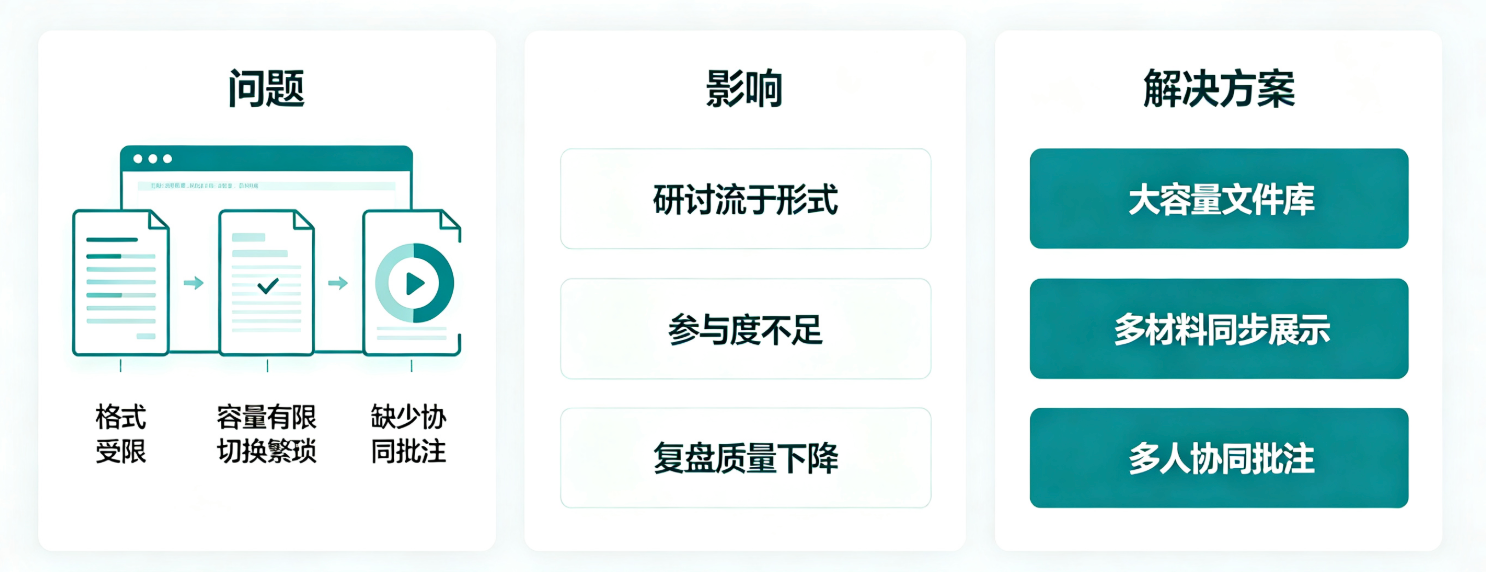
Comprehensive case discussions require simultaneous presentation of extensive dossiers, evidentiary files, court transcripts and case flowcharts, alongside joint analysis of disputed points and iterative refinement of litigation tactics by multiple lawyers. Generic live streaming tools impose restrictions on file formats and upload sizes, with cumbersome switching between different materials and no support for bulk import of docket records.
In addition, real-time collaborative multi-user annotation functionality is absent. Discussions follow a one-way presenter-led format with passive audience participation, eliminating opportunities for synchronized marking, breakout group deliberations and targeted review of unresolved legal issues. Online discussions remain superficial and fail to deliver the depth of brainstorming achieved through offline in-person reviews.
II. Building a Professional Online Seminar System for Law Firms
Polyv delivers a specialized low-latency, highly confidential, collaborative and fully traceable live streaming solution tailored to law firms’ scenarios: cross-regional case deliberations, confidential case reviews, multi-party litigation strategy argumentation and compliance risk management. It directly addresses the four core industry pain points of inefficient cross-regional collaboration, loose confidential permission controls, untraceable information leaks and inadequate document collaboration capabilities, enabling law firms to conduct regular, efficient, compliant and secure online case discussions.
(1) Self-Developed PRTC Low-Latency Multi-Party Calling & Lightweight QR Code-Access Collaboration
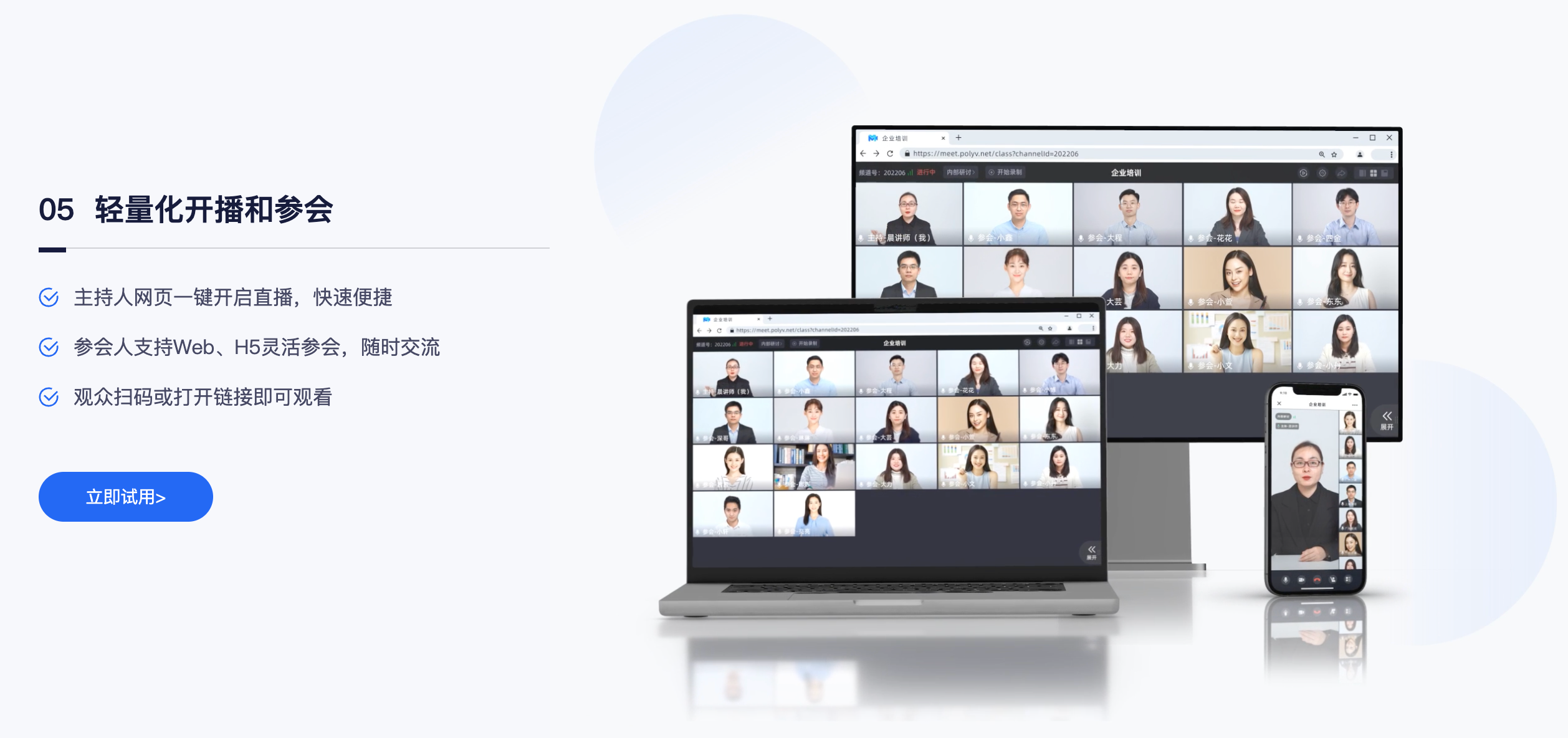
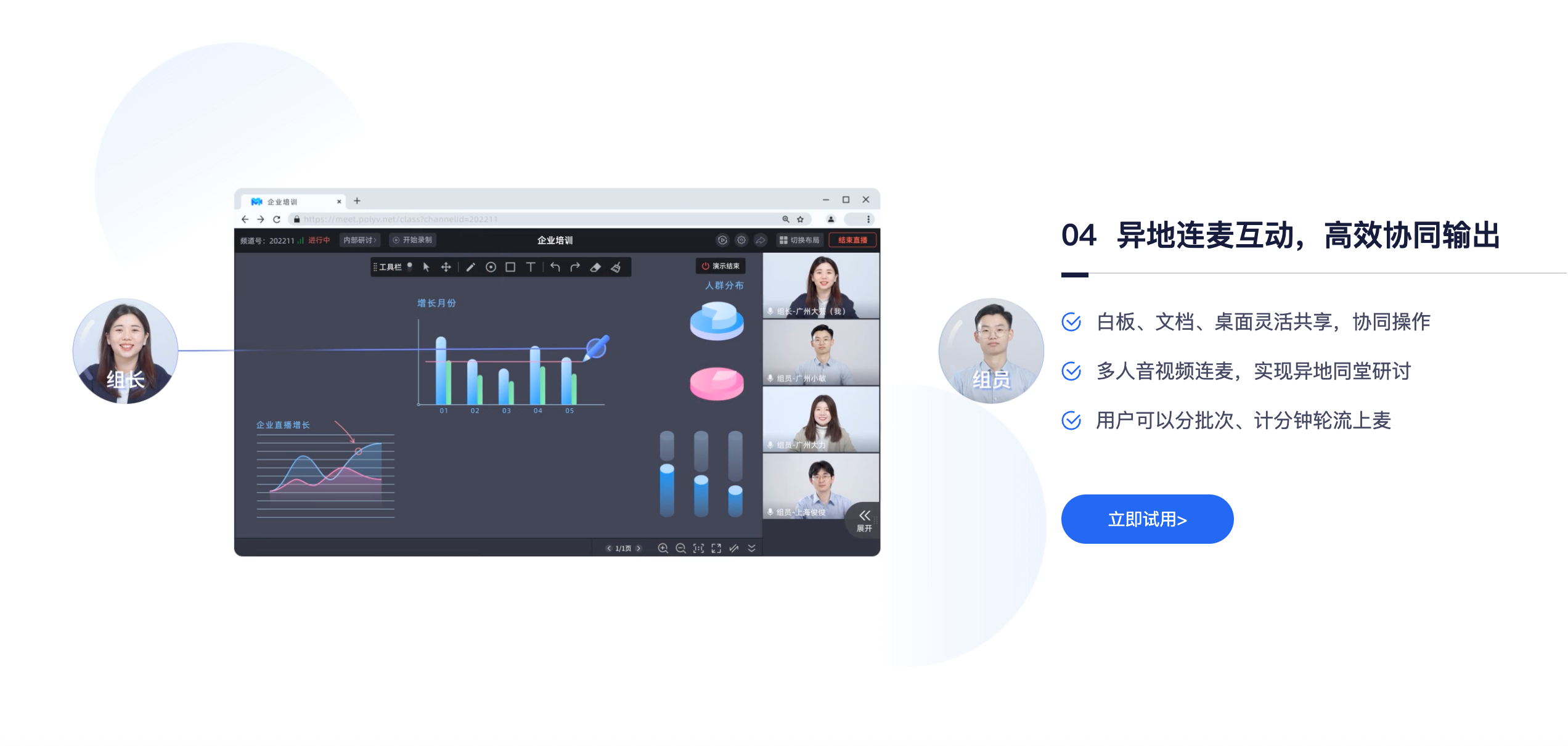
Powered by self-developed PRTC low-latency multi-party real-time calling technology, the solution establishes exclusive dedicated collaborative links for law firms to resolve cross-regional latency, audio-video desync and blurry shared visuals. It supports high-definition desktop sharing, synchronized document display and real-time electronic whiteboard annotation, rendering every detail of contracts, case evidence and docket files with precise clarity of text, charts and graphics.
Equipped with lightweight H5 QR code one-click entry, lawyers avoid tedious software downloads and complex setup steps. They can instantly join case discussions, annotate legal clauses and revise disputed points, drastically lowering barriers to cross-regional collaboration and accelerating cross-branch case communication and litigation strategy refinement.
(2) Refined Tiered Permission Control & Whitelist Access to Safeguard Confidentiality
The system features an exclusive refined role-based permission management framework paired with a dedicated whitelist access mechanism to strictly verify participant identities. Only lead counsel and co-counsel directly handling the case are granted entry to live confidential sessions, preventing unauthorized access to sensitive case details, litigation strategies and client private data by trainee lawyers, administrative staff, outsourced workers and irrelevant personnel.
Tiered visibility and hierarchical access management for discussion content fully align with lawyers’ statutory confidentiality duties and industry compliance standards, comprehensively mitigating risks of confidential case disclosure and forming a robust compliance risk prevention framework for law firms.
(3) End-to-End PlaySafe® Protection Enables Full Traceability of Information Breaches
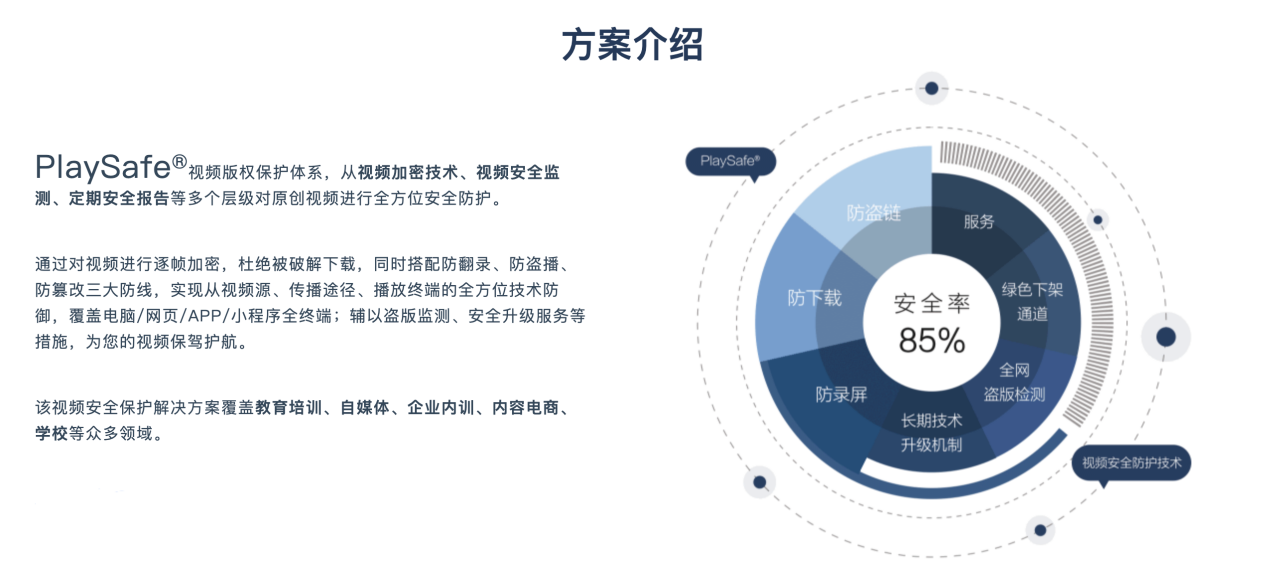
Embedded with the PlaySafe® end-to-end video copyright protection suite, the solution leverages exclusive VRM encryption technology, global anti-hotlinking, dynamic watermarks, cross-device screen recording prevention and illegal dissemination interception to create a multi-layered security shield for confidential content. It provides full-cycle protection for recorded case discussions, sensitive evidentiary materials and litigation strategies, effectively blocking unauthorized screen recording, screenshot capture, forwarding and external distribution.
Complete operational logs and attendee identity records are retained throughout every session. In the event of information leakage, the liable party can be accurately traced, allowing law firms to produce evidence for liability exemption and avoid compliance disputes and reputational damage.
(4) Multi-Format Document Collaborative Annotation Supports In-Depth Joint Case Reviews
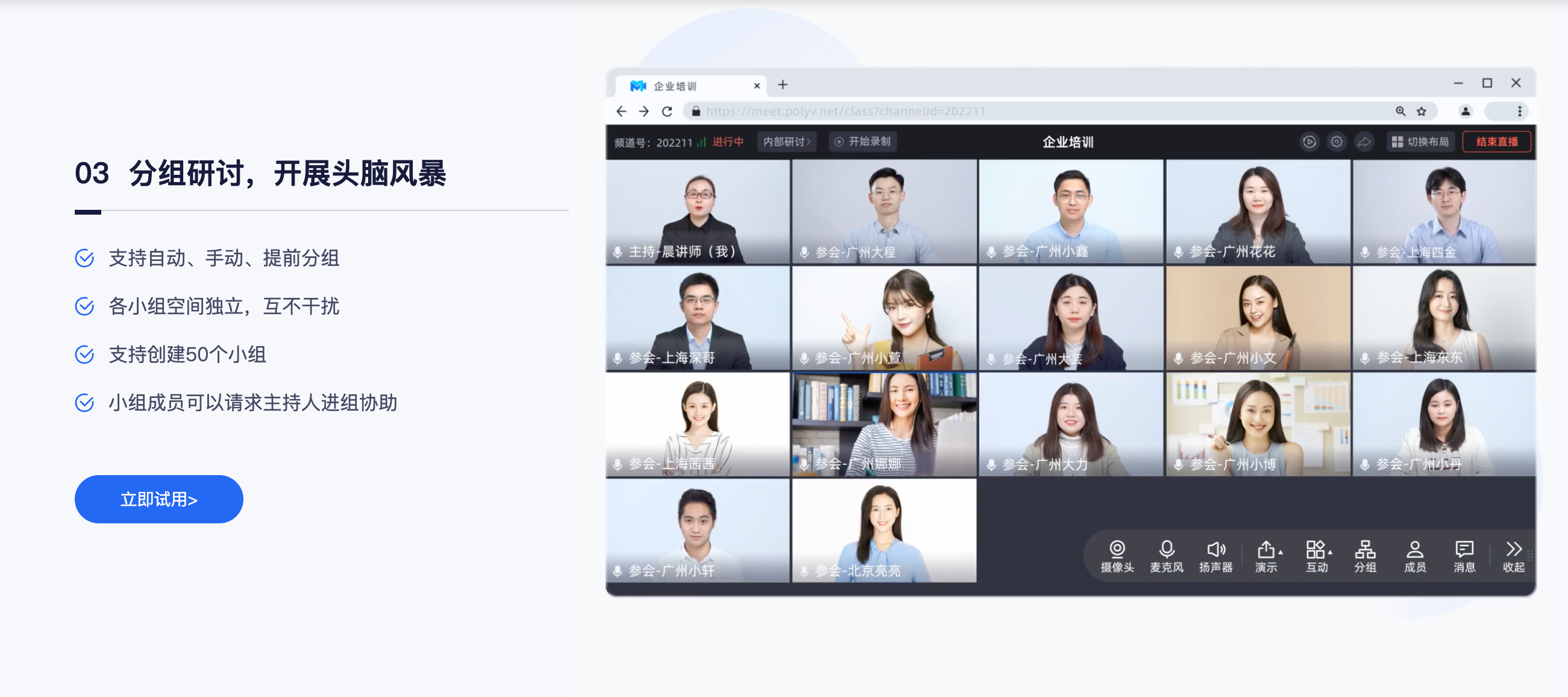
The platform supports bulk upload of full-format, large-capacity docket files, court documents and case flowcharts, with seamless one-click switching between materials to eliminate format restrictions and cumbersome material navigation common to generic tools. It also features a multi-user real-time whiteboard markup function: both presenters and breakout group participants may upload case files independently, with all parties able to synchronously mark disputed legal points, identify evidentiary gaps and optimize courtroom strategies.
This functionality enables multi-party joint brainstorming, breakout group discussions and synchronized case reviews, greatly enhancing the depth and efficiency of online deliberations and delivering online discussion outcomes matching or even exceeding those of offline meetings.
III. Core Business Value of the Solution
Precisely built to satisfy law firms’ core operational demands for cross-regional case handling, confidential deliberations, compliance risk control and collaborative case reviews, this solution comprehensively resolves the inherent limitations of conventional online meeting tools. It empowers law firms to establish an efficient, secure, compliant and traceable online case discussion ecosystem, cutting cross-regional collaboration costs, elevating the team’s professional case-handling standards and strengthening overall compliance risk governance.