Efficient Live Streaming Operation for FMCG Brand Campaigns: Custom Brand Live Streaming & Full-Link Collaborative Solution
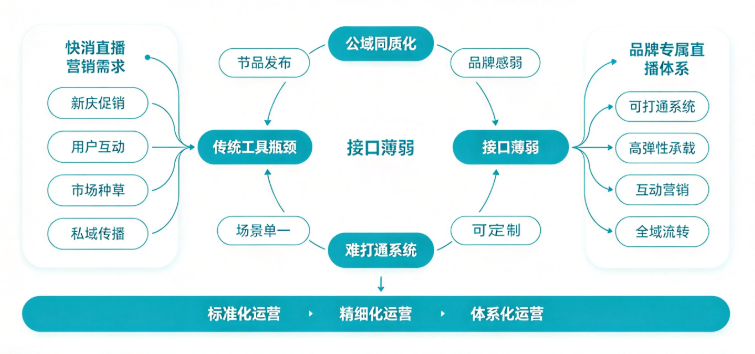
Live streaming marketing has become a core operational method for FMCG brands to launch new products, run festival promotions, engage users and generate market interest. Characterised by frequent campaigns, flexible scenarios and large audience bases, the FMCG industry imposes stringent requirements on brand exclusivity, system compatibility, load stability and interactive marketing capabilities for live streaming systems.
For regular online campaign live broadcasts, brands need to roll out communications via their own private domain channels while connecting multiple internal business systems to form a closed-loop end-to-end operation. Generic public-domain live streaming rooms suffer from serious homogenisation. They struggle to align with brand visual identities and cannot be deeply integrated with brands’ self-developed systems. Conventional live streaming tools have limited API capabilities and narrow functional scope, failing to meet FMCG brands’ business demands for high-frequency campaigns, diverse interactions and cross-domain traffic circulation.
Accordingly, building a customisable, system-integrable, highly scalable and fully featured proprietary live streaming operation system is critical for FMCG brands to standardise, refine and systematise live streaming marketing.
I. Core Pain Points in Live Streaming Operation for FMCG Brand Campaigns
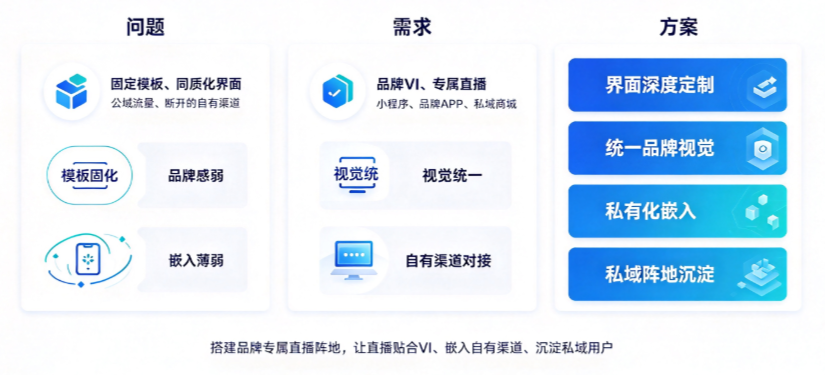
(I) Rigid Generic Live Room Templates Fail to Meet Brands’ Private Deployment Requirements
FMCG brands attach great importance to visual consistency and the exclusivity of private domain touchpoints. Marketing live streams of all types require a unified brand visual style to build dedicated live streaming spaces. Off-the-shelf public-domain live streaming rooms feature fixed templates with limited customisation. Interface layouts, visual styles and displayed content cannot match brand VI systems. Meanwhile, generic live streaming tools offer weak private embedding capabilities. They are hard to integrate deeply with brands’ in-house development frameworks and cannot be embedded into official mini-programs, brand apps, private domain malls and other owned channels.
Brands are unable to build independent, dedicated live streaming environments and have to rely on public platforms. This mixes in platform traffic, dilutes brand tonality and hinders private domain user retention and consistent brand image building.
(II) Isolated Data Across Systems Prevents Closed-Loop Cross-Campaign Operations
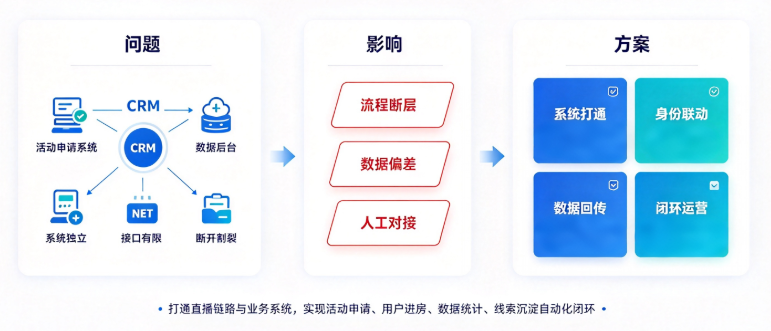
The end-to-end online campaign workflow of FMCG brands is comprehensive and rigorous. It covers campaign application and approval, live room creation and launch, user registration and entry, live data analytics and lead capture. It requires integration with campaign approval systems, CRM platforms, NET data backends and other business systems. Traditional live streaming platforms have restricted API capacity and cannot connect deeply with enterprises’ existing business systems.
Data silos and disconnected workflows are commonplace. Campaign approval status cannot sync automatically with live room status, user identities upon entering the live room cannot be linked and recognised, and viewership statistics, engagement metrics and lead data from live streams cannot be relayed to business backends in real time. Manual coordination across workflows is inefficient, prone to data discrepancies and process breakdowns, and prevents automated, closed-loop campaign operations.
(III) Wide Variation in Campaign Scale Creates Unstable Live Streaming Concurrency and Distribution
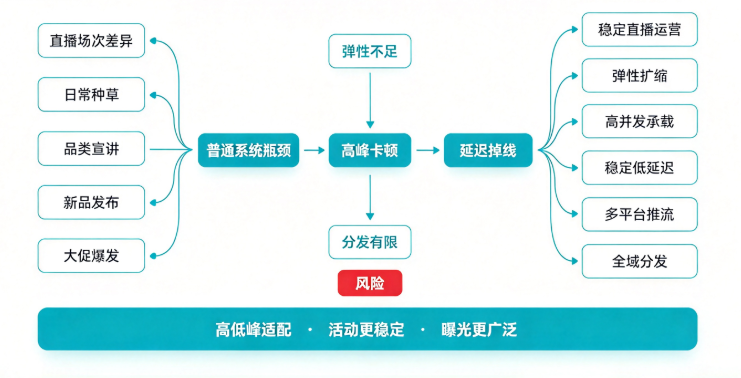
FMCG brands have dense marketing calendars throughout the year and run live campaigns of varying sizes on an ongoing basis. Most regular sessions are small-to-medium content seeding streams and category briefings with steady traffic. New product launches and major shopping festivals, by contrast, bring traffic surges with peak concurrent viewers in the tens of thousands, resulting in vastly fluctuating load requirements.
Ordinary live streaming systems lack elastic scaling capabilities to accommodate scenarios with high and low traffic volumes. Large-scale events are vulnerable to stuttering, latency and disconnections. In addition, brand marketing requires omnichannel exposure. Single-source live rooms have limited reach, and basic tools lack reliable multi-platform relay capabilities, making it difficult for brands to drive cross-domain traffic and maximise touchpoints.
(IV) Limited Interactive Marketing Features and Inflexible Product Conversion Links
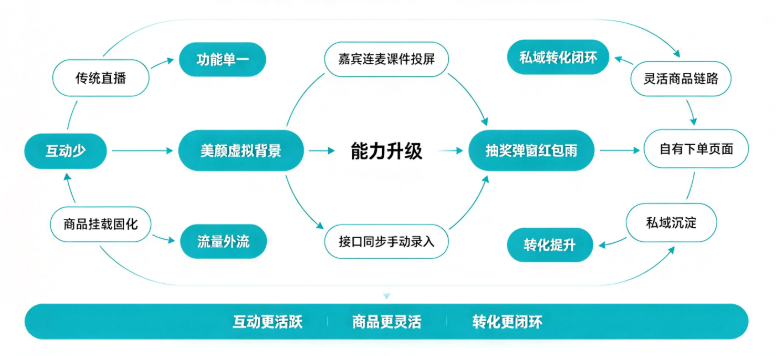
The core goals of FMCG live streaming are audience engagement, content seeding and conversion. Rich interactive features are needed to energise live rooms and retain viewers. Conventional live streaming tools are functionally limited. They lack fundamental production capabilities including beautification filters, virtual backgrounds, guest co-hosting and screen sharing for presentations. They also offer few interactive marketing modules such as pop-up draws and red packet rain, leading to flat live room atmospheres and poor user retention.
Moreover, product pinning frameworks are rigid and cannot flexibly connect to brands’ native merchandise systems. They do not support both API synchronisation and manual backend configuration. Live stream product links can only redirect users to third-party platforms instead of brands’ native checkout pages. Traffic cannot be retained within private domains for high-efficiency conversion, breaking the marketing closed loop.
II. Dedicated Live Streaming Solution for FMCG Brand Campaigns
Polyv tailors its offering to the FMCG industry’s characteristics of high-frequency marketing live streams, private domain operations, multi-system integration and omnichannel traffic distribution. Addressing pain points including limited customisation, system silos, unstable concurrency and insufficient functionality, it delivers an integrated live streaming solution with private customisation, end-to-end connectivity, elastic high-concurrency support and full marketing features. This empowers FMCG brands to build proprietary live streaming operation systems and implement standardised, automated and efficient live marketing.
(I) Private Integration via SDK/API to Build Brand-Exclusive Live Streaming Platforms
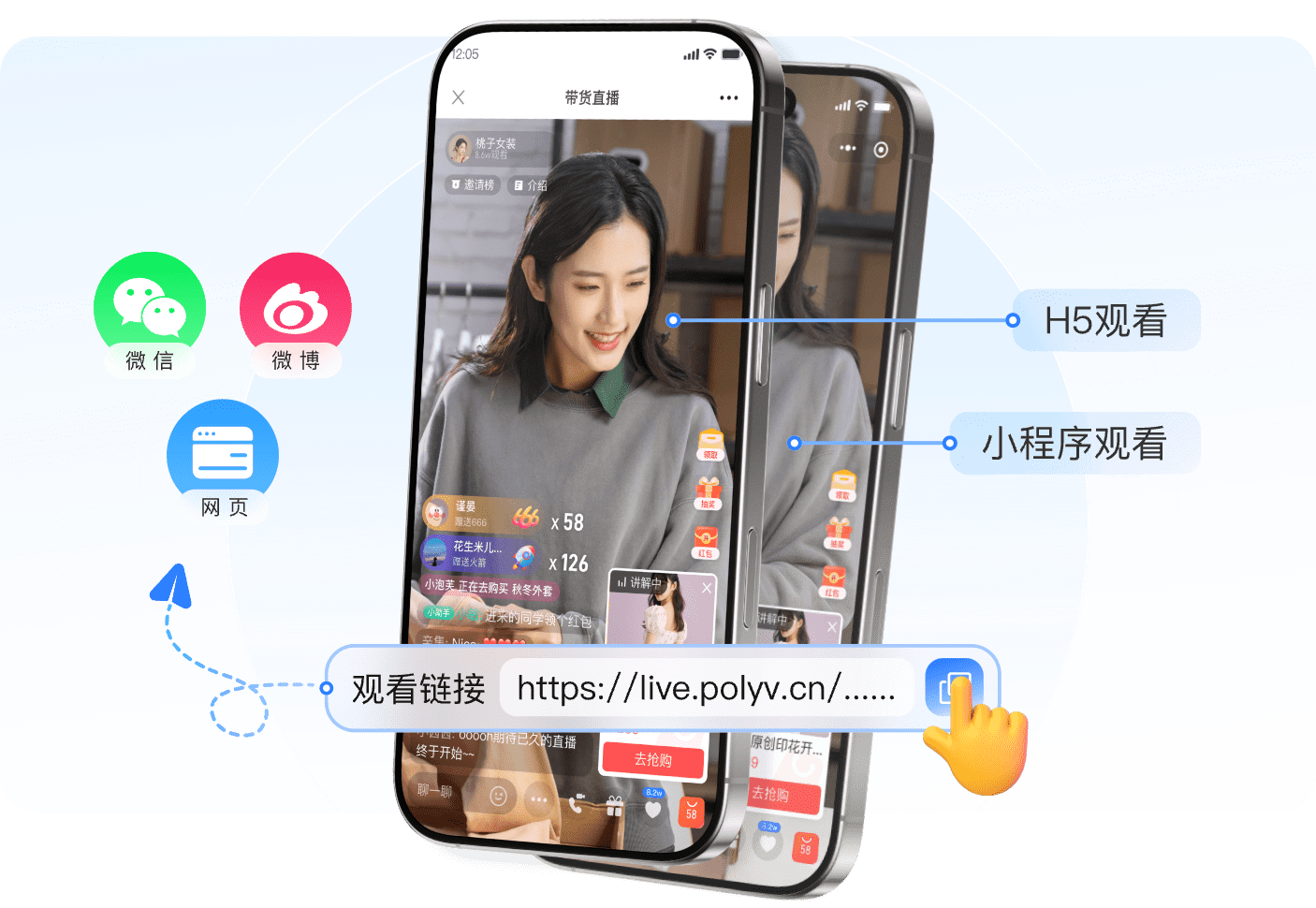
Powered by mature live streaming SDK and API capabilities for private integration, the solution can be deeply embedded into brands’ self-developed ecosystems. It enables full customisation of live room layouts, visual styles and brand assets to eliminate the homogeneity of public-domain live rooms. Full private deployment and channel embedding are supported for seamless integration with proprietary brand apps, official mini-programs, private domain malls and other owned touchpoints.
There are no public-platform watermarks or external traffic interference. Brands can build self-service live streaming spaces fully aligned with their VI systems, unify marketing visuals and facilitate the capture of private domain traffic.
(II) Full API System Integration to Enable Closed-Loop End-to-End Campaign Operations
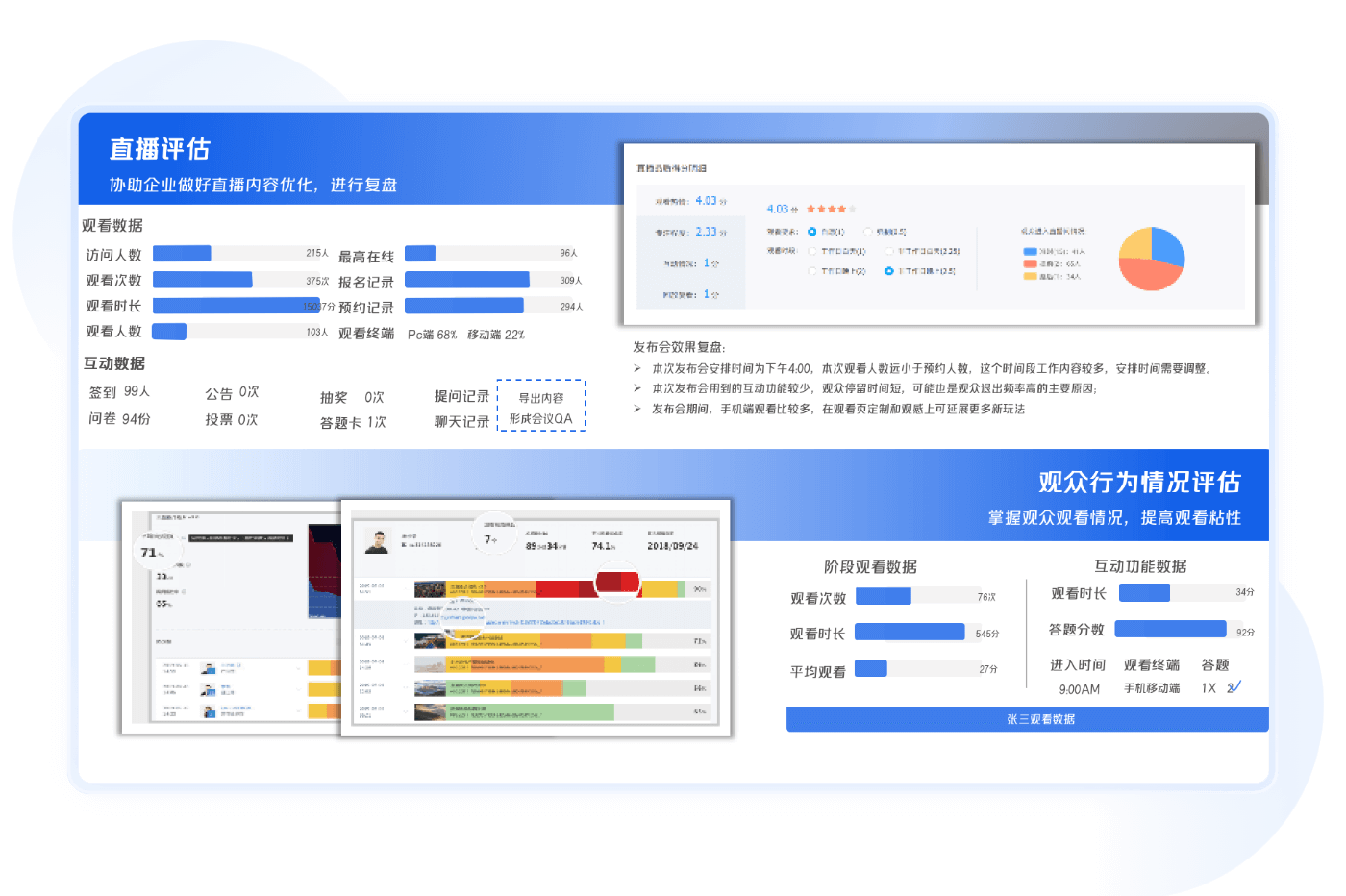
The platform exposes comprehensive standard APIs that can precisely connect with brands’ existing campaign approval systems, CRM platforms, NET data backends and other business tools. It automatically synchronises campaign approval workflows and live room creation status for unified online campaign governance. User registration data and identity information upon room entry can be exchanged in real time to accurately identify private domain users.
After each live broadcast, viewership metrics, engagement records and user behavioural data are automatically pushed back to business backends. This closes the full workflow from campaign initiation and user participation to data review, cutting manual operational overhead and refining campaign management.
(III) Elastic High-Concurrency Architecture for Multi-Scenario Omnichannel Stream Relay
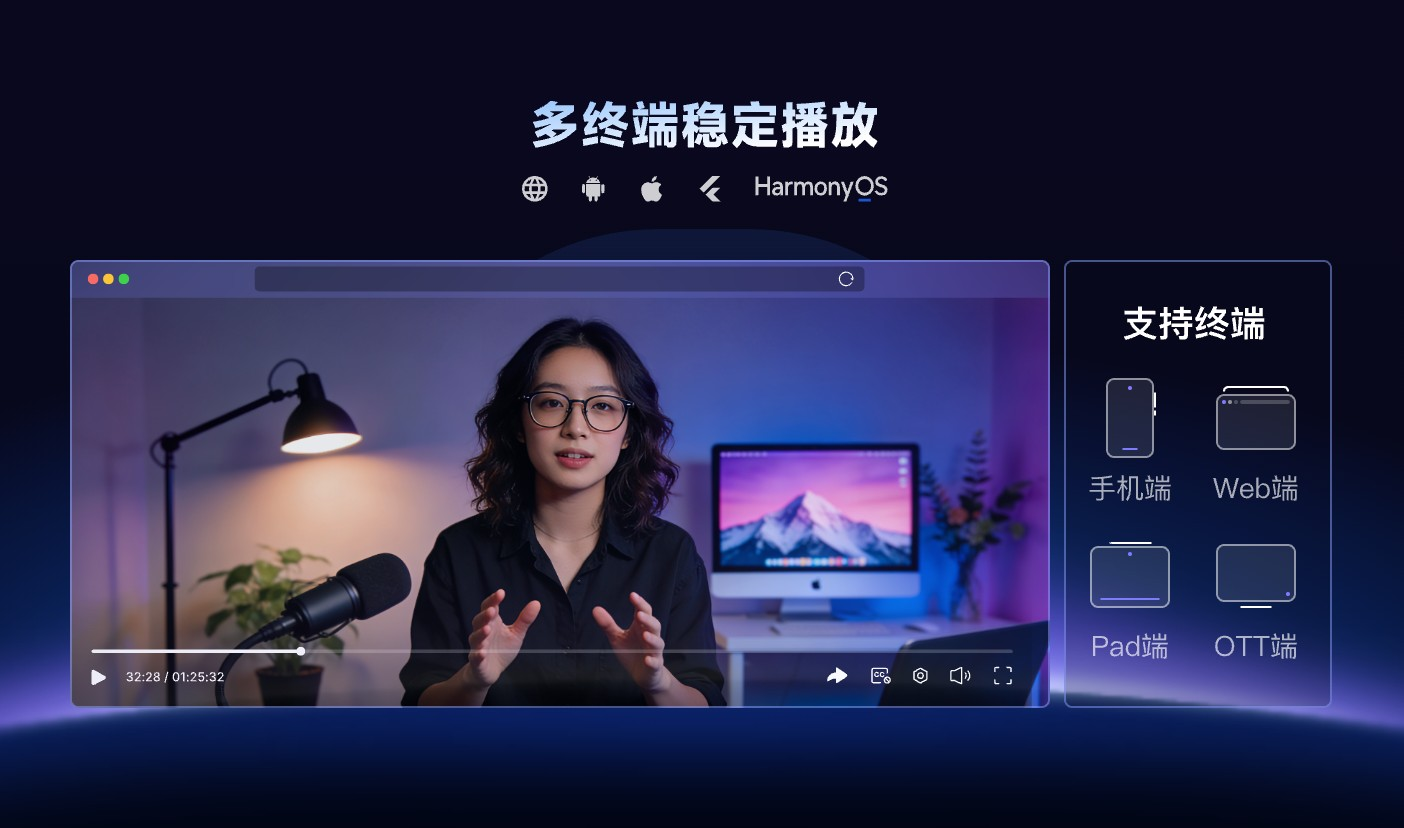
Built on an elastic, horizontally scalable cloud architecture, the system boasts strong traffic adaptability. It seamlessly covers small regular live sessions as well as large-scale new product launches and major promotion streams with tens of thousands of concurrent viewers. It maintains smooth playback during low-traffic periods and scales resources elastically during traffic spikes, mitigating stuttering, latency and disconnections caused by load fluctuations and ensuring stable broadcasts for marketing events year-round.
It also supports cloud ingestion of a single source and multi-channel cloud relay, enabling simultaneous distribution to multiple media platforms for omnichannel exposure and maximising the marketing value of brand live streaming.
(IV) Complete Suite of Interactive Marketing Modules to Support Brand-Native Conversion Journeys
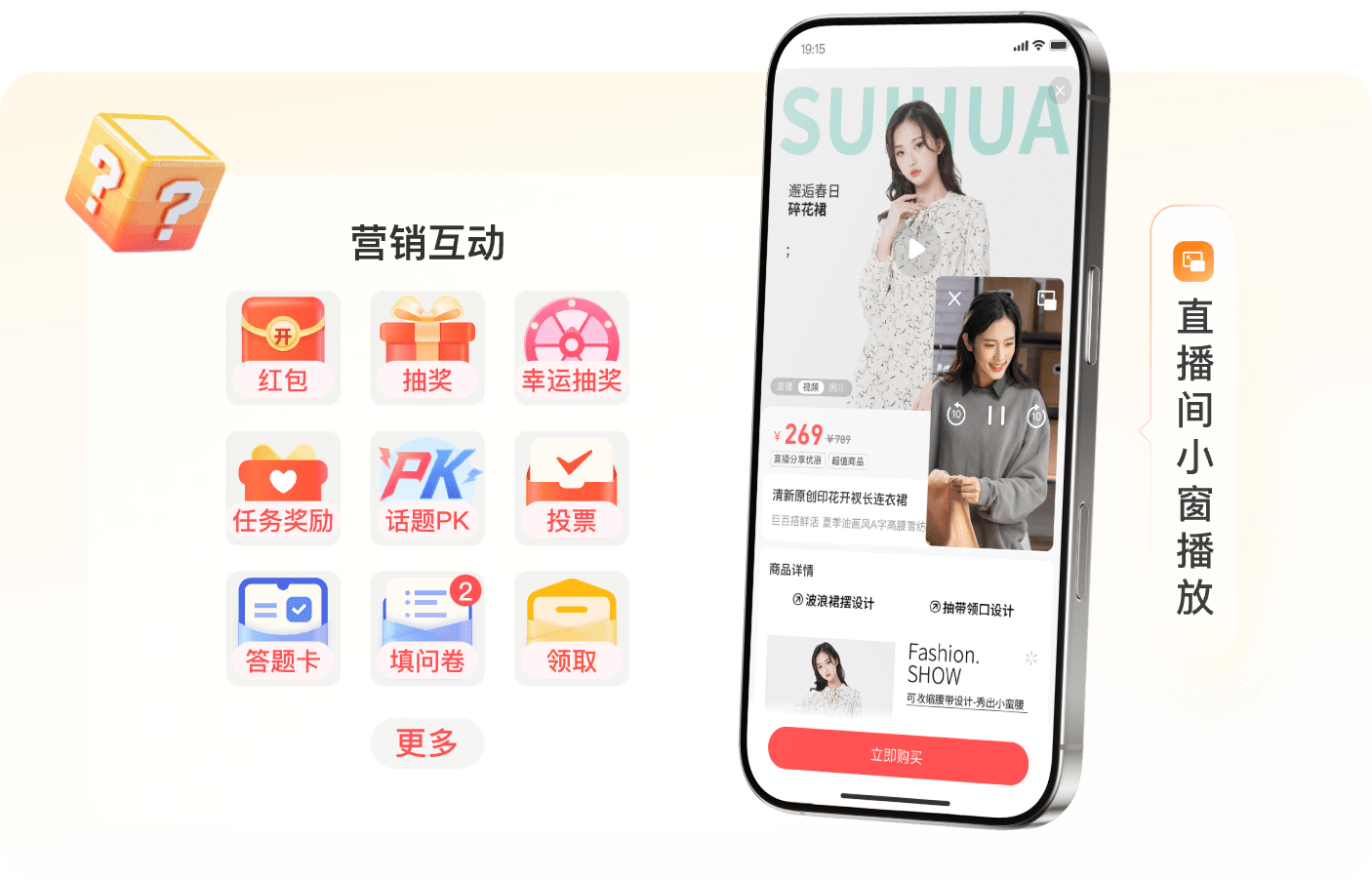
The system comes with a full set of professional live streaming capabilities, including host beautification, virtual backgrounds, guest co-hosting and presentation screen sharing to support briefings, content seeding, launch events and other live scenarios. It also features interactive modules such as pop-up lucky draws, red packet rain and gift bags to energise live rooms, extend watch time and boost user stickiness.
Merchandise configuration supports two flexible modes: automatic product data synchronisation via APIs and manual backend entry. Live stream product links can redirect users directly to brands’ native checkout pages, bridging the gap between live content seeding and private domain transactions and enabling efficient traffic conversion.
III. Core Value of Solution Implementation
This solution is built around FMCG brands’ requirements for frequent, diverse and closed-loop live marketing. It remedies key limitations of traditional live streaming tools. Private customisation integration helps brands build exclusive live touchpoints, unify visual identities and capture core private domain traffic. Multi-system API integration dismantles operational silos and enables automated workflows and closed-loop data management. The elastic high-concurrency architecture and omnichannel relay capabilities accommodate all live scenarios and guarantee reliable marketing events year-round. Rich interactive tools and flexible merchandise links enrich marketing mechanics, lift user activity and improve private domain conversion rates.
Overall, it helps FMCG brands develop proprietary, systematic, efficient and closed-loop live streaming marketing systems and continuously sharpen their competitiveness in online marketing.