Building a Live Streaming Ecosystem for Department Store Mini Program Malls: A Closed-Loop Solution for Private Domain Live Commerce Conversion
Nevertheless, most self-developed mini program malls lack native professional underlying capabilities for live streaming. In-house development entails exorbitant costs, while third-party tools suffer disjointed data and product systems, alongside a shortage of fission operation tools. These hurdles lead to challenges including difficult live streaming implementation, cumbersome product linkage, untraceable conversion paths and sluggish traffic growth, severely hindering the scaled and systematic development of platform live streaming businesses. Therefore, exclusive live streaming solutions featuring lightweight integration, seamless data connectivity and support for fission-driven growth have become an essential demand for the digital upgrading of department store mini program malls.
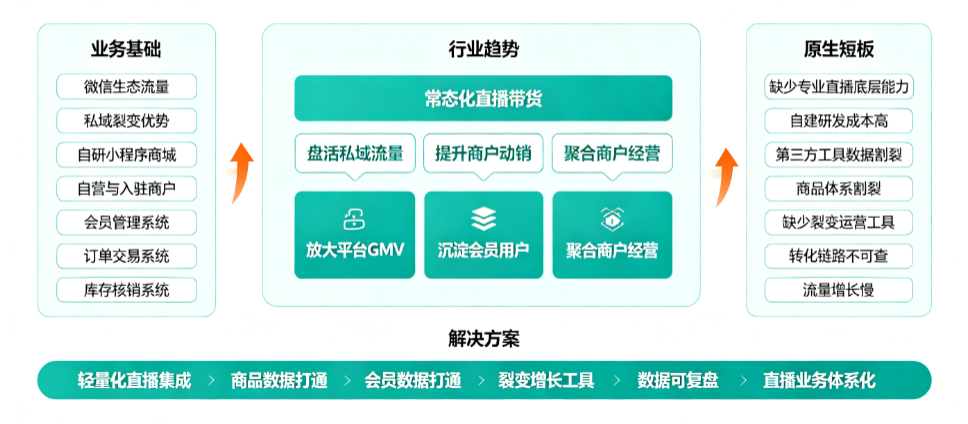
I. Core Pain Points of Live Streaming for Department Store Mini Program Malls
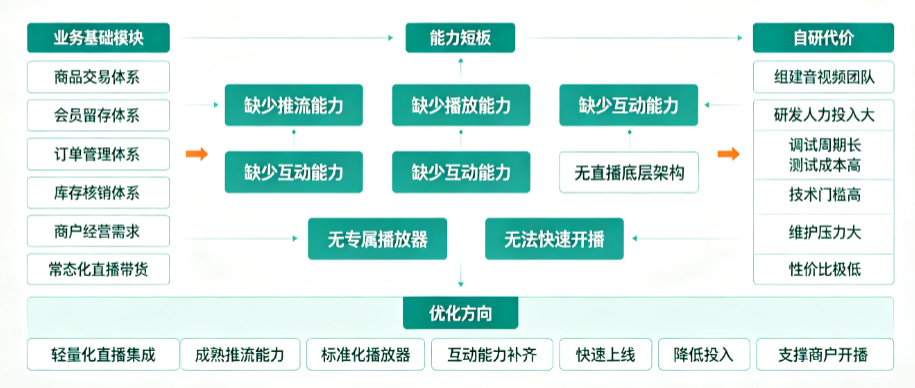
(I) Absence of Native Live Streaming Capabilities and High Costs for Independent Development
Self-developed mini program malls operated by department stores focus on commodity transactions, member retention and order management, without native underlying architectures for live streaming such as stream pushing, video playback and audience interaction. Should platforms build in-house audio and video R&D teams to develop exclusive live players and construct streaming and broadcasting infrastructures from scratch, massive investment in R&D manpower, lengthy debugging cycles and substantial testing expenses will be required. Such initiatives carry high technical barriers and long implementation timelines, delivering extremely low cost-effectiveness for retail-oriented department store platforms and failing to rapidly support regular live commerce by merchants.
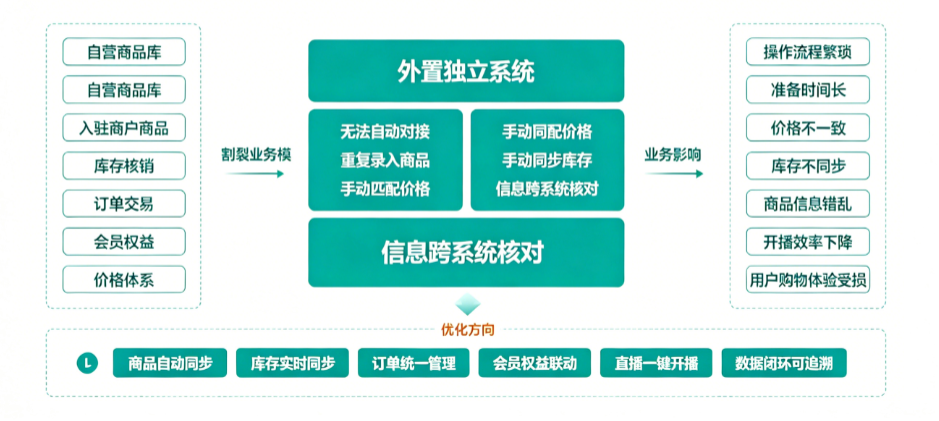
(II) Disconnected Product Systems and Tedious On-air Product Listing Procedures
Generic SaaS live streaming tools available on the market operate as independent external systems that cannot connect with the native product libraries, inventory and order systems of mini program malls. Every time self-operated teams and settled merchants initiate a live broadcast, they must re-enter product information and manually match prices and inventories within the live streaming backend. This not only creates cumbersome, time-consuming workflows, but also triggers inconsistencies in pricing, unsynchronized inventories and erroneous product information, greatly reducing live stream launch efficiency and undermining user shopping experience.
(III) Fragmented Data Chains Prevent Accurate Assessment of Live Streaming GMV and Input-output Performance
Traditional external live streaming tools exist as separate systems from mini program malls with fully isolated data. Live streaming terminals can only capture basic traffic metrics such as viewer count and interaction frequency, unable to link them with consumer behaviors within the mall including page clicks, cart additions and order placements. The full conversion path of “watching live stream – clicking products – jumping to place orders” cannot be fully traced. Platforms cannot accurately measure the real GMV contribution and performance of individual live sessions, making it difficult to scientifically identify high-performing settled merchants and optimize live scheduling and traffic allocation. Live streaming operations thus rely heavily on empirical judgment over the long term.
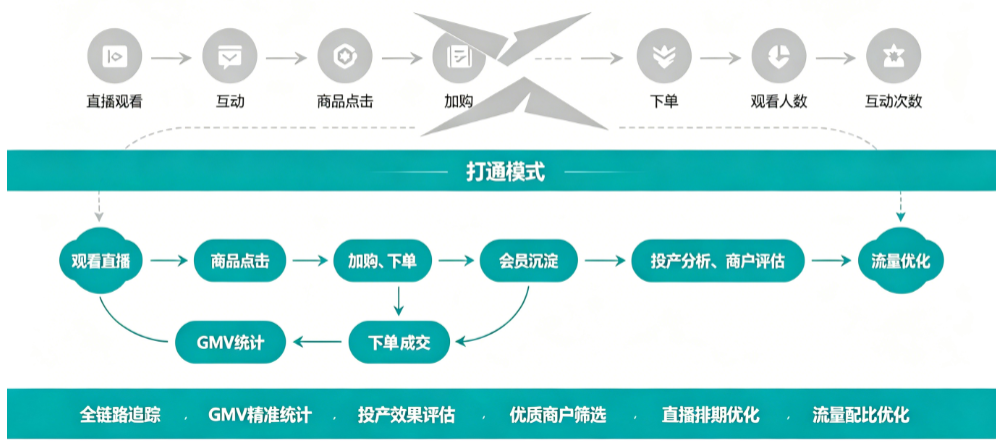
(IV) Lack of Fission Tools Restricts Growth of Private Domain Traffic
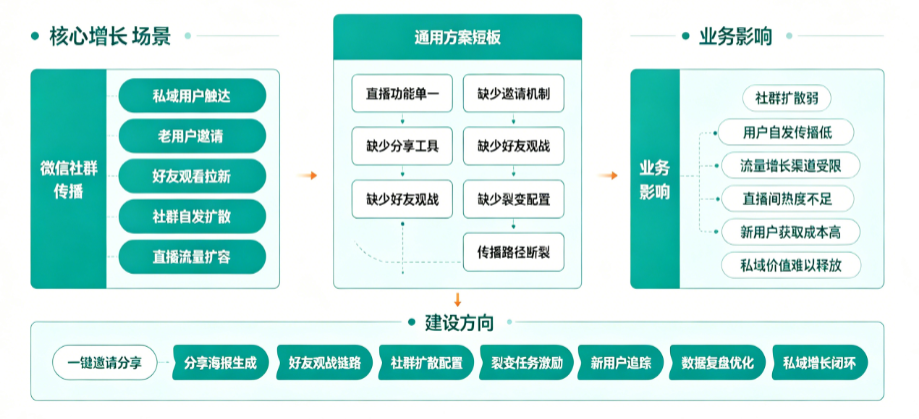
The core strength of live streaming on department store mini programs lies in leveraging WeChat communities and private domain users for viral communication, making invitation-driven sharing ideal for user acquisition and traffic expansion. However, conventional live streaming solutions offer limited functionality without standardized operational tools for live stream invitations, sharing-based fission and friend referral viewing. They fail to accommodate platform community outreach and organic user-driven dissemination, limiting channels for live traffic growth and preventing platforms from fully unlocking the value of WeChat private domain traffic.
II. Exclusive Live Streaming Solution for Department Store Mini Program Malls
(I) Lightweight SDK Embedding Enables Low-Cost Rapid Deployment of Live Streaming Capabilities
Standardized mini program live streaming SDKs are provided for lightweight embedding into self-developed mall platforms, supporting fast integration with Uni-app architecture projects. The solution can directly reuse the mini program’s existing operating environment, user system and underlying logic. Platforms are freed from developing live streaming infrastructures, players and streaming systems from the ground up, enabling out-of-box deployment and rapid launch. This drastically cuts R&D expenditure and implementation cycles. Fully compatible with regular live commerce scenarios for self-operated businesses and multi-merchant operations, it quickly addresses native live streaming capability shortages and facilitates large-scale commercialization of live streaming services.
(II) Cross-platform API Data Connectivity Creates a Closed-loop Live Shopping Experience
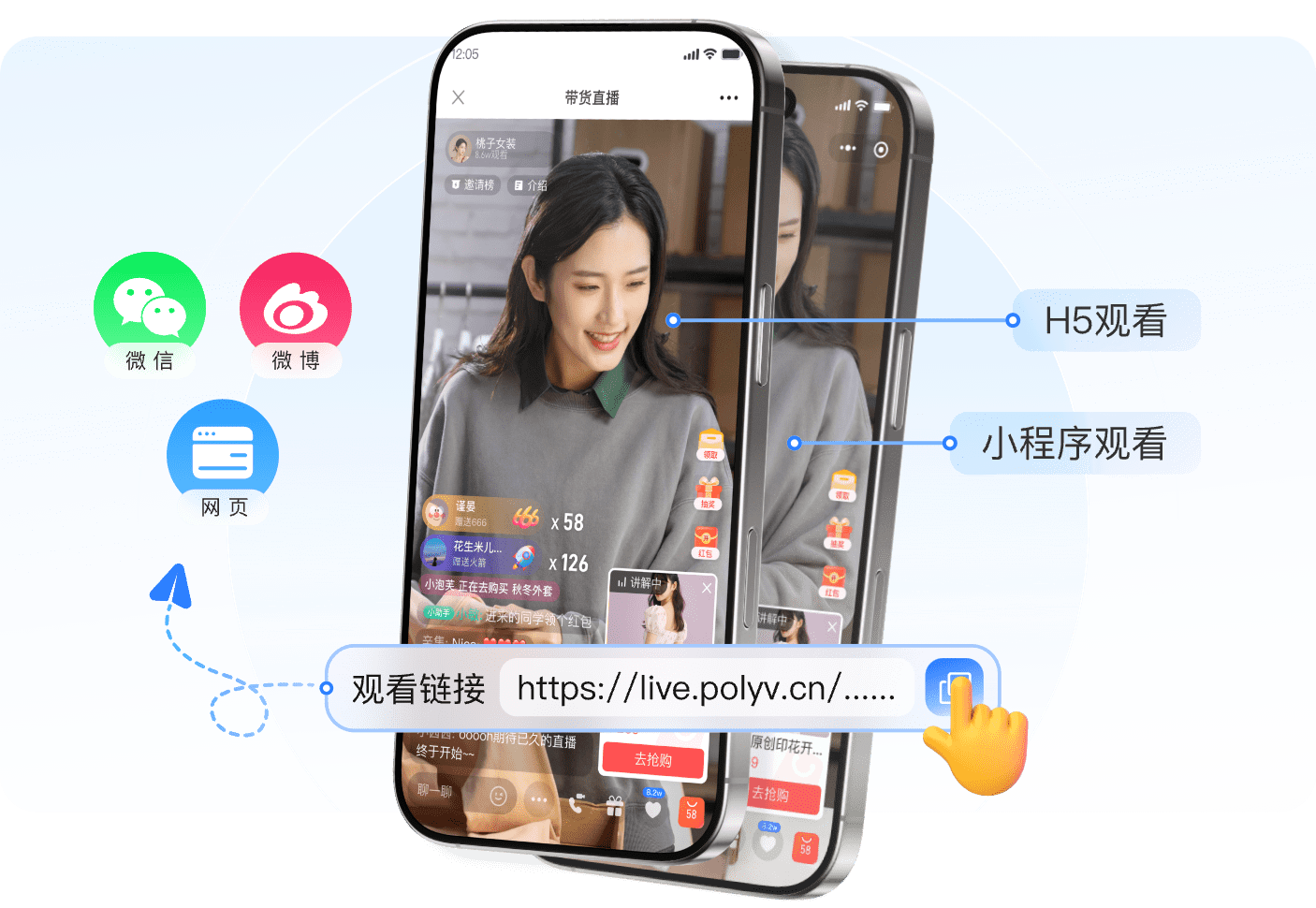
Standard APIs facilitate deep interconnection between the live streaming module and the mall’s existing product library, inventory and order systems to achieve full interoperability across business operations. Product information, pricing and inventory status are automatically synchronized, eliminating repeated data entry and manual listing by merchants and effectively avoiding information mismatches and inventory discrepancies. Products can pop up within live rooms, allowing one-click navigation to product detail pages. Users can browse items, add products to carts and complete purchases seamlessly, closing the consumption loop of “watch live stream – place instant orders”, shortening conversion paths and lifting transaction rates within live rooms.

(III) Full-link Data Feedback Enables Precise Quantification of Live Streaming GMV Value
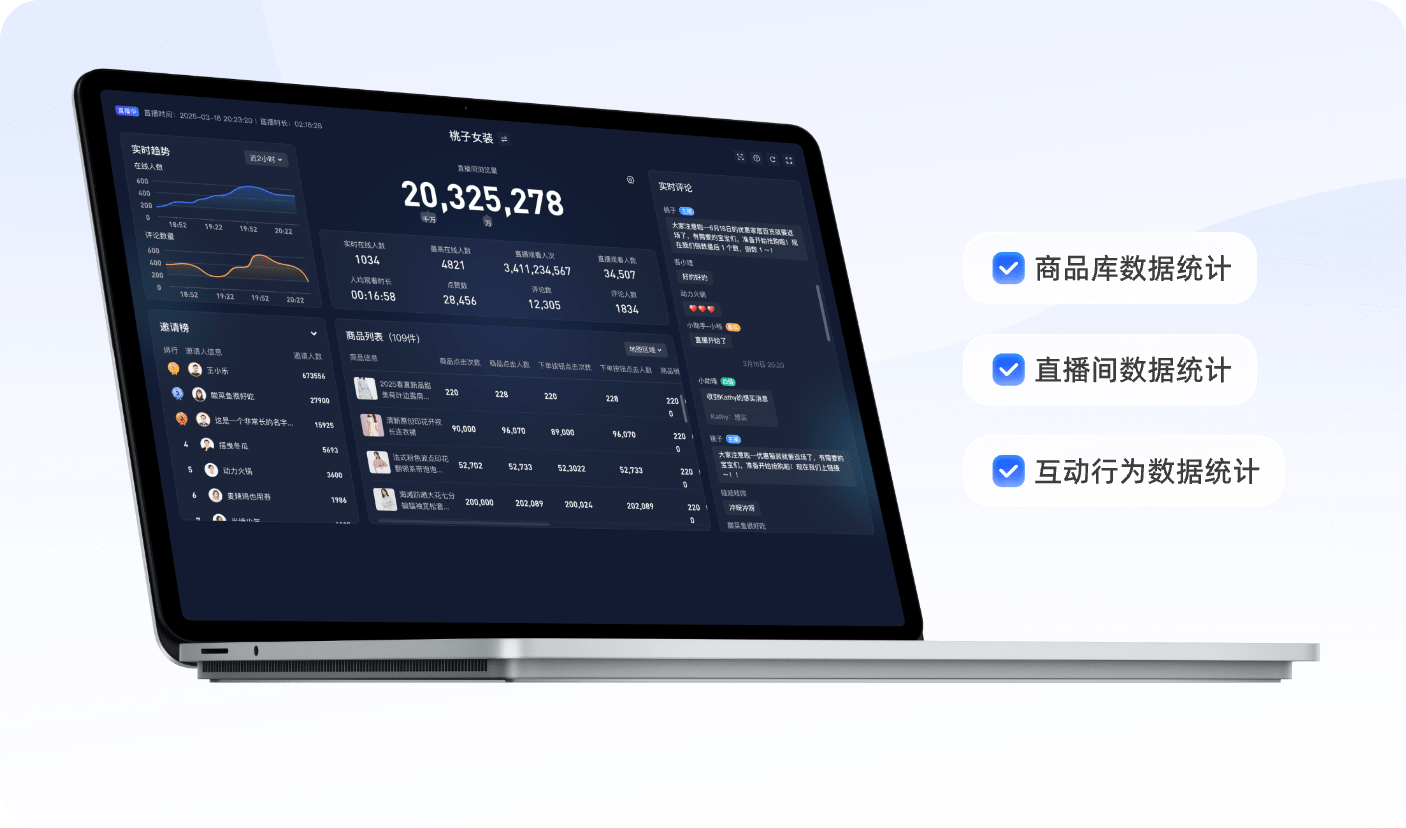
The live streaming SDK continuously collects granular user behavioral data including viewing duration, page dwell time, product clicks and interactions. Data is transmitted back to the mall backend in real time via APIs. Platforms can map the complete conversion chain spanning “live exposure – user viewing – product clicks – order confirmation and payment”, enabling accurate calculation of GMV, input-output ratios and user conversion efficiency for each live session. Supported by authentic data for post-event review, platforms can accurately identify high-output settled merchants and rationally optimize live scheduling, category layout and traffic distribution to realize refined, data-driven operations.
(IV) Dedicated Invitation and Fission Functions Activate WeChat Private Domain Traffic
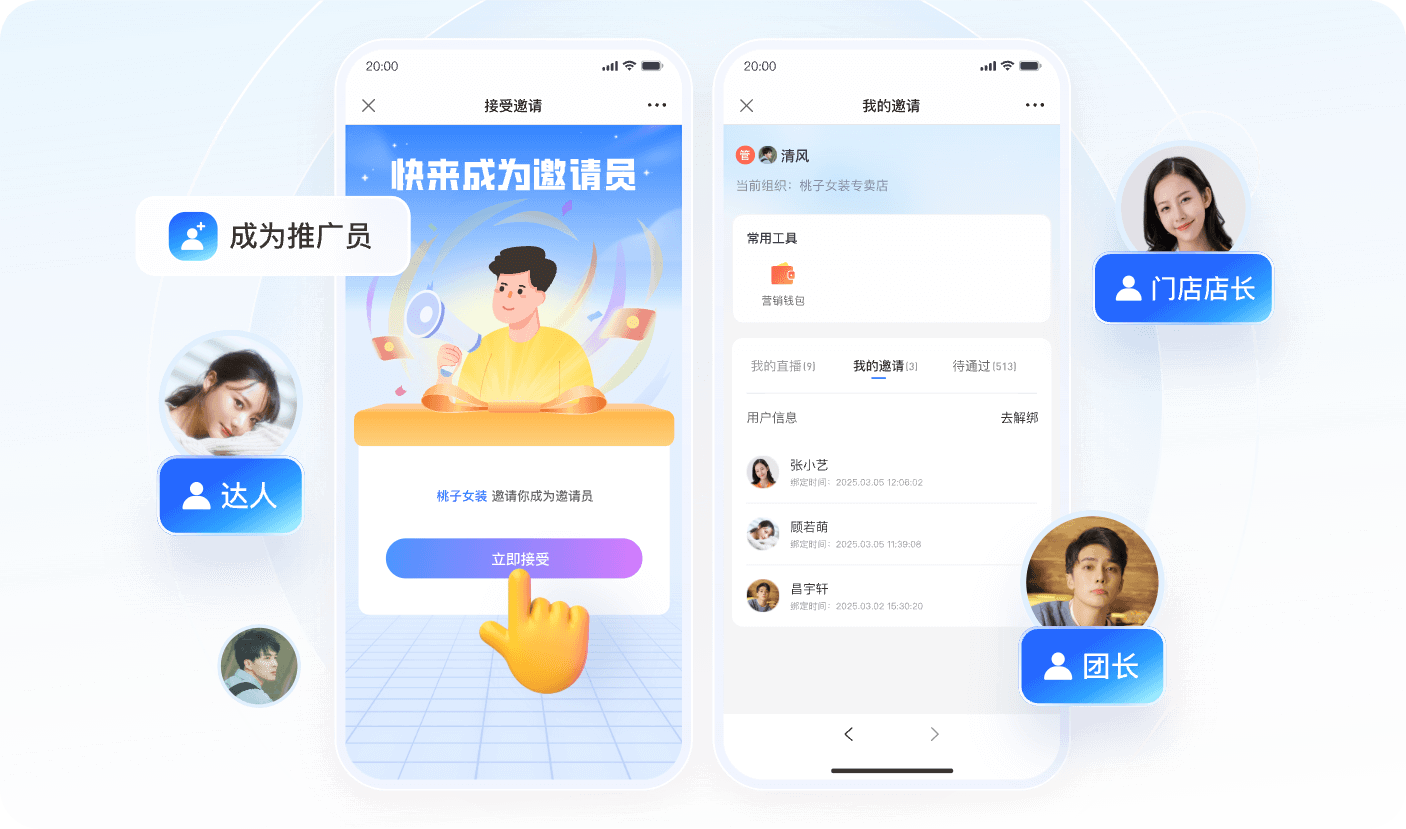
Standardized tools for live stream invitation and sharing fission are configured to fit operational scenarios such as WeChat community outreach and peer-to-peer sharing within private domains. Users can share live rooms with one tap and invite friends to watch, generating rapid audience expansion and social reach through viral communication. The solution helps department store platforms activate existing private domain users, tap free social traffic channels, boost live room exposure, resolve stagnant traffic growth plaguing traditional live streaming models, and steadily increase live viewership and overall transaction volume.